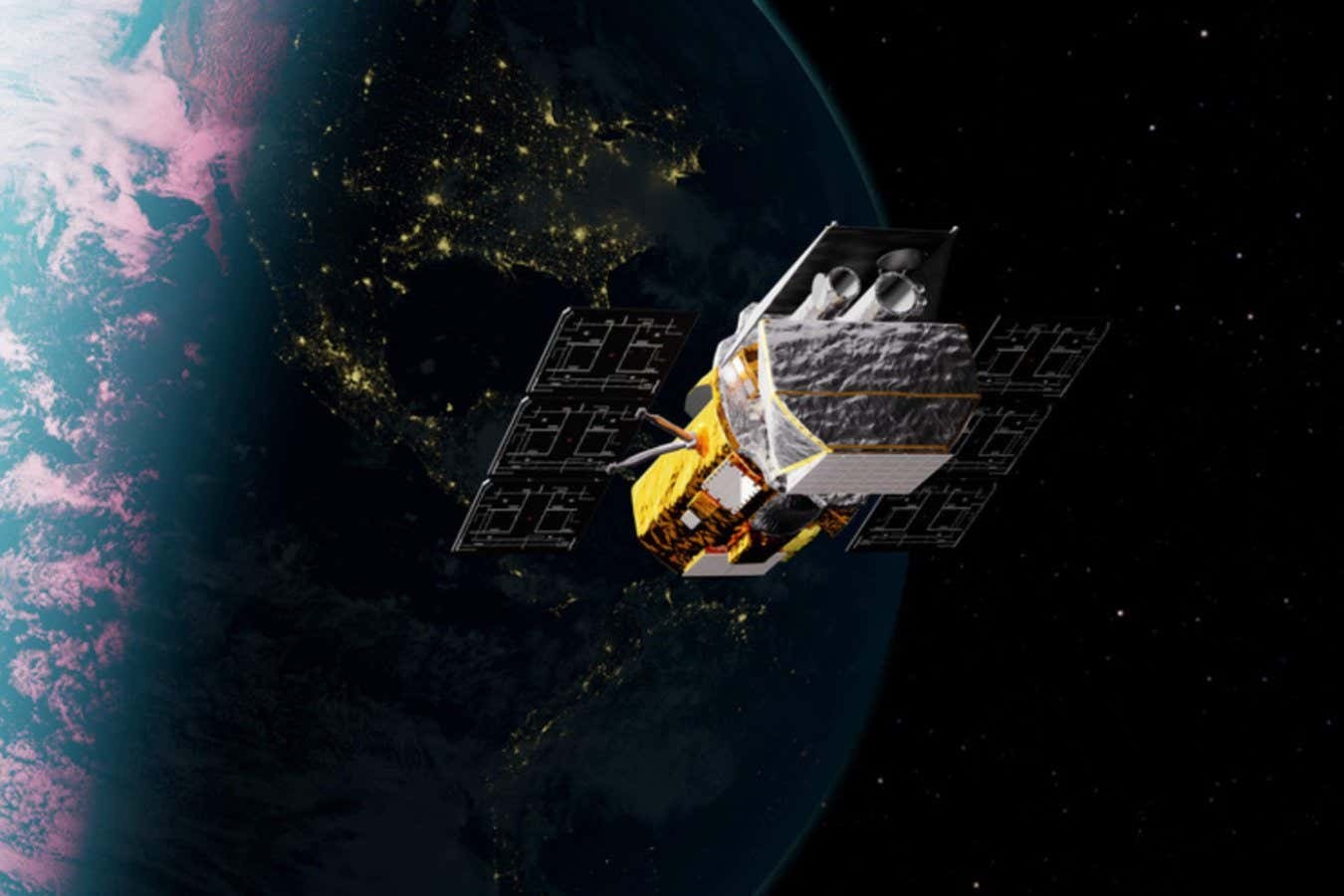
One of NASA’s best eyes in the sky is dying. The Neil Gehrels Swift Observatory isn’t just struggling, it is literally dropping toward Earth. Without intervention, it will burn up in the atmosphere soon. So they tried something stupidly bold. An actual rescue.
Orbits decay. Always. Swift has been fighting the thin outer fringes of the air since 2004. It launched high, about 600 kilometers up. Now it’s sitting at roughly 375. That drop should have been slower. Solar flares changed the script. Powerful bursts puffed up the atmosphere, making the air denser where it shouldn’t be. The drag got worse. Swift started sliding.
NASA needed a fix. Options were thin. The winner? A tiny Arizona startup called Katalyst Space Technologies. Their pitch was simple. Give it a kick. Not just any kick though. They designed a satellite named LINK to grab the old beast and pull it out of the well.
LINK is small. Less than two meters tall. Roughly one-third the volume of Swift. But it has huge solar wings to power its thrusters and three robotic arms. Arms that are meant to reach out and hold onto something not built for a handshake.
They launched LINK on a Pegasus XL rocket from Northrop Grumman. July 3 morning. Likely the last time we’ll see that rocket fly. It’s retired.
Now comes the waiting game. Weeks of testing in the void. Then the grab. If LINK holds on, it pushes Swift up slowly. About two months of thrusting. Until it hits that old 600-km ceiling again. If the math holds? Swift buys itself a decade more.
Swift was born for violence in space. Gamma-ray bursts. The brightest, most energetic explosions known. It’s watched nearly 1800. But it also spotted comets, planets, supernovae. Black holes.
“Swift wasn’t designed to be served.” — Ghonhee Lee, Katalyst CEO
He’s right. Nobody thought about maintenance back then. But if this works, the blueprint is printed. We can fix things that were never meant to be fixed. It’s cheaper than launching a replacement. Cheaper, anyway.
Hubble is watching this from a lower orbit. It will fall in the 2020s or 2030s. It needs a boost too. Can LINK save it? Maybe. Nobody knows. The idea alone shifts the entire industry.
Why let hardware rot? It makes no sense. We spend billions to get up there. We ignore it when the orbit fades. This might change that habit.
If LINK fails? Swift falls. No big deal. Just another piece of space debris. If it succeeds? We look at Hubble differently. Maybe at JWST differently.
The sky is crowded with things we forgot how to handle.
The history and future of US space landmarks awaits curious minds.