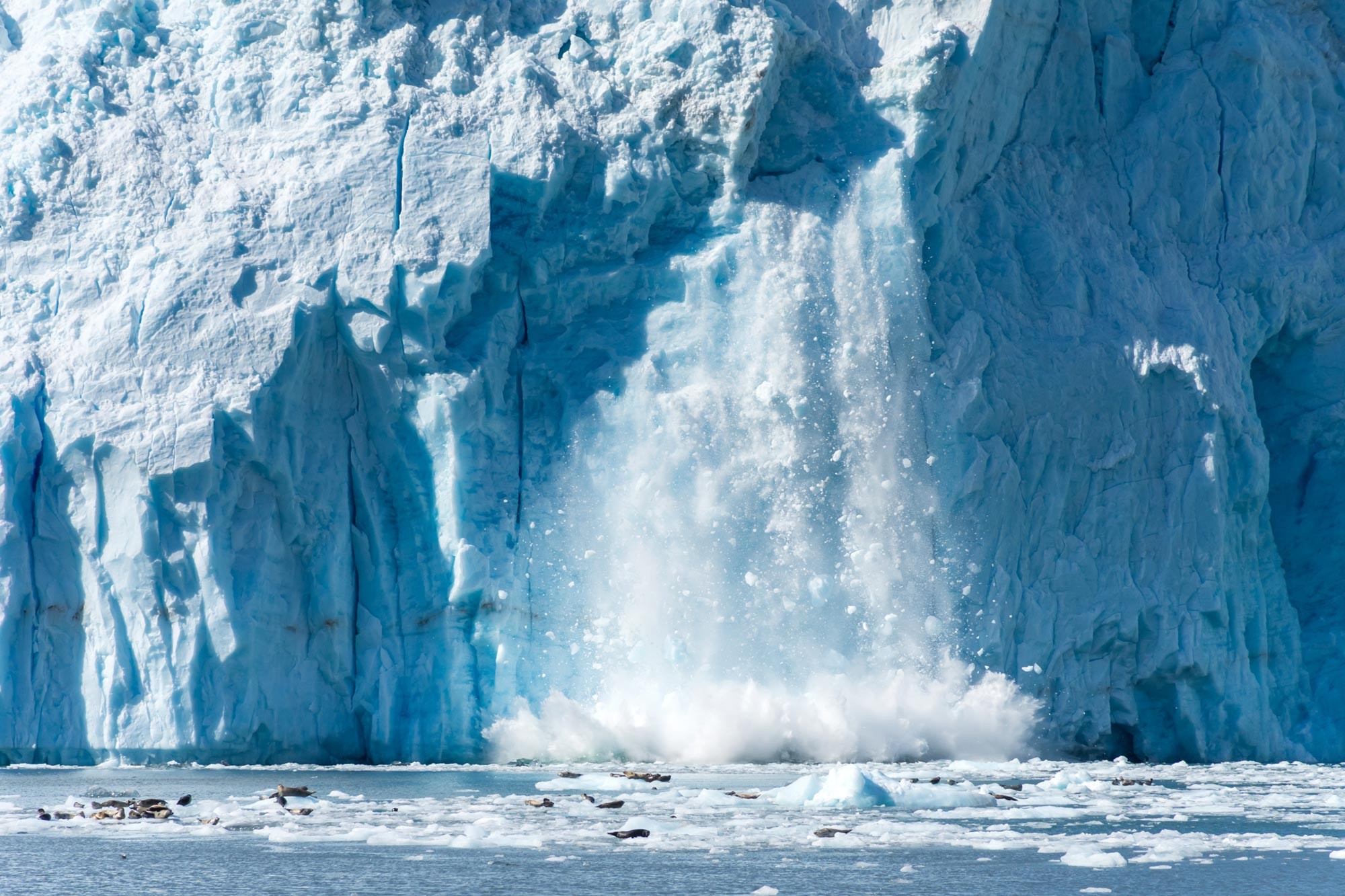
The ground doesn’t just shake when tectonic plates grind. Sometimes it happens when a mountain of ice decides to quit.
A new study shows that Thwaites Glacier — the so-called Doomsday Glacier — has been throwing seismic tantrums for years. We just didn’t listen. Or maybe we weren’t listening with the right equipment.
What is a glacial earthquake?
Picture an iceberg breaking off the front of a glacier. Not just flaking away, but toppling over like a drunkard stumbling into the water. That splash creates a vibration. A low, groaning hum that travels through the crust. Scientists call these glacial earthquakes.
We’ve known about them since the early 2000s, mostly in Greenland. Greenland quakes are loud. Some are as strong as nuclear tests. They pop up on global seismometers in late summer. Clear signals.
Antarctica was silent.
Until now.
In a paper published in Geophysical Research Letters, I analyzed local seismic data from the Antarctic ice sheet. Not the distant, high-frequency pings used for volcano alerts or earthquake warnings. I looked for the dull thud.
The result? Hundreds of uncataloged events between 2010 and more than 300 unrecorded quakes between 2022. Most happened near the end of the Doomsday Glacier, a region prone to collapse.
The quiet giant
Why did we miss these before?
Standard seismic networks ignore the low frequencies. Glacial earthquakes don’t ring; they rumble. They’re subtle. In Antarctica, the ice moves differently than in the north. The water is colder, the shelves wider.
Most previous attempts to find Antarctic glacial earthquakes relied on the worldwide network of sensors. But if the signal is too faint, the world doesn’t hear it. You need to put your ear close to the ground.
The best evidence comes from standing right where the action is.
I used stations embedded in Antarctica. The payoff was a map of more than 360 events. They fell into two main clusters.
One cluster sat right on Thwaites Glacier. About 245 of these — two-thirds of the total — were concentrated at its marine end.
Thwaites is different
Thwaites isn’t behaving like its Greenland cousins.
Greenland quakes follow the calendar. Heat melts ice, bergs capsize, quakes happen in late summer. Warm air drives the cycle.
Thwaites doesn’t care about air temperature. Not primarily, anyway.
The biggest burst of activity? Between 2018-2019 and 2019. This window lines up perfectly with satellite data showing the glacier speeding up. Its ice tongue accelerated toward the sea.
This speedup was likely driven by the ocean, not the atmosphere. Warmer water undercuts the ice, loosening it. The glacier surges forward, calving larger bergs that crash down harder. The ocean’s state on stability matters more than we thought.
It’s the water, stupid. Or rather, it’s the temperature of the water beneath the shelf.
The Pine Island Puzzle
Then there’s Pine Island.
Another massive cluster appeared here. But it doesn’t look right. The events were located 60-80 km from the water. Icebergs don’t travel that far before collapsing. These weren’t caused by capsizing ice.
We don’t know what caused them yet. Gliding ice? Fractures?
The answer matters because Thwaites isn’t alone. Pine Island has been a major source of sea-level rise, too. If one glacial quake mystery remains unsolved, maybe the other side of the coin will reveal more about Antarctica’s secrets.
So, what next?
Sea level projections remain highly uncertain. Climate models struggle with marine-terminating glaciers — those with ice sheets extending into the ocean. How fast will they retreat? When do they accelerate?
Detecting glacial earthquakes offers a proxy for this instability. It tells us how much mass is breaking off. It shows how responsive the ice is to the surrounding ocean.
We can use the ocean.
Right now, the best data we have is a patchwork of satellites and sparse ice cores. It’s like trying to understand a forest by counting trees. The seismic record provides a missing piece of the puzzle.
Can we predict the next crash?
Not exactly. But we can monitor the heartbeat of the ice. We can hear the cracks forming. The more we listen, the less surprising the collapse will be.