It didn’t take long for adults to realize something was wrong. In the early 1950s, parents were already on high alert over the “corrupting” influence of comic books. The US Senate was holding hearings. Dr. Fredric Wertham was publishing Seduction of the Innocent, claiming these paperbacks were turning kids into delinquents.
Then came Mad.
William Gaines and Harvey Kurtzman had just launched it as a comic book parody, but the backlash was immediate and brutal. The very thing that drove parents crazy about EC Comics’ horror titles now had a new target: satire.
“Mad began as a comic book parodying other comic books,” explains Judith Yaross Lee, a scholar of American humor and professor emerita at Ohio University.
The original title? Tales That Will Drive You Mad.
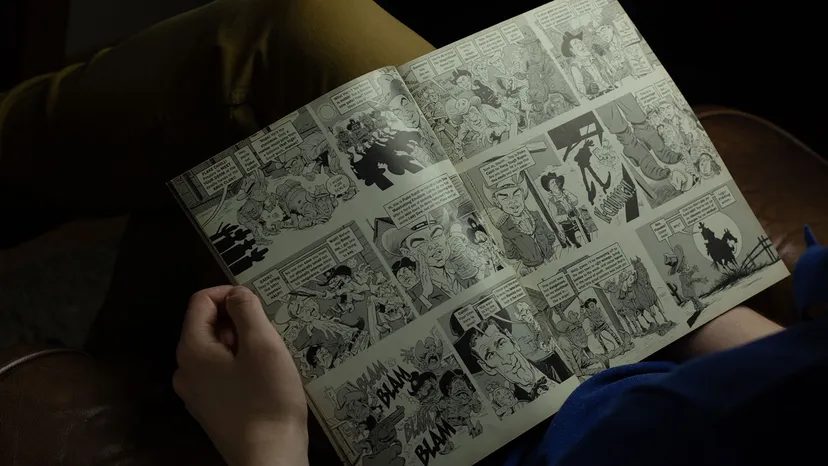
The first issue, released in 1953, featured a landmark parody called “Superduperman!” It starred Clark Bent, the pathetic “assistant to the copy boy,” who transforms into the vapid Superduperman. The opening panel shows him triumphantly punching an octogenarian on crutches in the gut.
Readers ate it up. Circulation soared to 750,000.
But the pressure was mounting. The Comics Code Authority was tightening its grip, killing off the horror genre entirely. EC Comics needed to pivot or die. Gaines and Kurtzman made a bold move. They transformed Mad from a floppy comic book into a magazine.
This shift wasn’t just a format change. It was a survival strategy that redefined American humor. By 1955, Mad was no longer just poking fun at superheroes. It was dissecting politics, advertising, and pop culture with a razor-sharp wit that had no place in the sanitized world of post-war America.
The magazine became a sanctuary for the cynical kid in every classroom. It whispered a simple, rebellious truth: Everyone is lying to you, including magazines. Think for yourself.
“Everyone is lying to you, including magazines. Think for yourself.” — Former Mad editor John Ficarra
This message didn’t just sell copies. It shaped minds.
The Golden Age of Snark
By the mid-1970s, Mad was a cultural juggernaut. Circulation hit 2 million. Half of those copies were hidden under the mattresses of 11-year-old boys, passed around at recess inside geometry textbooks.
It wasn’t just about jokes. It was about a specific kind of intelligence. A way of seeing the world that was skeptical, irreverent, and deeply human.
When Mad peaked, it wasn’t just a magazine. It was an institution. It taught a generation how to laugh at authority. How to spot the absurdity in the everyday. How to question the narrative.
But by 2017, that number had dropped to 170,000. The printing presses slowed. Then stopped. In 2019, Mad effectively shut down, ceasing original material production.
The brand lives on. New “best of” compilations like MAD Mocks Music drop regularly. A special 70th-anniversary issue appeared at Barnes & Noble. But the real legacy isn’t in the sales figures.
It’s in the DNA of modern comedy.
From Saturday Night Live to The Simpsons, from South Park to The Daily Show, the subversive sensibility of Mad set the tone. Every show that mocks the powerful, every sketch that highlights the ridiculousness of celebrity culture, owes a debt to Kurtzman and Gaines.
They didn’t invent parody. They didn’t invent satire, irony,
The year was 1954. Lawmakers were on a warpath. The Senate Subcommittee to Investigate Juvenile Delinquency had turned its gaze on comic books, claiming they were actively poisoning the youth of America. Harvey Kurtzman’s boss, publisher William Gaines of EC Comics, found himself in the hot seat.
A senator held up a gruesome image. It showed a man with a bloody ax, holding up a woman’s severed head. “Do you think that is in good taste?” the senator asked Gaines.
Gaines didn’t blink. “Yes, sir, I do,” he replied. “For the cover of a horror comic.”
The lawmakers weren’t having it. They forced the entire industry to create the Comics Code Authority. This new body acted like a digital filter from the 1950s. It automatically banned any comic book with words like “horror,” “terror,” “crime,” or “weird” in the title. It was a purge.
Gaines and Kurtzman needed a way out. They couldn’t just quit. They needed to survive the censors. So, they pulled off a savvy switcheroo. They transformed Mad from a 10-cent comic book into a glossy magazine. It was a format change that saved their skins.
Escaping the Comics Code
“For the past two years now, Mad has been dulling the senses of the country’s youth,” Kurtzman wrote in the introduction to the first issue of Mad the magazine. “Now we get to work on the adults.”
It wasn’t just about avoiding bad words in titles. It was about freedom. Yaross Lee, a humor historian, co-edited a scholarly volume with John Bird called Seeing MAD: Essays on MAD Magazine’s Humor and Legacy. In it, she breaks down exactly why the shift mattered.
Moving into a magazine format did two things at once. First, it freed writers from the strict censorship of the Comics Code. Second, it expanded their targets. They weren’t just parodying other comics anymore. They were going after movies. TV shows. Popular music. The whole cultural landscape.
“Mad’s M.O. was simple in both formats,” Lee writes. “Take a comic conceit and push it over the top.”
That was the engine. Take something familiar. Twist it until it breaks.
Outsiders Looking In
Parody is imitation with a difference. That’s the definition Lee uses. But for Mad’s writers and cartoonists, that “difference” came from their backgrounds. Almost all of them were Jewish guys from New York City.
They were outsiders.
In the 1930s and 1940s, art schools had quotas. They limited how many Jewish students could be accepted into each class. The “legitimate” art world was closed to them. So these frustrated artists became cartoonists.
They developed a specific style. It was a comic response to discrimination and oppression. It came from being kept out of the main room.
Readers in Iowa might not have caught every reference. They might not have understood random Yiddish words sprinkled into parodies. Words like furshlugginer (“beat up or junky”) or ganef (“thief or rascal”) flew over some heads.
But they felt the sensibility. It was distinctly Jewish. It was the outsider relentlessly mocking the mainstream.
Politics and Counterculture
This background shaped everything that followed. The magazine didn’t just make fun of ads. It made fun of power structures. It leaned into the counterculture.
By the time the 1960s hit, Mad wasn’t just a gag magazine. It was a cultural mirror. A distorted one, sure. But a mirror nonetheless.
The shift to magazine format gave them the space to get political. To get weird. To get deep into the cracks of American society.
The Jews of Mad had been barred from the galleries. So they
The magazine didn’t just reflect the chaos of the 1960s and 1970s. It helped drive it. Writers targeted everyone. Presidents. Poets. Hippies. War hawks. If you had an authority to question, Mad was ready to skewer it.
“All art is political,” Yaross Lee noted. “And Mad was counter cultural in its DNA.”
Peak circulation hit in the ’70s. That was when the unspoken message really stuck. Question everything. Trust no one. The cynical air of the Watergate era didn’t just appear out of nowhere. It was fueled by a generation that had been trained to look at the mainstream and laugh at its expense.
Paul Levitz, former president of DC Comics, put it bluntly. He argued that Mad didn’t just mirror the culture. It affected it.
“I really believe that Mad is one of things that made the ’60s possible, and even made the Watergate-era cynicism possible in many ways.”
The Middle Finger Cover
April 1974 brought a cover that defined the decade’s frustration. Alfred E. Neuman wasn’t grinning. He wasn’t worrying. He was just showing his middle finger.
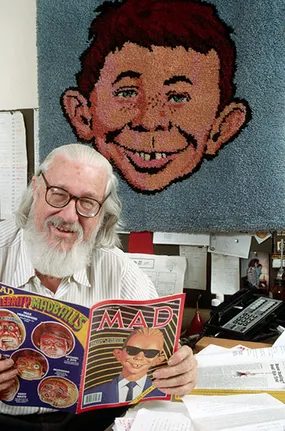
It was a stark shift for the character who had been a cartoon boy’s face since the 1890s. Al Feldstein named him Alfred E. Neuman in 1956. The “What, me worry?” catchphrase became iconic. But in ’74, the joke changed. The message was simple.
The magazine also leaned into global tensions through “Spy vs. Spy.” Two identical characters. One in white. One in black. They spent every issue trying to booby-trap each other. It was a cold War parody. Silent. Violent. Hilarious.
The Usual Gang of Idiots
Longevity required consistency. Mad had a stable of creators who joined in the 50s and 60s and stayed put. They called themselves “the Usual Gang of Idiots.” It was a classic Mad self-loathing move.
Mort Drucker was a cornerstone. He drew movie and TV parodies from 1959 to 2008. His caricatures were ingenious. Al Jaffee retired at 99. He created the “Fold In” in 1964. He drew it for every single issue. No breaks.
Harvey Kurtzman left in 1956. He started Trump magazine with Hugh Hefner. But his influence didn’t disappear. Adam Gopnik noted that Kurtzman left a mark on generations of American comedians.
Gopnik wrote that Kurtzman understood pop culture conventions. They ran deep in the audience’s imagination. They stood far from real experience. Kurtzman realized you could create new satire by simply inventorying those conventions.
“To say that this became an influential manner in American comedy is an understatement. Almost all American satire today follows a formula discovered by Harvey Kurtzman.”
Yaross Lee agreed. “The Mad sensibility is everywhere.”
Parody Power
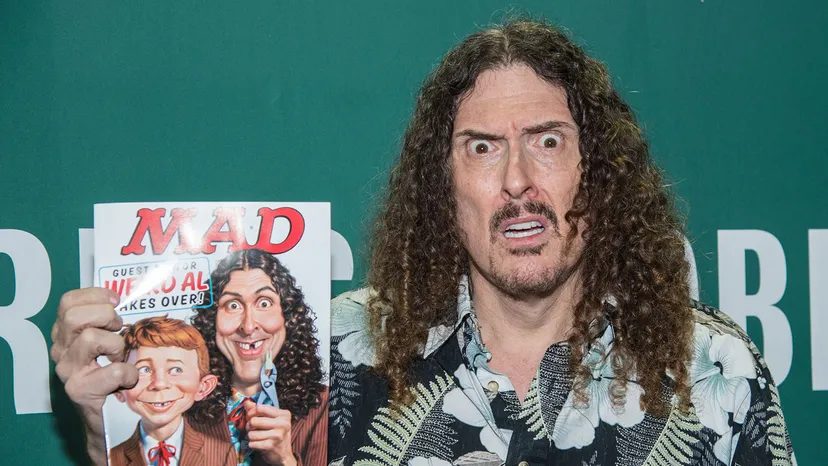
Weird Al might not exist without a specific legal precedent. Mad won a landmark copyright case in 1963. It made it legal for comedians to parody popular songs. Without that win, the genre looks very different.
Then there was MADtv. It ran from 1995 to 2009. It was originally inspired by the magazine. The sketch comedy show tried to capture that same chaotic energy.
The format changed. The medium shifted. But the core idea remained. Make fun of the serious things. Ignore the rules. Keep the middle finger ready.