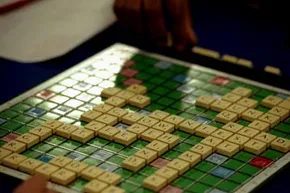
You’re staring at your rack. The board is open. You see it. Seven tiles. A triple-word score. And that elusive Z. You lay them down. Your friends are stunned. You just hit a Bingo. You’ve won.
This isn’t just luck. It’s a skill. Every night, people across the globe set up their racks. Scrabble is a crossword game where you build words on a grid. It’s a mix of skill and chance. You need a deep vocabulary. But you also have to work with the tiles you draw. Sometimes the tiles you get dictate your moves.
The Depression-Era Origin Story
Alfred Mosher Butts created Scrabble while unemployed during the Great Depression. He wanted to merge crossword puzzles with anagrams. He called the original game Criss-Cross Words.
Butts didn’t guess the letter distribution. He analyzed the front page of the New York Times. He counted every letter. Rare letters got higher point values. Common letters got lower ones. The math was precise. The design was intentional.
Manufacturers ignored him. No one wanted Criss-Cross Words. He needed help. He found James Brunot, an entrepreneur. Brunot saw the potential. He helped refine the rules and the board. They renamed it Scrabble. They started manufacturing it themselves in 1949.
Sales were slow at first. Then Macy’s decided to stock the game. That happened in the early 1950s. Sales exploded. It became a phenomenon. Butts and Brunot had a hit on their hands.
Today, Hasbro owns and manufactures Scrabble. It’s a staple in homes worldwide. It’s also a competitive sport. The National Scrabble Association helps players improve. They host an annual tournament in the United States. Other countries hold their own national championships. The best players in the world meet every two years for the World Scrabble Championships.
How to Play Scrabble: The Basics
Understanding how to play Scrabble starts with the board. The board is a 15×15 grid. Some squares have colored bonuses.
- Triple Word Score (TWS) : Multiplies the entire word’s score by three.
- Double Word Score (DWS) : Multiplies the entire word’s score by two.
- Triple Letter Score (TLS) : Multiplies the letter’s point value by three.
- Double Letter Score (DLS) : Multiplies the letter’s point value by two.
The center square is a star. It’s a free Double Word Score. You must start your first word on this square.
Understanding Tile Values
Each tile has a point value. You can find these values on the box or online.
- High-value, rare letters : Z (10), Q (10), J (8), X (8)
- Medium-value letters : K (5), F (4), H (4), V (4), W (4), Y (4)
- Low-value, common letters : E, A, I, O, N, R, S, T (1 point each)
- Blank tiles : 0 points. They can represent any letter.
Turn Structure
A game is played by two or four players. Two players is standard. Each player draws seven tiles. On your turn, you can:
- Place tiles : Add to existing words or create new ones.
- Pass : If you can’t or don’t want to play, say “pass.”
- Trade tiles : Exchange tiles for new ones from the bag. There’s a penalty for trading.
When you place tiles, they must form valid words. Every
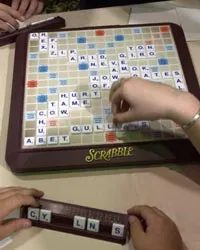
Scrabble is deceptively simple. You make words. You get points. The person with the most points when the tiles run out wins. It’s that straightforward.
The mechanics are brutal in their elegance. You place tiles on a grid. Each tile has a value. Common letters like E are cheap and plentiful. Rare letters like Q and Z are expensive and scarce. You build on top of existing words. You extend them. You intersect them. When no one can play anymore, the scores are tallied.
The Four Essential Components
You need four things to start. The board, the tiles, a bag, and a rack.
The Board
The game board is a 15×15 grid. It’s not just empty space. There are bonus squares scattered across it. Triple word score. Double letter value. The center star is where the first word goes. It sets the tone for the entire game.
The Tiles
There are 100 tiles in a standard set. Each carries a letter and a point value.
– Common letters (E, A, I, O, N) are worth one point and appear in high numbers.
– Rare letters (Q, Z, X, J) are worth 8 or 10 points. There is only one of each.
– Blank tiles are worth zero points. They have no letter printed on them. When you place one, you declare what letter it becomes. It stays that way for the rest of the game. Use them wisely. They are your escape hatch when you’re stuck.
The Letter Bag
This holds all the unused tiles. You draw from it every turn. It’s the source of your inventory. It’s also where your luck lives.
The Rack
Each player gets a wooden or plastic rack. You hold your tiles here. It hides your hand from opponents. You can rearrange your tiles without anyone seeing what you’re holding. This is where the strategy happens. You’re planning three moves ahead while the other player watches you squint at seven letters.
Setting Up for Play
You can play with two, three, or four people. Tournament play is strictly one-on-one. The rules don’t change, but the pressure does.
Before you start, agree on the dictionary. This is critical. You’re not just checking spelling. You’re checking definitions. Use the Official Scrabble Players’ Dictionary (OSPD) for North American play, or the Collins Scrabble Words (CSW) for international play. Disputes are common. Having a agreed-upon book saves time and arguments.
Many players use a timer. It adds pressure. It forces quick decisions. Without a timer, games can drag on for hours. With one, they become intense sprints.
The Objective
The goal is simple: score the most points.
You do this by creating valid words. You place tiles on the board. The base value of the word is the sum of the tile values. But that’s not all.
If you land on a bonus square, your score multiplies. Hit a Triple Word Score with a high-value word? Your points skyrocket. Place a high-value tile on a Double Letter square? You get double that tile’s value
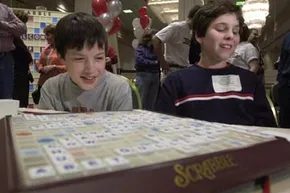
Start by dumping every tile into the bag. Shake it up. Each player grabs one tile to see who goes first. The person with the letter closest to A takes the opening move. A blank tile wins that spot too. Play moves clockwise from there.
The Opening Move
Players draw seven tiles and set them on their racks. The first player must lay down a word. It has to cross or go down the board. Crucially, one of those letters must land on the center star. That’s a double word score square. It only counts once per game though.
After laying the word, she counts the points. She announces the total. Then she draws more tiles until she’s back up to seven.
Building Words
The second player has to connect to the existing word. At least one new tile must touch a letter already on the board. You can add to a word. Make it plural. Add a prefix. Suffix. Or start a brand new word off any letter.
Diagonals don’t count in Scrabble. Only horizontal and vertical lines are valid. The player counts her points. Announces them. The next player continues. They build off any word on the board.
Use all seven tiles in one turn? That’s a bingo. You get a 50-point bonus. It’s the fastest way to jump ahead in score.
Blank Tiles and Challenges
Blank tiles are tricky. Announce what letter they represent as soon as you play them. They stay that letter for the rest of the game. They are worth zero points. Use them strategically.
Scattered across the board are bonus squares. Some boost individual letters. Others double or triple the whole word. Remember, these squares disappear after you use them.
Disputes
Anyone can challenge a word. Pull out the dictionary. You can only use it for challenged words. If the word isn’t in the book, the player takes back their tiles. They lose their turn.
If the word stands, the challenger loses their next turn. You can only challenge right after a word is played. Wait too long and it’s too late.
Ending the Game
The game ends when one player empties their rack and there are no tiles left in the bag. Or if the bag is empty and no one can make a word.
Tally up the points. If you won by emptying your rack, add the opponent’s unplayed tiles to your score. If the game ends with tiles left in hands, subtract your unplayed tile values from your total. The highest score wins.
Scrabble Tips
Strategy for Higher Scores
Don’t just play for points. Play for board control. Blocking off premium squares can starve your opponent of high-value moves. Use your blanks for rare letters like Q or Z if you can, saving common letters for later.
Keep an eye on the vowels. Running out of vowels stalls your ability to form words. If you have multiple consonants, try to dump them early by forming compound words or using suffixes.
Managing Your Rack
Hand management is half the battle. Try to keep a balance of vowels and consonants. If you’re stuck with too many consonants, you might need to pass or play a low-scoring word just to get new tiles.
Think ahead two or three turns. What tiles might your opponent need? Can you block a spot they might want for a triple word score? It’s not just about your current move. It’s about the shape of the board in three moves.
Using the Dictionary
Know when to challenge. If a word looks suspicious, challenge it. But
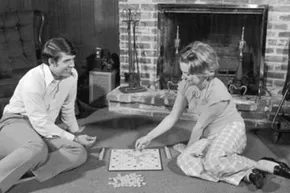
High scores don’t just happen. They require you to stop looking at the board as a static grid and start seeing it as a dynamic resource. You have to play the board to win.
Here is how you actually extract value from your tiles.
Points vs. Leave
Laying down a word is the easy part. The hard part is deciding what stays on your rack.
Every turn changes your inventory. If you play a word that leaves you with Q, Z, and J, you are in trouble. You need to ask yourself if you are setting up a big play or just dumping bad letters.
Sometimes you have to play low-point tiles just to clear space.
It is okay to exchange tiles. You lose a turn, sure. But if your rack is stuck with three consonants and no vowels, a fresh draw might yield a triple word score setup. It is a calculated risk.
Parallels and Hooks
Most players ignore the empty spaces next to existing words. This is a mistake.
Every new word you create scores points. But if you can create multiple words in one turn, you multiply that score.
Consider this: If TON is on the board, you can lay down NOW underneath it. The N sits under the O. You now have NOW, ON, and NO. Three words. One play.
Creating three small words that play off bonus squares often produces more points than one long, elegant word.
Hooks work the same way. A hook is adding one tile to an existing word to make a new one. If EEL is down, add an F. You get FEEL. You score for FEEL and you score for whatever else that F connects.
Exploiting Bonus Squares
Bonus squares are traps if you are careless.
You need to know where they are. Do not lay down a word that gives your opponent a triple word score on their next turn. That is amateur hour.
Use high-point tiles on them. Put your Q or Z on a double letter score. Do not waste a blank tile on a double letter. Save blanks for word scores.
Setting Up Your Rack
How you organize your hand matters.
Some players alphabetize. It is clean. It is predictable. Others group by suffix or prefix. They keep -ING, -ED, and -TION together.
There is no “right” way. But you must have a system. If you are scrambling to find letters every turn, you are wasting time and mental energy.
Anagrams help here. Practice transposing letters in your head. It helps you see the hidden words in your rack.
Learn your twos. The list of acceptable two-letter words is short. Knowing them allows you to shed difficult tiles early. This is crucial near the end of the game when space is tight. You cannot afford to be stuck with a J if there is no room to use it.
Scrabble Variations
The game has evolved. It is not just the standard board anymore.
Scrabble Variations
Beyond the Standard Grid: Scrabble Variations and Formats
Most people know the drill. Flat board. Imprinted grid. You slide tiles around. But if you want to upgrade your setup, fancy boards exist. Some include a plastic overlay to stop tiles from sliding. Others sit on a lazy susan. You spin the board to pass turns. Special editions pop up regularly for collectors.
Kids can start young. Junior versions help them match letters to words on the grid. As skills improve, they flip the board. The reverse side lets them build their own words. It is a gradual learning curve.
Taking the game on the road is easy. A folio edition comes in a zip-up case. Tiles snap into the grid. They stay put while you travel. If you need speed, try Scrabble Express. It is a small game. Letters are on dice. You roll to create words. A timer keeps it under 20 minutes.
You do not have to stick to physical boards. Electronic and online versions abound. Play on a video game system. Use a smartphone. A PC works too. Hasbro even made a Scrabble electronic pocket game. Digital word play is accessible.
Card Games and Portable Twists
Hasbro released Scrabble Slam! It is a card game. Two to four players race each other. The goal is to build four-letter words. Once a word is formed, players lay down cards. They change the word to clear their hand. It is fast-paced.
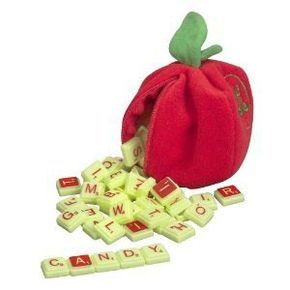
There is also Scrabble Apple. It has no grid. Letter tiles come in a plush apple shape. Players flip them over one by one. It is a race to build words the fastest.
Global Reach of the Classic Word Game
Scrabble is huge worldwide. It makes sense that it is not just in English. You can play in Spanish. German. French. Swedish. These are just four of the 29 languages available.
Lots More Information
Related HowStuffWorks Articles
- How Checkers Works
- How Yahtzee Works
- Top 10 Putting Tips
- How Mahjong Works
Sources
- Hasbro. “About the Scrabble Game.” (March 26, 2010) http://www.hasbro.com/scrabble/en_US/aboutScrabble.cfm/
- Mattel. “Scrabble: History.” (March 26, 2010) http://www.mattelscrabble.com/en/adults/history/index.html
- National Scrabble Players Association. “Scrabble History.” (March 26, 2010) http://www2.scrabble-assoc.com/Images/Images/history%202009a.pdf