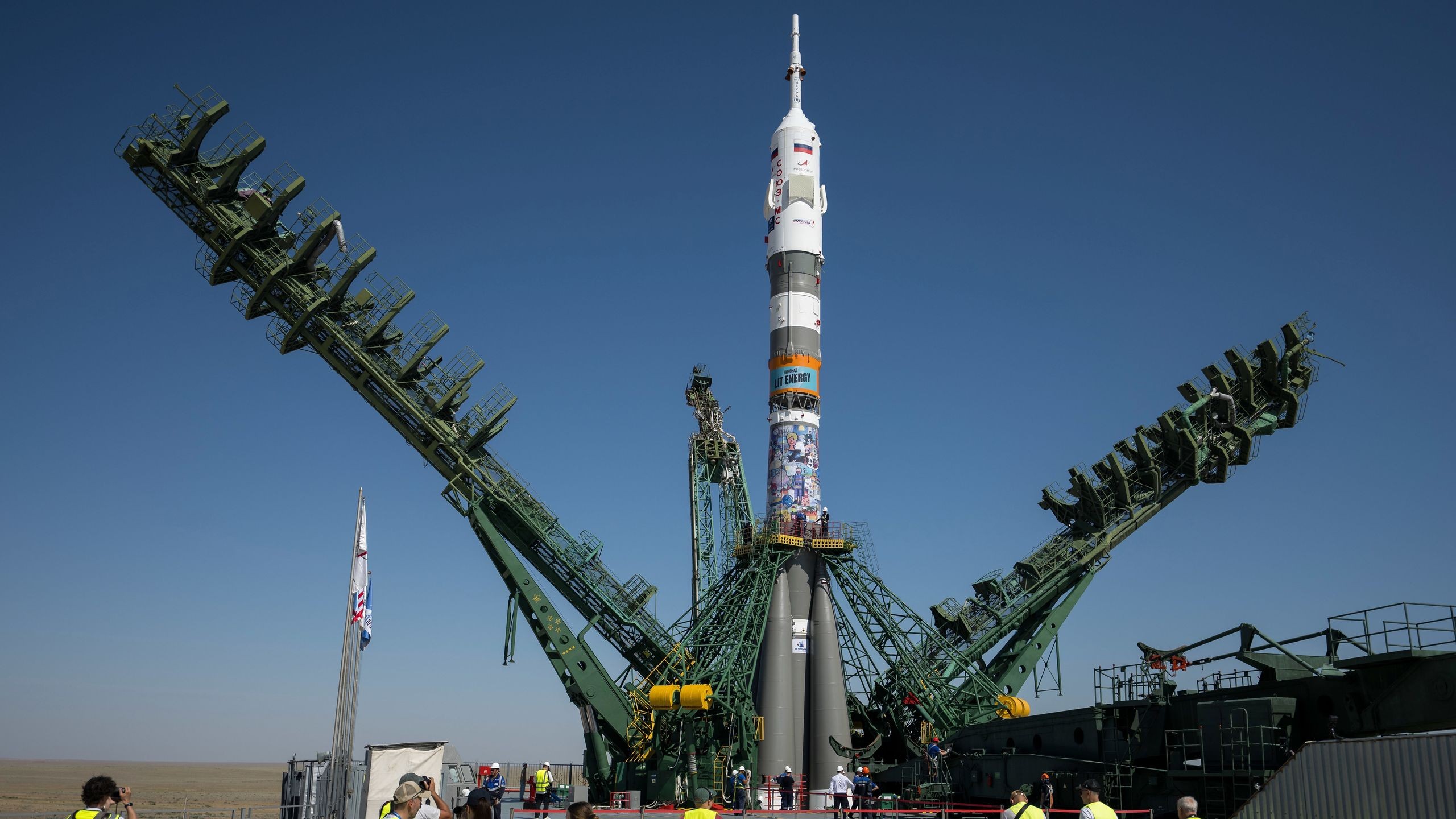
Lemonade on the fuselage.
It looks strange, doesn’t it.
On July 14, the Soyuz MS-29 rocket lifted off from Kazakhstan carrying three astronauts toward the International Space Station. The vehicle was bright. Loud. And covered in branding for Лимонад LIT ENERGY, an energy drink. The ads were visible days prior when the rocket rolled out, captured in photos now circulating online.
Not just corporate greed, though. The same rocket featured drawings made by children with cancer. Beside the artwork, a phrase: “Life has no end.” It was an advertisement for the Unity Charitable Foundation.
Russia has always plastered its hardware.
Roscosmos often uses rockets for PR without direct payment. Back in June 2018. A Soyuz flew with the FIFA World Cup logo slapped on the side. Soccer season was in Russia then. It worked.
The space industry has tried ads before. Do you remember the space cola wars. Pepsi tried to fly their logo into orbit, though they ultimately failed to attach it directly to a spacecraft before the US government stopped it. Russia has been bolder.
- In 1990. A Soviet launch carried ads for Sony and Unicharm alongside a Japanese journalist from TBS.
- Later, after the USSR collapsed, the Mir space station itself displayed logos for RadioShack and Israeli milk brands.
- Then came the big one. A 2000 Proton rocket launch sponsored by Pizza Hut for $1.25 million. They even flew a special pizza to the ISS later that decade using salami instead of pepperoni since salami survives space better.
Nothing new here, except the context.
Recent legislation changes how Russia approaches this. Ars Technica reports that economic pressure from Western sanctions following the invasion of Ukraine in 2022 has pushed the government toward new revenue streams. Vladimir Putin authorized these recurring space advertisements to ease the budget strain.
The law went into effect on January 1, 20 will it last.
“Roscosmos has been granted the rights… to place advertising on space objects… [creating] a mechanism for attracting private investment… and reduce the burden on state budget.”
Private money saving the state. It works on paper.
The ISS remains a zone of awkward cooperation. Despite sanctions. Despite the war. NASA Administrator Jared Isaacman showed up on Tuesday. First time a NASA admin attended a Soyuz launch in eight long years. He watched the rocket vanish. He didn’t comment much. The mission continues. The ads stay up there.
We’ll see what the next patch looks like.