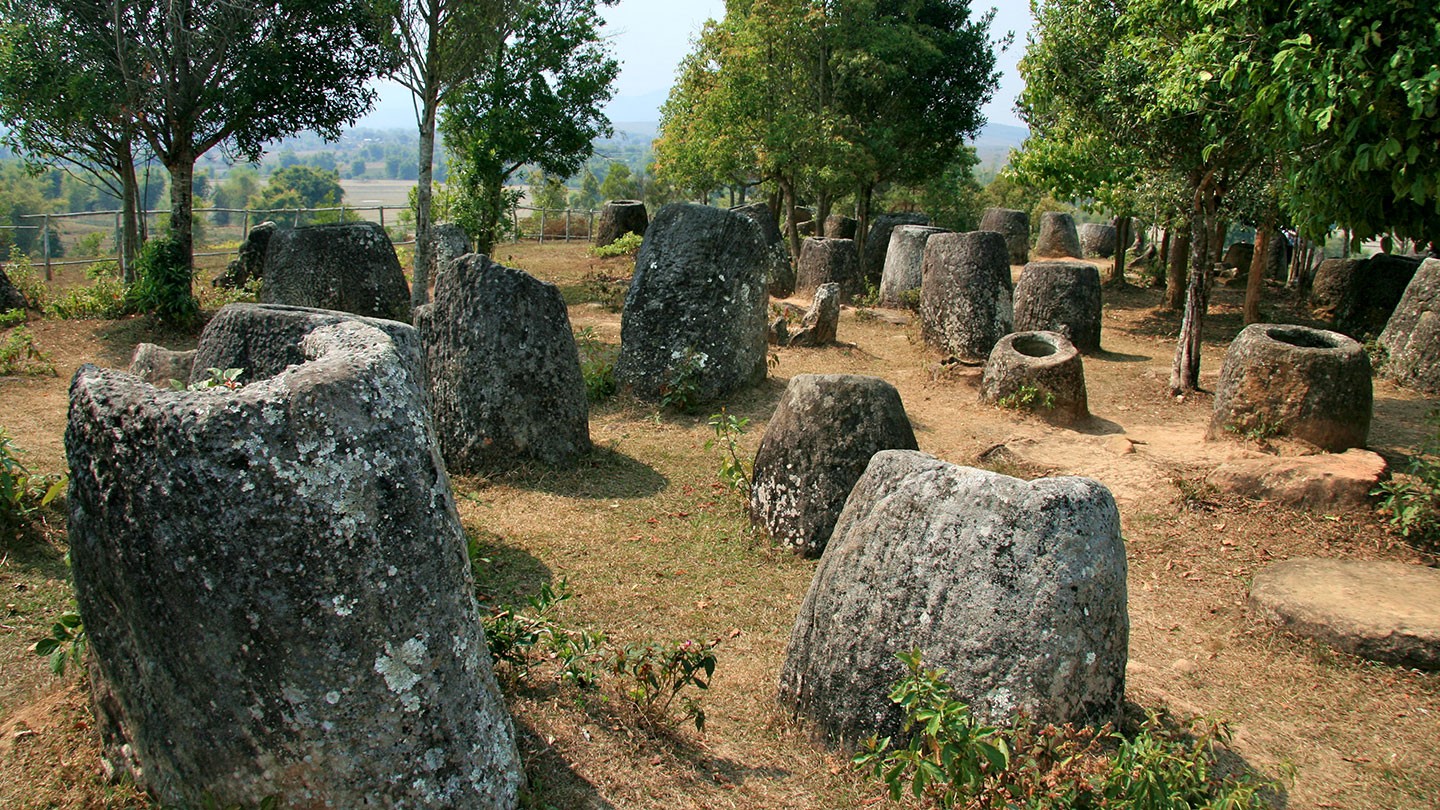
Local legends claim giants used them to brew rice wine.
Archaeologists just buried that theory. Well. Partially.
Excavators in northern Laos opened a massive stone vessel. They found bones. Thirty-seven people worth of them. Some dated back over a millennium. This discovery shakes the foundations of what we think we know about the “Plain of Jars.” It suggests these thousand-ton stones weren’t just decorative. They were crypts.
The new study lands in the August issue of Antiquity.
A Secondary Graveyard
The specific jar in question sits in the woods. Roughly seventy kilometers northeast of Phonsavan. On the Xieng Khouang Plateaue.
It is huge. Over two meters across. Inside? Not skeletons. Just fragments. Loose bones. Ash.
This points to secondary burial practices. The bodies rotted somewhere else first.
Maybe in smaller jars nearby. Nicholas Skopal, an archaeologist at James Cook Queensland, calls it distillation. Not of wine. Of flesh.
“They take the bones and put them… in this big jar.”
So the large stone acts like a communal locker for the deceased. Once the soft parts go away the bones move into the main archive.
Old Myths New Science
People have stared at these rocks for decades. French explorer Madeleine Colani visited in the 193os. She rejected the idea that the locals stored grain or water in them. Colani guessed they were for the dead.
Nobody listened. Mostly because the region is mined with unexploded ordnance from the Vietnam War. Clearing that crap is still a work in progress.
So the mystery festered.
Now Skopal confirms Colani was right about the burial aspect. But the timeline got rewritten. Radiocarbon dating shows the bones are about a thousand years old. Younger than the stones themselves. Colani thought the jars were two millennia old.
Did the later residents just borrow the ancient furniture for their own rites? Perhaps. Buddhism arrived later. It brought cremation. The jar contained ash and burnt fragments. That fits.
Who Built This?
Miriam Stark from the University of Hawaii watches this unfold with interest. She wasn’t involved in the dig but she expected to see this evidence.
“This is a collective mortuary assemblagement.”
But she asks the real question. Where did they sleep?
No houses have been found near the jars. No clear markers of which culture wielded the chisels. We have the graveyard. We don’t have the neighborhood.
Who were these people? We might never find the answer in the stone alone. The earth keeps its own secrets. Sometimes deeper than a jar lid can hide.