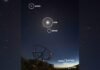
Look up at Monoceros, the unicorn constellation. There’s a faint, ghostly cloud there known as NGC 2261. It’s not just a static patch of dust. It’s a dynamic scene driven by a young, chaotic star named R Monocerotis.
This star belongs to a specific class called T Tauri variables. These are infant stars. They are still gathering mass and haven’t quite settled into their adult lives as main-sequence stars. They are volatile. They flare. They shift.
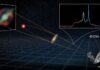
R Monocerotis sits deep inside a thick cloud of gas and dust. This isn’t empty space. It’s matter. Dense matter. The star pumps out energy. Mostly in the infrared spectrum, which humans can’t see directly. But that energy hits the surrounding cloud. It bounces off. It gets absorbed. It re-radiates.
That’s why the nebula changes brightness. It’s not flickering on and off like a faulty lightbulb. The cloud itself is reacting. It’s reflecting the star’s erratic output. One moment, more light hits a pocket of dust. The next, the angle shifts. The energy distribution changes. The nebula appears to pulse.
Why does this matter? It’s a textbook example of how young stars sculpt their surroundings. We see this in real-time, roughly 2,500 light-years away. It helps astronomers understand planet formation. Because that same dust cloud? It’s the raw material for planets. Watching how the star interacts with the dust tells us how a solar system begins. It’s messy. It’s loud. It’s bright. And it’s still happening.