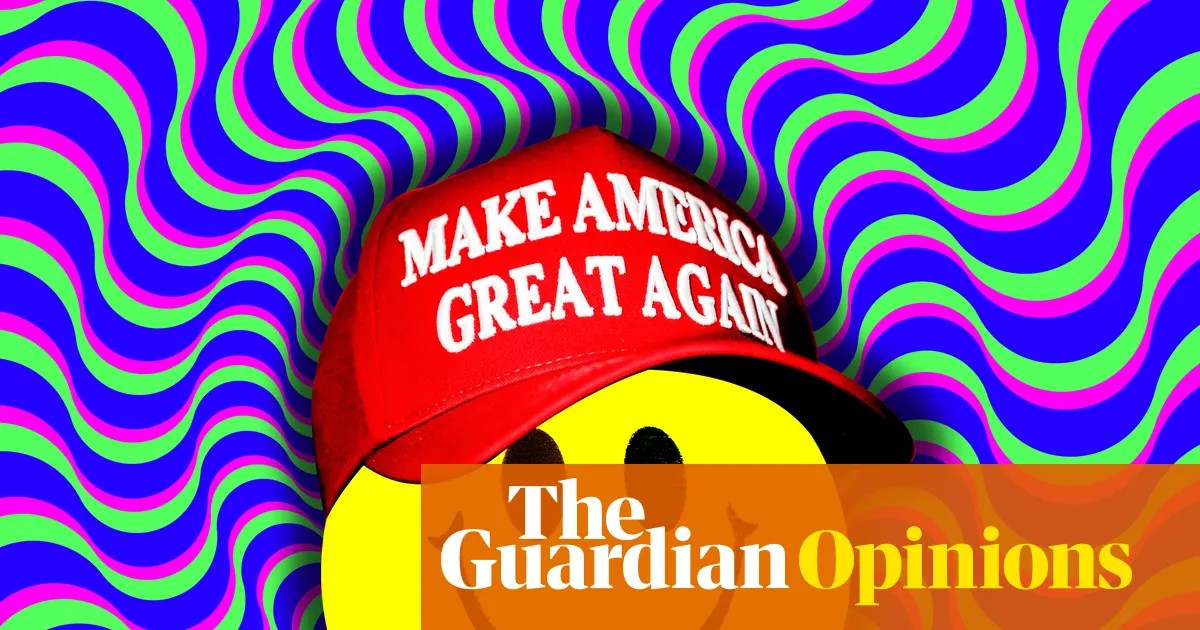
In May 1966, the American political establishment viewed psychedelics as a direct threat to the social fabric. During a heated Senate subcommittee hearing, Senator Ted Kennedy interrogated Harvard psychologist Dr. Timothy Leary, framing LSD as a “dangerous drug” responsible for the breakdown of societal order and the rise of anti-war protests. At the time, the “psychedelic movement” was synonymous with hippies, rebellion, and chaos.
Fast forward nearly 60 years, and the political landscape has undergone a startling transformation. Under a new presidential executive order, the US government is now actively accelerating access to psychedelic-based medical treatments—a move championed by figures within the MAGA coalition, including Robert F. Kennedy Jr. and influential voices like podcaster Joe Rogan.
The Great Rebranding: From Rebellion to Remedy
The shift from “dangerous drug” to “medical breakthrough” is not merely a change in political opinion; it is a fundamental rebranding driven by clinical science. What was once caricatured as a symbol of countercultural decadence is now being positioned as a transformative tool for treating chronic mental health crises, including PTSD, depression, and suicidal ideation.
This evolution has created an unlikely alliance:
– Veterans and First Responders: Groups traditionally aligned with conservative values are lobbying for psychedelic access to treat combat-related trauma and occupational PTSD.
– The Republican Right: Former Texas Governor Rick Perry has noted that psychedelic legalization is seeing significant support at the federal level from Republicans, a complete reversal of the 1960s stance.
– The MAGA Coalition: The movement has moved from the fringes of the “left” into the heart of a new, tech-driven conservative platform.
The Economic Engine: A Multi-Billion Dollar Frontier
The primary driver behind this rapid acceleration is arguably the massive economic potential. As the global population of people living with mental health disorders reaches a staggering 1 billion, the demand for effective treatments has never been higher.
The financial stakes are immense:
– Market Projections: Forbes predicts the psychedelic mushroom market could exceed $3.3 billion by 2031.
– The “Ozempic” Parallel: Analysts suggest that psychedelic medicine could become as lucrative as weight-loss drugs like Ozempic, providing a solution to one of the most widespread healthcare crises in history.
– High-Profile Investment: The “psychedelic renaissance” is being fueled by some of the wealthiest names in the global economy. In recent years, tech titans and venture capitalists like Peter Thiel and Sergey Brin have poured hundreds of millions of dollars into biotech startups focusing on compounds like ibogaine.
The Silicon Valley Connection
The current surge is deeply rooted in the culture of Silicon Valley. There has long been a historical thread connecting psychedelic exploration with technological innovation. Iconic figures such as Steve Jobs, Bill Gates, and Sam Altman have all cited psychedelic experiences as part of their cognitive journey, helping to normalize the practice within the upper echelons of the tech industry.
This creates a unique political synergy: the alliance between the Trump administration and the tech oligarchy is fundamentally driving the deregulation and acceleration of these substances. While blue states like Colorado and Oregon have led the way in state-level reforms, the federal momentum is being shaped by a worldview that treats the human brain as “capital” to be optimized.
Conclusion
The era of “turning on, tuning in, and dropping out” has been replaced by an era of biohacking and venture capital. While this shift promises unprecedented access to life-changing mental health treatments, it also raises a critical question: will the future of psychiatric care be a public good, or a high-priced commodity controlled by a small group of tech and finance elites?