The ocean didn’t die. That was the takeaway.
The first trial of adding crushed olivine—essentially green sand—to the sea to suck carbon from the sky found no major harm to life on the bottom in its first year.
It happened off New York. It was promising. But do not let that lull you into a false sense of security. Researchers warn the picture might still be incomplete.
Emilia Jankowska led the study for Hourglass Climate. She sees potential. “There might be ways that it could work,” she says. Minimal effect? Maybe. Careful regulation? Absolutely necessary.
Why are we even doing this?
Because the UN says we need it. Planting trees isn’t enough anymore. Giant air filters aren’t enough. We need every tool available if we have any chance at stopping warming before 1.5°C becomes a distant memory. And with emissions still rising? We are scrambling.
Olivine is magnesium iron silicate. It comes from deep in Earth’s mantle, green and heavy. Naturally, it reacts with rainwater, grabs CO2, and eventually washes into the sea as stable bicarbonate. That locks carbon away for thousands of years. Nature’s original air conditioner.
We could spread this on farmland. It’s been studied. It might pull a billion tonnes of CO2 a year. But Vesta, a US startup, wants to skip the farms. They want to throw it straight into the ocean.
More CO2 dissolves. The ocean becomes hungrier for atmospheric gas. Simple logic.
Except.
There are risks. Heavy metals. Nickel. Chromium. Lab studies show crustaceans soaking them up. Also, physics. Sand smothers things. Snails, worms, bottom-feeders. If you bury them, they starve or suffocate.
So in 2022 Vesta tested the theory.
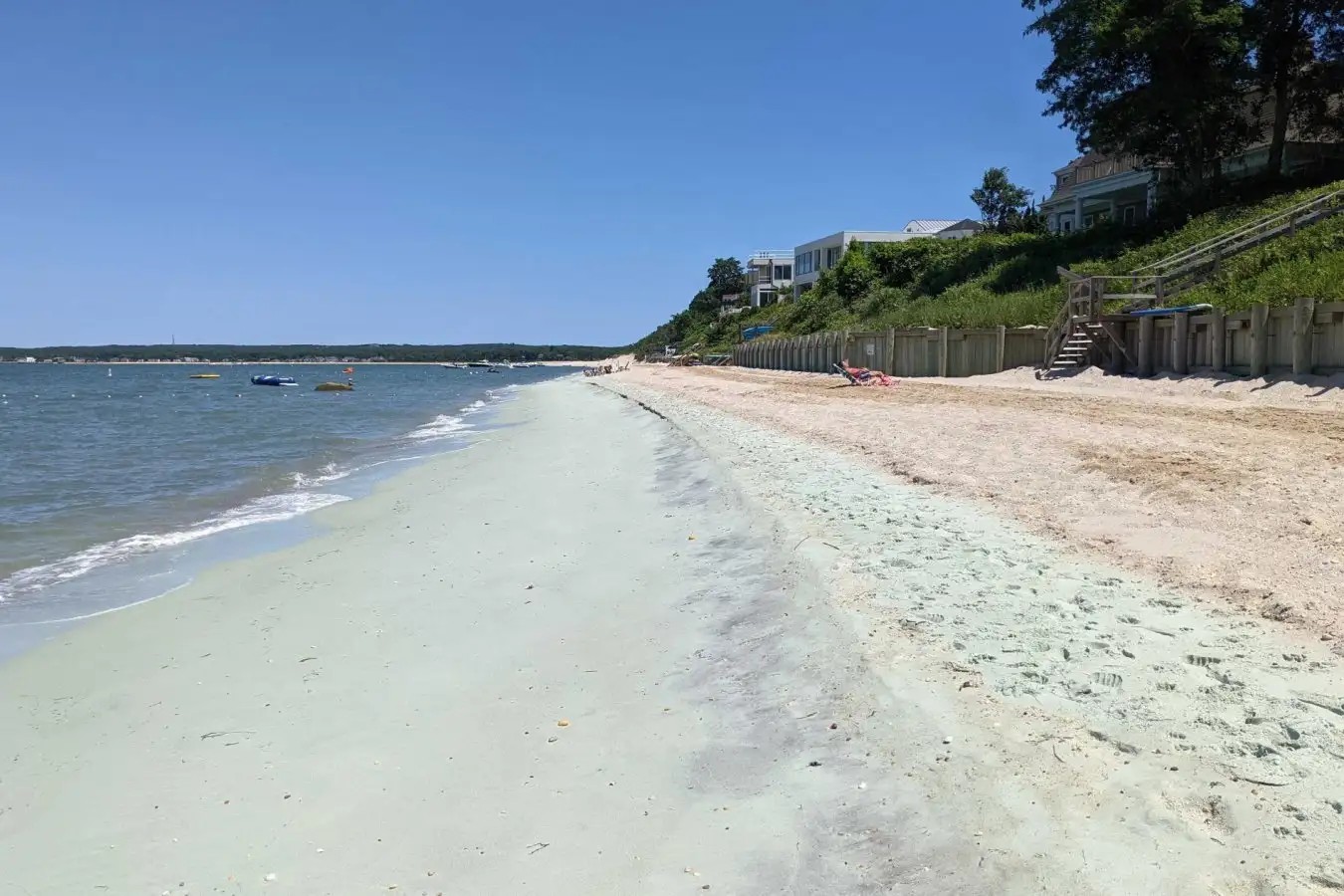
They dropped 650 tonnes of green olivine onto a beach on Long Island. They buried it under 13,500 regular beach nourishment tonnes because storms are eroding the coast anyway. The waves did the rest, dragging the minerals out to sea.
Jankowska’s team scooped sediment before, during, and a year later. Out to 160 meters. They checked against spots with just normal sand. Against spots with nothing.
One tiny worm, the fringed bloodworm, crashed in number.
But then it bounced back. Two months and the ecosystem was back to normal levels. The diversity changed, yes, but it also changed in the plain sand areas. Turns out beach nourishment is pretty disruptive regardless. You mess with the seabed, you get results.
The scary part? The metal toxicity.
Nickel. Cobalt. Manganese. Concentrations stayed low. Why? The sea moves. It dilutes. “The natural system is so dynamic,” Jankowska notes. Dissolving parts vanish into the vastness quickly.
Wait, a conflict of interest check?
Vesta did the monitoring. Jankowska used to work there. Her org got grant money to check the data. Transparency matters. Good thing they did.
Christopher Pearce at the National Oceanography Center thinks it matters. He likes that we are moving from beakers to real water. “A really critical study,” he calls it. He points out a trade-off, though. Precipitation of calcium carbonate traps those heavy metals, yes, but it also stops the water from drinking in more CO2. There is always a cost.
Then comes the skepticism.
James Kerry of OceanCare doesn’t buy the “no adverse effects” headline. He says it is too strong. The olivine was likely buried most of the time. Hidden under layers of boring white sand.
“It’s a lack of accumulation,” he argues. “Not proof it is safe. Proof it wasn’t exposed enough.”
Fair point. If you can’t hurt them, you haven’t tested you properly.
The game is moving faster now.
North Carolina, 2024. Vesta dropped 8,200 tonnes—much more, deeper water—450 meters out. Preliminary reports? Life returned. Diversity bounced. Hourglass is still crunching the numbers on metal buildup.
Will it be safe? Maybe.
Will it be enough? Only time tells.
The ocean absorbs. The ocean dilutes. The ocean does not ask questions.
We are putting more pressure on a system we barely understand, hoping the math works out before the temperature does. 🌊