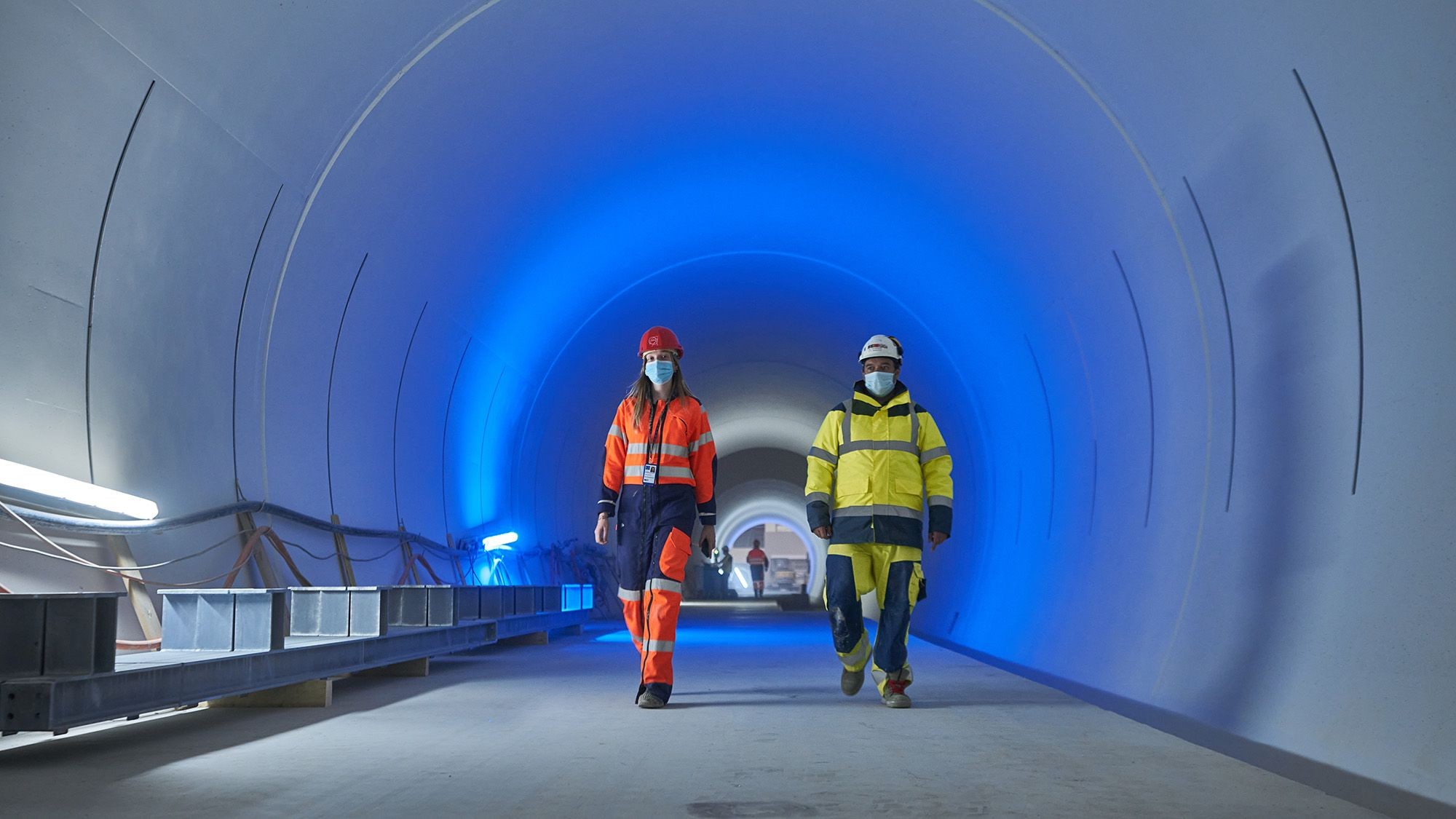
Big machine. Off.
The Large Hadron Collider just shut down. Monday morning. It stays dark for four years. Until 2030.
This isn’t a breakdown. It’s an upgrade. A massive one. The goal is simple, aggressive. Turn it into the High-Luminosity LHC. That name sounds clunky. HiLumi LHC does the job.
We want to smash more stuff.
Ten times more particle collisions. Roughly.
Think about the last time you saw anything explode at that scale.
“From Monday, we will be entering new phase.” — Markus Zerlauth, project chief
He calls it an important moment. Fair enough. Since 2009 protons have been banging heads in this 17-mile ring straddling the France-Switzerland border. Near Geneva. It’s where physics happened. Specifically, where the Higgs boson was found in 2012. The particle that explains why things have mass.
But that was the old setup.
This is shutdown number three.
First break in 2013. Two years. They welded magnets and bumped the energy. Second break lasted longer. 2018 to 4222. Lots of maintenance. Replacements. Boring work.
Now? This is LS3. Long Shutdown 3.
They are swapping out 1.2 kilometers of magnets. Zero to four feet of superconducting steel. Plus other parts. Across the whole CERN complex dozens of projects are happening at once. Thousands of people. Engineers, physicists, technicians. It’s a logistical nightmare. Or a triumph depending on your day.
“It really is an opportunity to explore universe in way we haven’t done before.” — Mark Thomson
That’s the director talking. He’s excited. Should you be? Maybe.
The machine will be brighter. “Luminosity” is the jargon for how hard things hit each other. We are tripling the collision rate. More crashes. More data.
What does data get us?
Answers. Or better questions.
The Standard Model is our map of particles. It works great mostly. But it’s incomplete. Missing dark matter. Dark energy. The stuff making up most of the actual universe. We can’t see that stuff directly. Not yet.
With HiLumi LHC we’ll churn out roughly 380 million Higgs particles. The current machine has only made 55 million so far.
Do the math. More samples means finding rare glitches. Weird things that don’t fit the model. Breaks in the code of nature.
We’re going to dig deeper into antimatter. The early universe conditions. Maybe finally explain what gravity is made of if you squint right.
Work continues though. Researchers aren’t idle. They’re mining old data. Sifting through terabytes collected during Run 3. Looking for hidden signals.
Meanwhile the iron rests.
The tech used to build this isn’t just for physics nerds. CERN invented things we use daily. Medical imaging. Art restoration tools. Sensors in your phone maybe. You never notice. They work seamlessly. Wait. Can’t use that word. They just work.
The machine wakes up in 2030.
It’ll run hard then. Until the 2040s. When it finally dies.
Then what?
Probably something bigger. Something we can’t imagine yet.