$600 million. That is the price tag NASA just slapped onto a trio of private companies. The goal isn’t just a splashy landing. It is infrastructure. Permanent stuff.
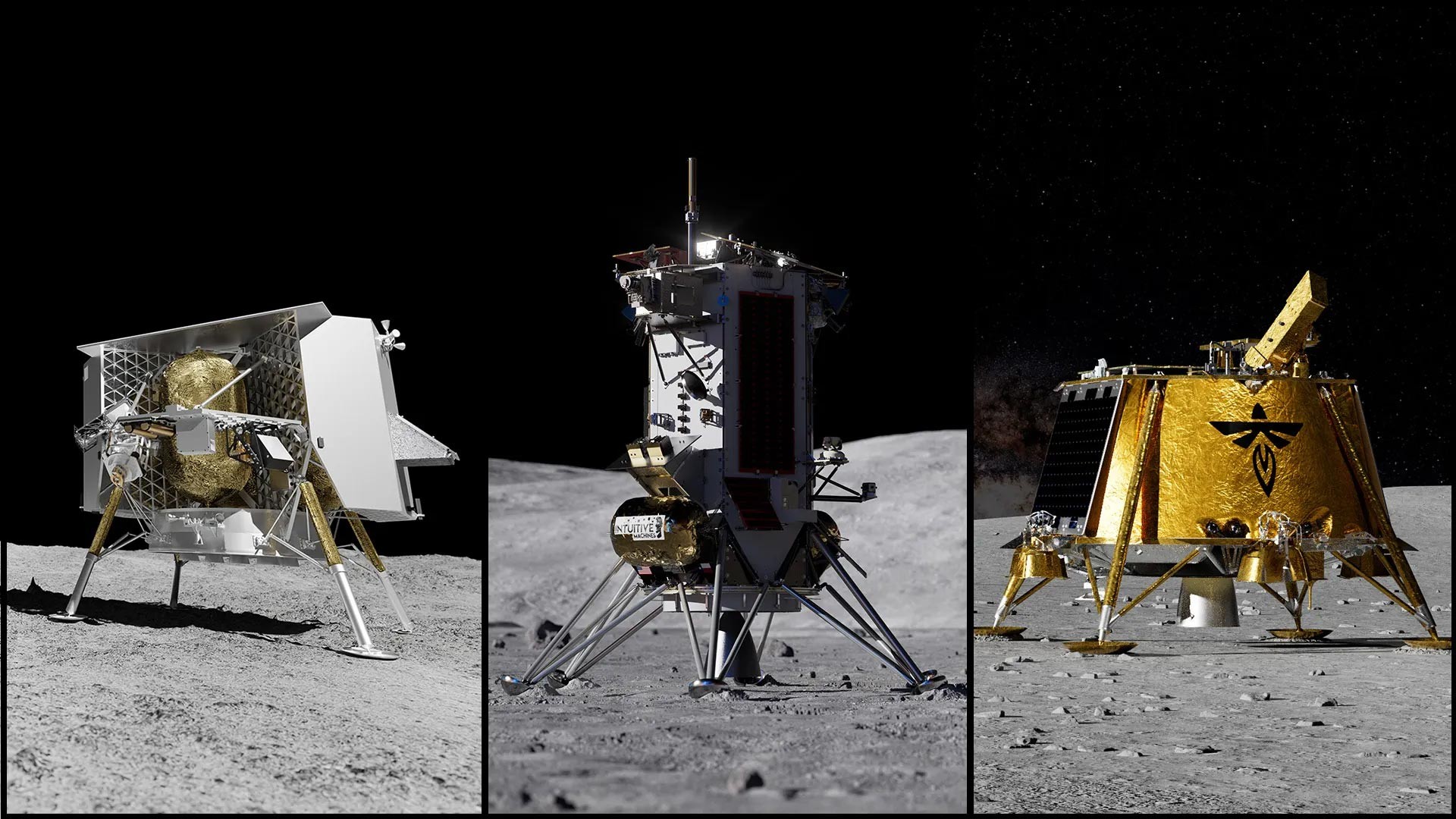
Astrobotic. Firefly Aerospace. Intuitive Machines.
Three names. Four missions. All set for late 2028.
These aren’t experimental moonshots in the old sense. They are delivery runs. Cargo. Science kits. The agency calls this the Moon Base Program. We call it the grind before the glory.
Lori Glaze, who oversees human spaceflight at NASA headquarters, called it a commitment to “accelerate.” That is corporate speak for “we are running out of patience.” They want a long-term presence. They want skills. They want to prosper, or at least survive.
Who gets paid what?
Astrobotic takes the lion’s share. $297.9 million. Two drops.
Firefly gets $144.2 for one.
Intuitive Machines? $148.3. Also one.
All three will fly upgraded versions of landers that have already made it to the moon. This is the Commercial Lunar Payload Services (CLPS) initiative. It is the workhorse.
“We’re building a proving ground,” Ryan Stephan, acting director of cargo landers, said. “Move quickly. Learn. Iterate.”
Iterate is the keyword. You fail fast. You try again. That is the philosophy now.
New hardware in the wings
NASA isn’t waiting. Seventeen deliveries are now planned. More American companies are getting a look.
One concept has a catchy name. PROMISE. It stands for Polar Rover for Observation, Mapping, and in-Situ Exploration.
Think of it as a space hybrid. It borrows heavily from Mars rovers Perseverance and Curiosity. Scientists might use it to dig. To map. To find resources that actually work. Water, maybe. Ice. Something useful.
In coming months, NASA will ask for proposals on new landers. These need to carry power tech demos. Science instruments. Optical imagers for the south pole.
There is also a plan for a relay constellation. Communications. Navigation. The moon is silent out there. It needs ears.
What actually goes on the lander?
Every single one of these four missions carries the same trio of instruments. Repetition. Boring? Perhaps. Essential? Yes.
Dust is deadly
The Stereo Camera for Lunar Plume Surface studies (SCALPSS). That is a mouthful. It does something important though.
Landing on the moon kicks up dust. A lot of it. Engines scream. Dust flies. It clogs gears. It blinds sensors.
SCALPSS uses four cameras and stereo photogrammetry. It makes a 3D movie of the mess.
“We will gather observations involving different engine sizes and propellants.”
High-res images. That helps modelers predict how soil erodes. How debris throws itself across the surface. As heavier ships arrive, this matters more. You don’t want to blind your neighbor.
Passive mirrors for guidance
Next is the Laser Retroreflector Array (LRAs).
It is cookie-sized. Eight quartz corner cube prisms inside an aluminum dome. No power needed. No maintenance.
Orbiting spacecraft shoot lasers at it. The mirrors bounce them back. Boom. Precise navigation.
You already know where the moon is. LRs tell you where you are standing.
Previous missions have dropped these. Future ones will keep dropping them. It creates a global GPS for the moon. A network of passive markers. Simple. Reliable.
Shielding the astronauts
Finally, the Linear Energy Transfer Spectrometer. The LETS.
Space radiation kills. Not quickly, but steadily. It damages cells. It breaks electronics.
LETS measures this. It uses a tiny silicon detector to check the energy and type of incoming radiation.
It flies to different spots. Different times. NASA needs this data. It needs to build walls. Better suits. Safer habitats.
Joel Kearns, deputy associate for exploration, put it best. “It is akin to having weather stations.”
Weather on the moon is not rain. It is radiation. Dust. Impact hazards.
You check the forecast before you leave. You build your house accordingly.
The endgame isn’t clear
This is all part of a bigger picture. A long-term program.
Astronauts will return. They will walk further. They will stay longer.
NASA talks about a “Golden Age.” It sounds nice. It implies innovation. It implies discovery.
But the immediate future is dirt. Logistics. Dust clouds. Laser dots.
Will it lead to Mars? Probably. That is the pitch.
Will it be smooth? No.
We have the contracts. We have the tech. Now comes the hard part. Keeping it together out there.
Who knows how it will end. But we are heading to the shop floor. The lunar shop floor.
It’s going to get dusty. 🌑