The sun was angry back in 1200.
It wasn’t the lazy, eleven-year nap the star takes today. No, between 1200 and 1704 CE the solar cycle tightened into a short, intense breath. Just seven or eight years. That’s the story whispered by wood and ink. By buried tree roots in northern Japan. And by the diary of Fujiwara no Teika.
A poet’s sky
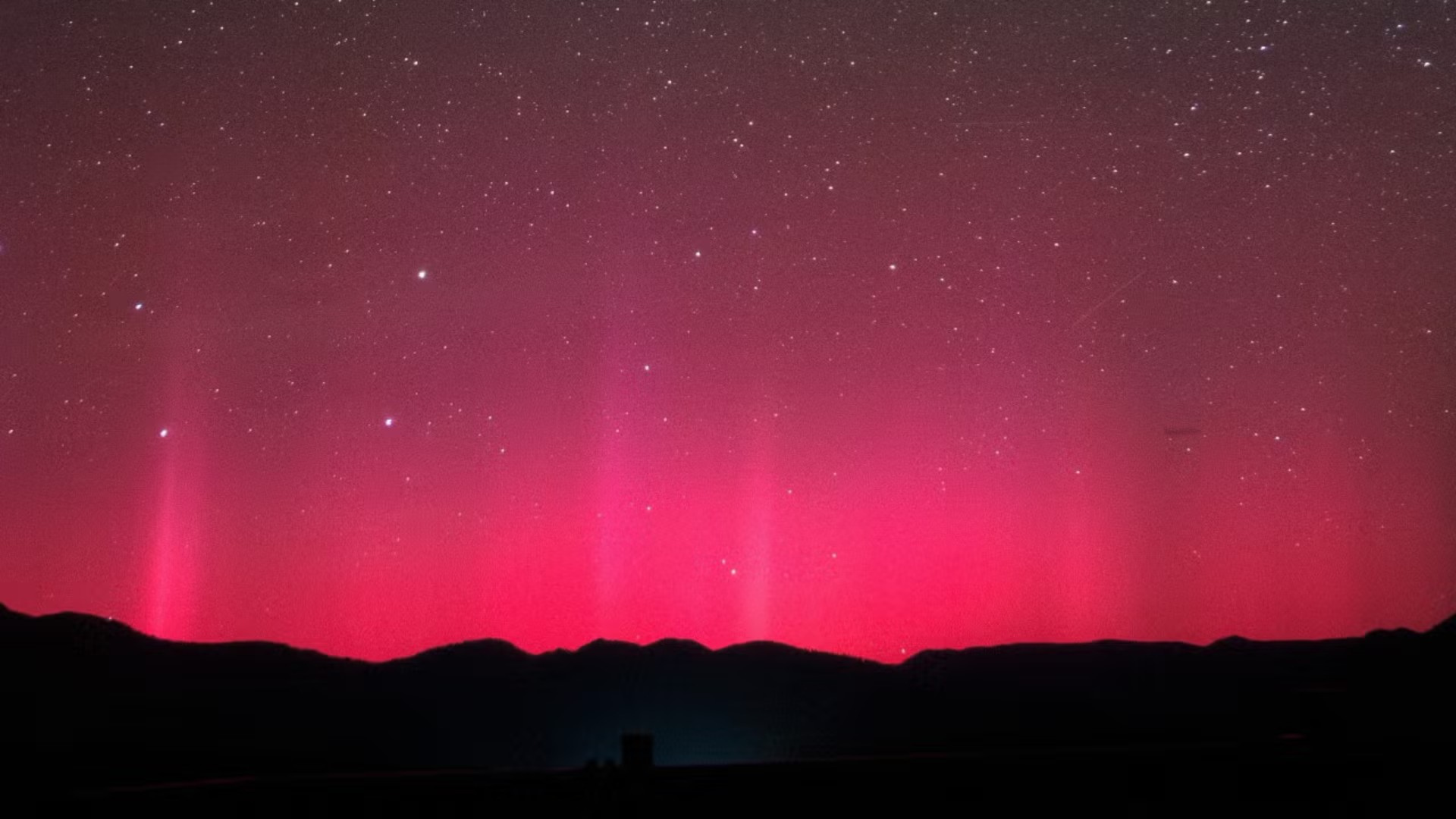
Teika wrote Meigetsuki. He lived 1162-1241. Courtier. Poet. He noted red lights over Kyoto in February 1204.
“Red lights in the northern sky.”
Kyoto sits at 35 degrees latitude. Auroras usually hug the poles. To see them that far south requires a massive solar hammer blow. Teika had no idea he was witnessing physics in motion. Chinese astronomers saw it too. A shared moment of cosmic spectacle.
The carbon clue
Solar proton events (SPEs) are nasty business. Flares and coronal mass ejectione (CMEs) accelerate protons to ninety percent the speed of light. Dangerous for astronauts. Terrifying for satellites. Most protons bounce off Earth’s magnetic field. Some don’t.
They punch through.
When those particles hit the atmosphere, they smash into gas. This collision creates carbon-14. The unstable isotope drifts down. Plants breathe it in. Trees trap it in rings.
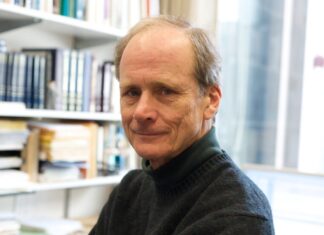
Hiroko Miyahara leads a team at the Okinawa Institute of Science & Technology (OIST). She looked for these events in asunaro tree fossils from Japan. Borne wood. Dug up from the dark.
They found a spike in carbon-14. Winter 1200 to Spring 1201.
A “sub-extreme” SPE.
Hidden history
Previous research chased only the biggest monsters. The rare, catastrophic blasts. But Miyahara’s team argues the medium-storms matter. Sub-extreme events carry ten to thirty percent of the energy of the big ones. They happen more often.
We can’t ignore them.
“Our paper provides a basis for detecting them.”
Using dendroclimatology (studying ring spacing to track climate shifts), the team mapped the solar cycle. It wasn’t smooth. It was jagged. Fast. The sun was supercharged. The dated SPE happened at the peak of this frantic cycle.
But here’s the weird part.
The auroras Teika saw happened when the cycle was winding down. Approaching minimum. Usually space weather follows activity. Flares spike during peaks. This defied expectations. A strong light in the twilight of a cycle.
Sun spots don’t lie
Isotope studies of beryllium-10 and carbon-14 show solar cycles vary. We’ve known this for a while. The sun is a fickle beast over ten millennia. But there’s a catch.
For decades we believed 1940 started the strongest solar period in 9,000 years. The Modern Grand Maximum.
This data shatters that pride.
Medieval times hit harder. Or at least faster. More volatile.
We think we know the sun. We monitor it daily. We track its spots. Yet our star still holds secrets in its rings. And in a poet’s notes.
History keeps its own records.
We just have to know how to read them. Or not.
🌌