NASA is launching the Lucy spacecraft toward Jupiter. The goal is straightforward but ambitious. Scientists want to visit the Trojan asteroids. These rocks share Jupiter’s orbit. They are ancient relics from the solar system’s birth. By studying them, researchers hope to understand how planets formed.
The mission targets a group of objects often overlooked. Most people think of planets or moons when they think of space exploration. Asteroids are just space junk to many. But these specific asteroids hold clues to the early solar system. They are time capsules. They have remained largely unchanged for billions of years.
Why Jupiter’s Trojans Matter
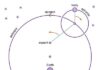
The Jupiter-Trojan asteroids are located at stable points in Jupiter’s orbit. These points are called Lagrange points. Gravity keeps the asteroids trapped there. They travel ahead of or behind the giant planet. This makes them easy to target for a spacecraft.
Why study them now? The answer lies in their age. These objects date back to the formation of the outer planets. They contain primitive material. This material has not been heated or altered much over time. It offers a pristine view of the solar nebula. The nebula is the cloud of gas and dust that collapsed to form our sun and planets.
Without Lucy, we have only sampled a few asteroids. We have landed on Bennu and Ryugu. We have flown by Vesta. But these are main-belt asteroids. They are closer to Mars. The Trojans are different. They likely formed in the outer solar system. They provide a unique data set. This data can confirm or refute theories about planetary migration.
The Science of Planet Formation
Planets did not just appear. They grew from smaller bodies. Rocks collided and stuck together. This process is called accretion. Scientists study asteroids to see how this worked. But main-belt asteroids may have changed. Heat from radioactive decay can alter them. Impacts can reset their clocks.
The Trojans are colder. They are further from the sun. They are drier. This preservation is key. It allows scientists to analyze their composition. They can look for organic compounds. They can measure water content. These details reveal the conditions of the early solar system.
Lucy will visit multiple Trojans. It will not just fly by one. The spacecraft will encounter seven asteroids. This variety is important. One size does not fit all. Some Trojans may be dark and carbon-rich. Others might be brighter and contain more ice. Comparing them gives a broader picture. It helps scientists build a model of the outer solar system.
“The Jupiter-Trojan asteroids are time capsules. They have remained largely unchanged for billions of years.”
How Lucy Will Operate
The spacecraft is named after a hominid fossil. The fossil Lucy helped trace human ancestry. This mission traces planetary ancestry. The design is robust. It needs to survive a long journey. It also needs to handle multiple encounters. The mission will last over a decade.
The spacecraft will use gravity assists. It will swing by Earth. It will pick up speed. This saves fuel. It extends the mission’s reach. Lucy is not just going to Jupiter. It is going to the Lagrange points. It will visit asteroids in both the L4 and L5 clouds.
The instruments on board are specialized. They