Depression is relentless.
For 300 million people worldwide, it’s not a bad day—it’s the only kind of day they know. Medication helps some. Therapy helps others. But then there is the stubborn third. The ones who try everything, fail at everything, and keep trying because the alternative is just… suffering.
The problem isn’t just treatment failure. It’s the silence after success. Even when a drug works, it often stops.
Enter a small device. And a big trial.
Researchers led by Charles Conway at Washington University in St. Louis found that stimulating the vagus nerve with an implanted generator can produce lasting relief. Not quick relief. Not universal relief. But real, durable relief for some of the hardest cases.
“We’re seeing people getting better and staying Better,” says Conway.
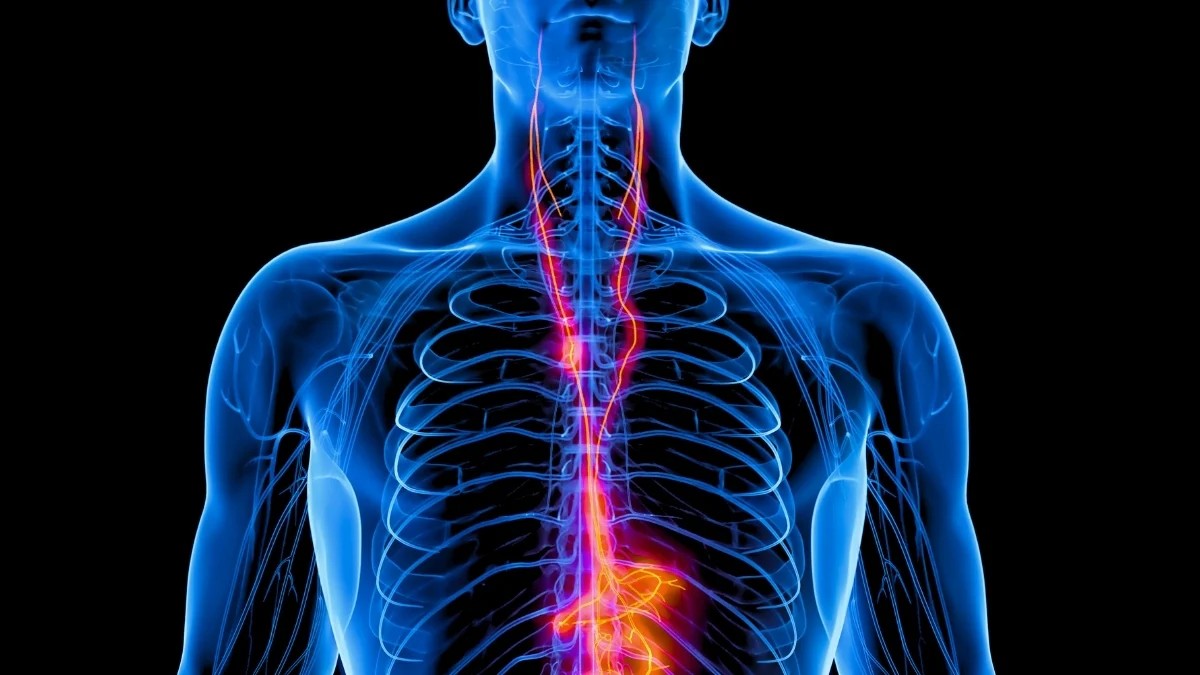
The device is called vagus nerve stimulation or VNS. It looks like a pacemaker, about that size too, tucked under the chest skin. A thin wire runs up to the left vagus neck. The nerve itself? It’s the longest in your body, threading from your brainstem down through the lungs, heart, and gut.
The device zaps that nerve with low-level electrical pulses. Brief. Regular. Unassuming.
The Trial That Targeted the Worst Cases
The data comes from the RECOVER trial. Four hundred ninety-three people. All in the US. All exhausted by medicine.
The numbers are brutal. On average, each patient had failed 13 treatments prior to joining the study. Many had tried dozens. They had spent more than half their lives ill.
Half of them got the active device for the first year. The other half? They got a placebo. Just the shell, no current. A control group for those who couldn’t be cured by hope alone.
By month twelve, the active group was beating the controls. Last year, two papers came out showing promise.
The 2026 paper digs deeper. It looked at the 214 patients whose devices were active from day one. Did the improvement stick through year two?
For most? Yes.
About 69 percent saw a meaningful change by twelve months. Of those, over 80 percent held onto those gains or got even better by twenty-four months. We’re talking depression scores. Quality of life. Functioning.
The strong responders? The ones whose symptoms dropped by 50 percent or more at twelve months? Ninety-two percent of them were still benefiting at the two-year mark.
Conway calls the result shocking.
One in five patients was effectively free of depressive symptoms. Not managed. Not coping. Free.
That’s atypical. Treatment-resistant depression studies rarely show benefits lasting this long, let alone two years. These were the sickest patients ever studied, according to Conway. On average, they’d carried this weight for 29 years. three quarters of them couldn’t work.
Slow Work Pays Off
Here is the kicker.
One third of the patients saw no benefit at twelve months.
By month twenty-four, that number shrank. People who looked like failures at the halfway point suddenly improved. VNS takes time. It drags. But if you stay in it? The payoff might arrive later than you expected.
Why does this matter?
Because antidepressants often take weeks to kick in. Waiting is part of the treatment. A device that needs two years to reveal its full effect forces you to have faith in a machine. Or faith in your body’s capacity to heal, if you just nudge the right nerve.
Follow the Money
There’s a caveat, obviously.
LivaNova, the company that makes the device, funded the trial. They want this therapy covered by Medicare. Currently? It’s not. The FDA approved VNS for resistant depression way back in 2005. Nobody fully knows exactly how it fixes a broken mind, but it’s been allowed since the early internet days.
The data aims to tip the scale for federal insurance coverage.
This isn’t a rapid fix. Not everyone responds. It requires surgery. It requires waiting.
But for the people who have tried 13 drugs and felt nothing? Maybe “slow” is exactly what they needed all along.
The study lives now in the International Journal of Neuropsychopharmacology.
We don’t have a magic pill for the rest of us yet.
Just a wire. And time.