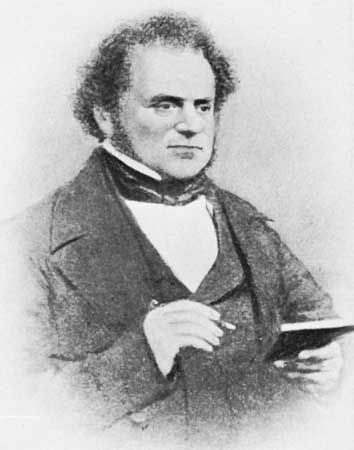
Most people associate the democratization of color art with the lithographic boom of the late 19th century or the digital revolution. They forget about George Baxter. Born in Lewes, Sussex, in 1804, Baxter was an engraver and printer who realized that black-and-white reproductions were boring. He wanted color. He wanted it cheap. And he wanted it for everyone, not just the wealthy collectors who could afford hand-colored engravings.
His solution wasn’t just clever; it was a mechanical workaround for a problem that had stumped printers for decades. Before Baxter, adding color to printed images meant hiring artists to hand-paint each sheet. It was slow, expensive, and inconsistent. Baxter’s process, patented in 1835, changed that. He figured out a way to layer colors using multiple plates without the mess of hand-painting.
The result? Reproductions of famous paintings that actually looked like paintings. Not flat, sepia-toned sketches. Real color. For the first time, a middle-class family could hang a print of a Turner or a Constable in their parlor without spending a fortune. It was mass production of beauty.
But the story of Baxter’s invention is also a story of missed opportunities and industrial blind spots. He didn’t just invent a new way to print; he exposed a flaw in how the publishing industry valued labor versus efficiency. The process he pioneered was technically brilliant. It was also commercially disastrous. Why? Because the established players refused to adapt. They liked the old ways. They liked the high margins. Baxter’s low-cost, high-volume model threatened the entire ecosystem of elite art publishing.
So, while Baxter’s name didn’t become household, his technology did. It set the stage for everything from color magazines to the glossy ads you see today. He proved that color could be cheap. The question then became: who would capitalize on that truth?
How the Baxter Process Actually Worked
To understand why Baxter’s invention mattered, you have to look at the mechanics. Before 1835, color printing was a nightmare of logistics. Printers had to align multiple plates perfectly. If one plate shifted even a millimeter, the image blurred. If the ink wasn’t mixed correctly, the colors bled.
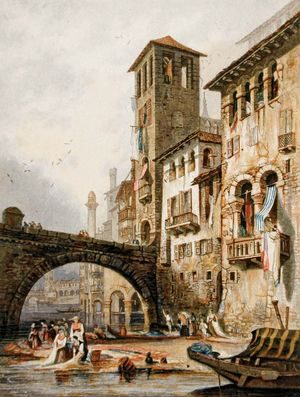
Baxter’s method was different. He used a technique called “chromatic printing.” Instead of printing a full color image in one go, he printed the black outline first. Then, he overlaid translucent washes of color. This allowed for a soft, watercolor-like effect. It wasn’t bold, primary colors. It was subtle. It was elegant.
The key innovation was in the registration. Baxter developed a system that allowed him to align the color plates with unprecedented accuracy. This reduced waste. It increased speed. And it lowered the cost per unit. Suddenly, a color print that once cost as much as a week’s wages could be produced for pennies.
This wasn’t just a technical fix. It was a economic disruption. Baxter showed that quality and quantity didn’t have to be mutually exclusive. You could have both. The industry, however, wasn’t ready for that trade-off. They saw the low price point as a threat to prestige. They ignored the volume.
Why Mass-Produced Color Art Changed Society
The Man Behind the Color Revolution
George Baxter didn’t just make pretty pictures. He built a technical system that changed how mass-produced art looked. But for all the royalty and prestige, the man himself remained broke.
He came from a long line of ink and paper. His father, John Baxter (1781–1858), ran a printing press in Lewes. The Baxters issued the famous “Baxter” Bible. It was an illustrated hit. George moved to London in 1827. He needed more room to print.
A Queen’s Visit, No Profit
In the capital, he worked for publisher George Mudie. He also produced prints for the London Missionary Society. The work got attention. High-born clients bought his pieces. Queen Victoria summoned him to court.
He had the audience. He lacked the business sense.
Competition was killing his margins. Cheap colored lithographs flooded the market. They undercut him. He didn’t profit greatly from his own invention. He lost money while others got rich on his methods.
The Secret Recipe
Baxter’s process was obsessive. He used carefully etched plates. Each layer required precision. A handpress did the work. It wasn’t a factory line. It was art.
He used register points to align colors. This kept the image sharp. He demanded the finest colors. Oils and paper had to be perfect. He mixed the pigments himself. No shortcuts.
But he left no record of the mix. We don’t know the composition. The formula died with him.
The result was unmatched vibrancy. No lithograph could match the depth.
His colors popped in a way cheap prints couldn’t. The technique was sound. The business model was not. He sold the method. He kept the losses.