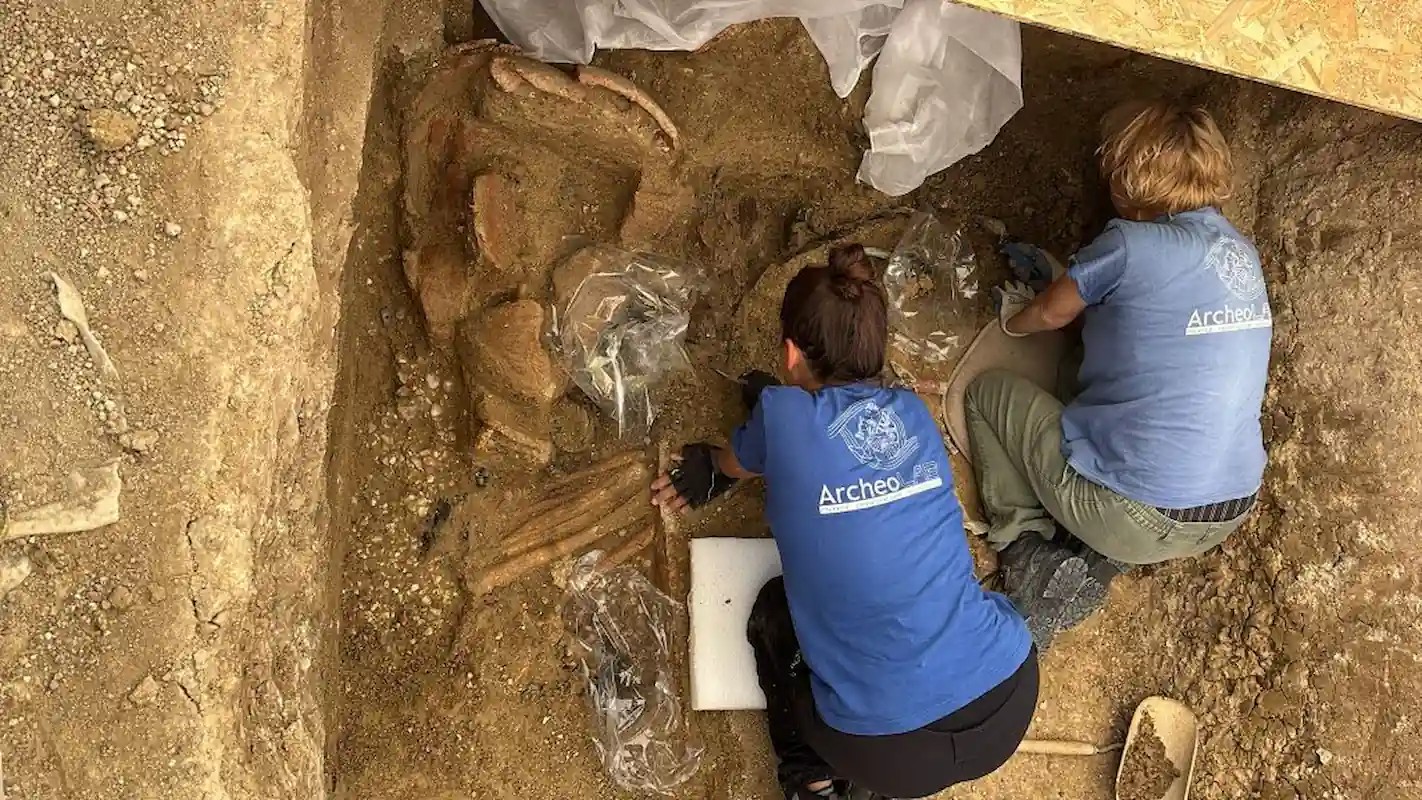
Archaeologists found a body. A big one. The remains of a “warrior prince” from 2,500 years agO.
It sits on the Adriatic coast in Italy. Near Sirolo. Not some obscure patch of dirt, but a small town that’s seen things. Along with the prince came his chariot. His helmet. Weapons meant for use, or at least for show.
This isn’t just a lonely grave. It’s part of a larger complex. One that tells us things we didn’t know about the Piceni. They were an Italic group living there in the 6th century B.C. Bordered by Etruscans to the north. We know almost nothing about them from writings, they didn’t leave much behind on paper. So we dig. And the dirt talks.
The Piceni are a mystery. Mostly silence. But their graves scream.
In 2020, archaeologists dug up another princely tomb in the Pini cemetery complete with an iron-wheeled car, weapons, and headgear. Now we have a second. Two is better than one for establishing patterns.
Here’s where it gets interesting. At the center of this new find is a massive circular palisade. Wooden posts. Strong ones. Inside lay a male burial. The body was interred around 500 B.C. right next to his currus a two-wheeled vehicle that went in whole. Intact. That’s rare. Hard to bury something that big without breaking it. He also had an ax. And bronze vessels with ceramic lids. Probably food. Or what’s left of a funeral feast.
Food for the road? Or just leftovers?
Right beside him lay a woman. She had textiles. Shoes. Fibulae. Ancient safety pins. Lots of them. They held her clothes together, probably held her burial shroud too. There was one huge fibula with a chunk of amber on her head. A hair clip? A statement piece?
This isn’t isolated history. In 1989, they found the “Queen’s Tomb” not far away. That woman had two chariots. Two mules. A mountain of stuff. So this new pair fits a pattern. Elite Piceni buried with serious wealth.
But the layout shocked everyone. Why? Because previous burial grounds used ditches. Moats of earth to separate the living from the dead. Standard procedure for the time, or so we thought. This cemetery didn’t have a ditch. It had a wooden fence. And it was built on a slight hill. On purpose. To be seen. To dominate the skyline. Monumental.
We used to think they dug holes. Turns out they built fences.
This is the first time experts have seen an entire “aristocratic nucleus” of Piceni people. Stefano Finocchi who directs the excavation calls it new perspectives on the elite structure. These weren’t just warriors hanging out. They were part of a network. Dense. Connected. Stretching from the central Adriac all the way into the main hubs of central Italy.
The artifacts are still under study. Lots of analysis to go. But the message is clear already. These rulers weren’t isolated hill folk. They were plugged in. Trading. Connecting. Powerful.
Who knew the dead had such busy schedules?
The soil gives up its secrets slowly. Piece by piece. We still have much to learn. About them. About who they were.