Air pockets have long been the cheat code for keeping things cool. Trap air, block heat, problem solved.
It works great for foam. It falls apart for anything needing to actually hold up under stress. Add air bubbles to plastic, you trade insulation for weakness. You get fragile material. Harder to make, too.
Researchers at UMass Amherst decided to scrap the air gap idea.
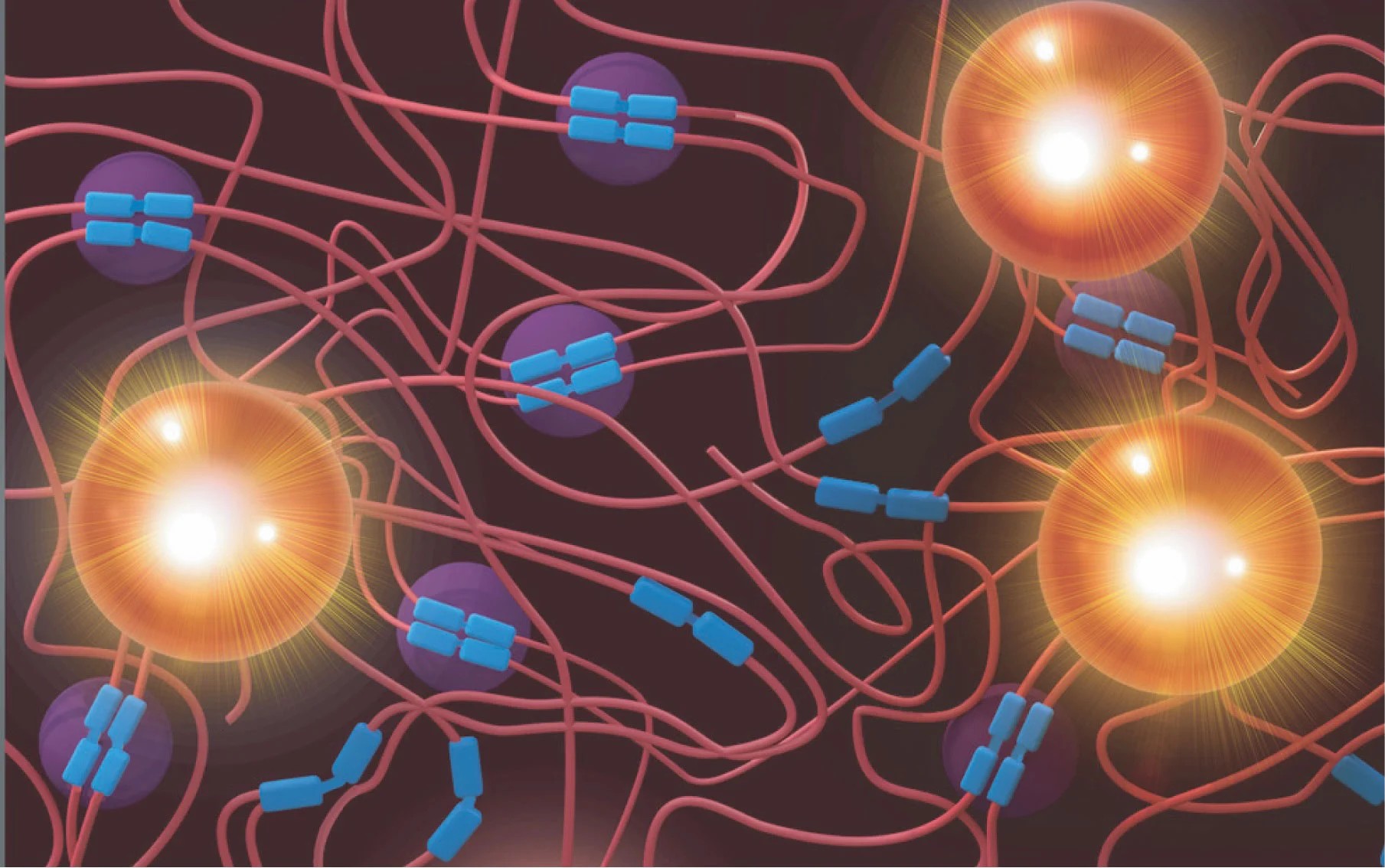
They looked at heat at the atomic level. In solid plastic, heat travels as vibrations passing from atom to atom. Organized movement equals fast heat transfer. Disorganized movement equals… slow motion.
Yanfei Xu, an assistant professor of engineering, wanted to disrupt the party.
The Bucket Brigade Analogy
Xu compares efficient heat transfer to firefighters passing buckets of water. Line them up perfectly? The water flows. Heat moves.
The researchers wanted the toddlers instead.
Disorganized. Moving in random directions. Carrying thimbles instead of buckets. That is the new target state for this plastic.
“Slow chaos”
That is the phrase Xu uses.
By engineering the polymer structure, specifically a hybrid of polyurethane and tetrahydrogy deoxybenzoin triazole.
What happened?
Thermal conductivity dropped by 17%. Not earth-shattering yet, but promising. The material stayed dense. It stayed flexible. And it became flame-retardant.
Think spacesuits. Spacecraft hulls. Better insulation for buildings or electronics without the flimsiness.
The goal is lightweight material that resists both heat transfer and fire simultaneously.
Why add empty space when you can just confuse the atoms?
The study, published in Materials Horizons, outlines the method for limiting accessible vibrational modes. Supported by the National Science Foundation and the FAA.
17 percent reduction is the proof of concept.
There is more work to do.
The path forward seems clearer. Disrupt the vibration. Keep the strength. Leave the air behind.