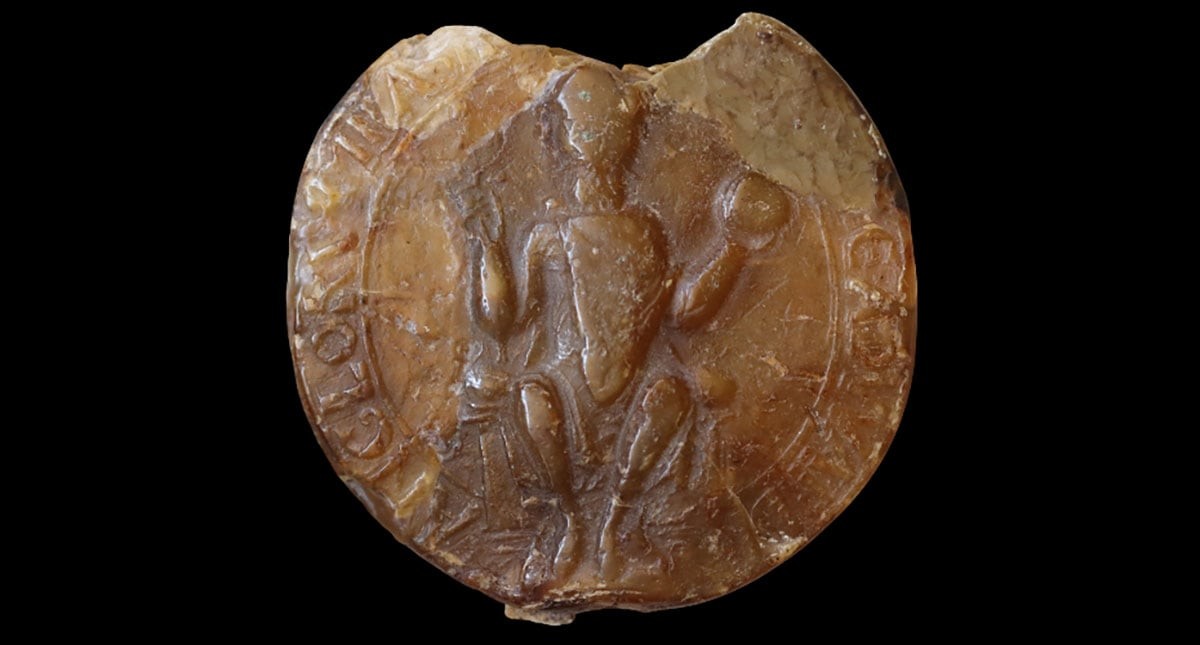
A rare 11th-century royal seal belonging to Edward the Confessor has been rediscovered after vanishing from a Parisian archive for more than 40 years. The object, known as the ‘Saint-Denis seal,’ is the best-preserved example of the three known seals used by the king who ruled England from 1042 until the Norman Conquest in 1066.
Its recovery is not merely a triumph of archival housekeeping; it provides tangible evidence of how Edward’s administration actively incorporated Byzantine and continental European influences into the machinery of English government. By analyzing the seal’s iconography and the documents it authenticated, historians can now better understand the diplomatic ambitions and bureaucratic innovations of pre-Conquest England.
The Rediscovery
The seal had been part of the Archives Nationales in Paris for nearly two centuries before disappearing in the 1980s. Its loss was a significant blow to medieval historians, as it was the only intact seal from Edward’s reign, offering unique insights into the iconography and diplomatic practices of the era.
In 2021, the artifact was located by Dr. Guilhem Dorandeu, a PhD student at the time, and Clément Blanc, a curator at the Archives. They found it while examining a collection of detached and damaged seals (Sceaux détachés ). The discovery was recently detailed in a new academic study co-authored by Dr. Dorandeu and Professor Levi Roach of the University of Exeter.
“It was a genuine ‘wow’ moment,” said Professor Roach. “This is our most important seal from pre-Conquest England… Having it back is, in and of itself, important, but it was also an opportunity to reopen questions that have lain dormant for four decades.”
Decoding the Design: A Byzantine Connection
The seal is a pendant seal, a two-sided wax impression attached to documents by cord or ribbon to authenticate state papers. Its design reveals deliberate artistic and political choices that echo Eastern Europe rather than just local Anglo-Saxon traditions.
Key features include:
* The Inscription: The text reads “Anglorum basileus” (King of the Anglo-Saxons). The term basileus is distinctly associated with the Byzantine Emperor, suggesting Edward or his advisors were drawing on Byzantine models of imperial authority.
* The Sword Imagery: One side of the seal depicts a sword. While a sword might seem a standard royal attribute, it was rarely used in English iconography at this time. However, it appeared on Byzantine coins featuring rulers like Constantine the Great just five to ten years prior.
Dr. Dorandeu notes that this suggests “strong connections with, and quick responses to, Byzantine iconography,” whether transmitted directly or through continental Europe. This indicates that the English court was well-aware of broader European political symbolism and sought to align itself with prestigious imperial traditions.
Administrative Innovation: The Rise of the Writ-Charter
Beyond its artistic symbolism, the seal’s discovery sheds light on a significant administrative shift in Edward’s reign. The researchers link the seal to the emergence of the writ-charter, a new form of official document.
Unlike earlier periods, where land grants were often recorded in charters, Edward’s reign saw the rise of writs that both granted rights and instructed local officials to enforce those decisions. Seven original writ-charters from Edward’s reign survive, whereas none exist from earlier periods.
“The writ-charter, in its classic form as a sealed document, is almost certainly a novelty of Edward’s reign,” Professor Roach explains. This new bureaucratic tool required a new form of authentication—the pendant seal—further demonstrating Edward’s adoption of continental administrative practices.
Why This Matters
The rediscovery of the Saint-Denis seal challenges the notion that pre-Conquest England was isolated from continental developments. Instead, it reveals a ruling elite that was:
1. Cosmopolitan: Actively engaging with Byzantine and European cultural symbols.
2. Administratively Advanced: Implementing sophisticated bureaucratic tools like the writ-charter to centralize power.
3. Diplomatically Aware: Using visual language to project authority and legitimacy on a European stage.
These findings reinforce the idea that the political and cultural landscape of England was already deeply intertwined with continental Europe long before the Norman Conquest of 1066 reshaped the kingdom.
The return of this small wax impression offers a window into a pivotal moment in English history, showing how Edward the Confessor sought to strengthen his rule through both symbolic power and administrative innovation.