


The folk ballad is not dead. It survives in Europe, specifically in places where literacy, urban sprawl, and mass media haven’t completely crushed the habit of communal singing. Its roots trace back to the late Middle Ages, but the form persists in communities like those in France, Denmark, Germany, Russia, Greece, Spain, England, and Scotland. If you are looking for where folk ballads still thrive in modern Europe, these regions hold the most impressive surviving collections.
The term ballad applies broadly to any narrative composition suitable for singing, but the folk variety has a specific DNA. At least one-third of the 300 extant English and Scottish ballads have counterparts in continental balladries, particularly in Scandinavia. Yet, the formal characteristics are never identical across language areas. British and American ballads are invariably rhymed and strophic. Russian ballads, known as byliny, and most Balkan ballads are unrhymed and unstrophic. Spanish romances and Danish viser both use assonance instead of rhyme, but the Spanish versions are generally unstrophic while the Danish ones are strophic, divided into quatrains or couplets.
Why the Form Matters More Than the Rules
In reception, technique and form are often subordinated to the presentation of events. Audiences care about the story, especially when it is presented as historical, whether factually accurate or not. The ballad plays a critical role in creating and maintaining distinct national cultures. In contemporary literature and music, the genre is primarily defined by nostalgia, community histories, and romantic love.
How the Narrative Structure Works
A typical folk ballad tells a compact story. It begins eruptively, right at the moment the narrative turns decisively toward catastrophe or resolution. The inception of the conflict? Left to be inferred. The setting? Sketched hurriedly. Characterization is minimal. Characters reveal themselves through actions and speeches. Overt moral comment is suppressed, and motivation is seldom detailed.
Description is brief and conventional. Transitions are abrupt. Time shifts are vague. Crucial events land in crisp, poignant dialogue. The method is directed toward a bold, sensational, dramatic effect. It is purposeful starkness.
But there is a repertory of rhetorical devices used to prolong highly charged moments. The most famous is incremental repetition. A phrase or stanza repeats several times with a slight, significant substitution at the same critical point. Suspense accumulates with each change until the final substitution bursts the pattern.
Then out and came the thick, thick blood,
Then out and came the thin,
Then out and came the bonny heart’s blood,
Where all the life lay in.
Why Variations Keep the Song Alive
Ballads thrive among unlettered people. They are freshly created from memory at each separate performance. This means they are subject to constant variation in both text and tune. Where tradition is healthy and not heavily influenced by literary or outside cultural forces, these variations keep the ballad alive. They gradually bring the song into line with the style of life, beliefs, and emotional needs of the immediate folk audience.
Ballad tradition is basically conservative. This explains references to obsolete implements and customs. It also explains the appearance of words and phrases that are badly garbled. The singer may not understand their meaning, but takes pleasure in their sound and respects their traditional place in the version.
New versions arising from cumulative variations are no less authentic than their antecedents. A poem is fixed in its final form when published. A printed or taped record of a ballad is representative only of its appearance in one place, one line of tradition, and one moment in its protean history. The first record of a ballad is not its original form, merely its earliest recorded form. Recording does not inhibit tradition from varying it subsequently. Tradition preserves by re-creating, not by exact reproduction.
How ballads are actually made: the communal vs. individual debate
Scholars have been fighting about ballad origins for over a century. It’s less a mystery and more a turf war.
The communal school, led by American scholars F.B. Gummere (1855–1919) and G.L. Kittredge (1860–1941), originally claimed ballads sprang from collective creation during the high energy of dance and song festivals. Think of it like a campfire where everyone adds a line. But that pure version took some heat. Under pressure, the communalists walked back. They still believed the style of the ballad was born in those communal moments, even if the specific songs we have today weren’t written by a crowd.
Their rivals, the individualists, pushed back hard. This group included British figures W.J. Courthope (1842–1917) and Andrew Lang (1844–1912), plus American linguist Louise Pound (1872–1958). They argued every ballad started with a single composer. That person wasn’t necessarily a folk singer. Tradition just carried the song along. The composer wrote it; the public passed it down.
Then came the compromise. The communal re-creation theory, championed by American collector Phillips Barry (1880–1937) and scholar G.H. Gerould (1877–1953), is the one most people accept now. It concedes the ballad began as an individual work. But that’s a small detail. Why? Because the singer isn’t just expressing personal feelings. They’re a deputy for the public voice. A song isn’t a ballad until the folk community accepts it. And once it’s in the wild, tradition remolds it. Variations happen. The communal product emerges.
Did ballads start as high art?
Some people thought ballads were just art songs for fancy audiences that trickled down to the common people. It makes sense for some folk lyrics. For ballads? No. If they were just discarded castoffs from sophisticated verse, you’d expect to see traces of that fancy style. You don’t. The ballad style is distinct. It looks nothing like anything found in polished, sophisticated verse. That separation is hard to ignore.
How ballad stanzas mirror musical phrases
The structure of a traditional ballad usually splits into two distinct stanza types. The first type pairs lines with four stressed syllables, weaving in a refrain that often feels disconnected from the narrative.
But it would have made your heart right sair,
With a hey ho and a lillie gay
To see the bridegroom rive his haire.
As the primrose spreads so sweetly
The second type alternates between four-stress and three-stress lines, with the second and fourth lines rhyming.
There lived a wife at Usher’s Well,
And a wealthy wife was she;
She had three stout and stalwart sons,
And sent them o’er the sea.
Musical analysis reveals that those three-stress lines actually carry an implied fourth stress. This hidden beat aligns with the pause in the musical phrase. The interwoven refrain exists as a concession to the music. It might be nonsense syllables like “Dillum down dillum” or “Fa la la la.” It could also be irrelevant talk about flowers or herbs. Some ballads even use stanza-length burdens between narrative sections, a technique borrowed from medieval carols.
While refrains create a lyrical, incantatory effect during performance, they often look ridiculous on the printed page. This disconnect likely explains why early collectors frequently failed to note them. Notice how the gaiety of the refrain in the first example clashes with the mood of the meaningful lines. To satisfy the music’s demand for lyrical flourishes, ballad stanzas often rely on repeating textual phrases.
So he ordered the grave to be opened wide,
And the shroud to be turned down;
And there he kissed her clay cold lips
Till the tears came trickling down, down, down,
Till the tears came trickling down
Why ballads rely on incremental repetition
Refrains are just one layer of repetition. Incremental repetition serves as the structural principle for entire ballads like “The Maid Freed from the Gallows” and “Lord Randal.” Many others use long exchanges of similarly patterned phrases that build cumulatively toward the denouement.
“Oh what will you leave to your father dear?”
“The silver-shod steed that brought me here.”
“What will you leave to your mother dear?”
“My velvet pall and my silken gear.”
“What will you leave to your brother John?”
“The gallows-tree to hang him on.”
A compressed narrative of sensational events told at a high pitch of feeling cannot exhaust the emotion in a single saying. It must repeat words and phrases. This tendency accounts for stanzas like:
Then He says to His mother, “Oh: the withy [willow], oh:
the withy,
The bitter withy that causes me to smart, to
smart,
Oh: the withy, it shall be the very first tree
That perishes at the heart.”
Much of this repetition is mnemonic as well as dramatic. Because ballads are performed orally, the audience cannot flip back a page to recover a vital detail that slipped by during a moment of inattention. Skillful repetition incises crucial narrative facts into memory. Instructions given in a speech are exactly repeated when the singer reports the complying action. Answers follow the form of the questions that elicited them.
Which conventions limit ballad imagery
The exigencies of oral performance also explain the conventional, stereotyped imagery in ballads. Unlike the poet, who reaches for individualistic, arresting figures of speech, the ballad singer seldom ventures beyond a limited stock of images.
Knights are always gallant. Swords are royal. Water is wan. Ladies are gay. Whatever is red is as red as blood, roses, coral, rubies, or cherries. White is stereotyped as snow white, lily white, or milk white. These conventions fall into place almost by reflex action. They ease the strain on the singer’s memory, allowing him to give his full attention to the manipulation of the story.
The resulting bareness of verbal texture is more than compensated for by the dramatic rhetoric through which the narrative is projected. Complex syntax and richness of language are forbidden to texts meant to be sung. Music engages too much of the hearer’s attention for him to untangle an ambitious construction or relish an original image. Originality, like anything else that exalts the singer, violates ballad decorum. The singer must remain impersonal.
How ballad tunes work: modes, meters, and the “passive” style
You can’t call it a real ballad if it isn’t sung. Text and tune are locked together, but the pairing isn’t one-to-one. You’ll find the same lyrics riding on different melodies, or one melody serving multiple stories. Clusters of versions are the norm. Tunes for a specific ballad often form a family, all looking like distant cousins of a single original.
These melodies don’t live in the diatonic or chromatic scales you hear in pop or jazz. They’re built on musical modes. If you hear chromaticism in American folk, it usually comes from Black folk practices or learned classical music, not the core folk tradition. Most folk tunes stick to Ionian, Dorian, or Mixolydian modes. Lydian and Phrygian? Rare.
The rawest folk music doesn’t even use all seven tones. It uses gapped scales. Hexatonic (six notes) or pentatonic (five notes) are common. Modulation happens, but usually just to an adjacent mode.
Structure matters. Most tunes are 16 bars long. Duple rhythm (two beats per measure) edges out triple rhythm. The tune repeats for every stanza.
Unlike art songs, which tweak the melody to match the emotional shift in the lyrics, folk songs keep the melody flat.
That limitation explains the “impassive” vibe of folk singing. But wait, that doesn’t mean singers are robots. Variation is constant. A singer will never perform the same ballad exactly twice.
The most stable parts of the tune are the mid-cadence (end of line two) and the final cadence (end of line four). The third phrase, matching the third line of the stanza, is the wildest. Statistically, it’s the most variable. Funny enough, those notes land on the rhyming words.
The final note resolves on the keynote. The mid-cadence usually sits a perfect fifth above or a perfect fourth below the tonic. Intervals rarely jump more than three degrees. This keeps it singable. Since the singer is often solo or accompanying themselves, they don’t have to stick to rigid timing. They add grace notes for long syllables or stretch notes for emphasis.
Which types of balladry exist? The Child ballad vs. others
The standard English folk ballad is often called a Child ballad, named after Francis Child, the scholar who compiled the definitive collection. That’s the main focus of traditional studies. But balladry has peripherals. You need to know them to understand the whole landscape.
Minstrel ballads: Professional entertainment, not folk art
Minstrels were professional entertainers. They played for nobles, squires, rich townsmen, and clerics until the 17th century. Technically, they had nothing to do with folk ballads, which were self-created entertainment for the peasantry.
But minstrels borrowed. They mimicked folk styles or remodeled existing folk ballads. Child included many minstrel ballads in his collection because he thought fragments of true traditional balladry were hidden inside them.
The style gives it away. Minstrel ballads are blatant. They break the strict impersonality of folk songs. The minstrel intrudes. They moralize. They make fervent assurances that they aren’t lying, right when the story gets most fabulous.
They manipulate the narrative with coarse explicitness. They beg for attention. They promise the story will be interesting. They predict future events. They shift scenes obtrusively. They comment on character motives with partisan prejudice.
Minstrel pieces are often divided into “fits” or cantos to build suspense through delays and piecemeal revelations.
Some surviving minstrel pieces are actually propaganda. “Johnie Armstrong” praises the Armstrongs. “The Rose of England” honors the Stanleys. “The Battle of Otterburn,” “The Hunting of the Cheviot,” and “The Earl of Westmoreland” are works about the Percys. These were likely written by propagandists employed by those noble houses.
The older Robin Hood ballads? Also minstrel propaganda. They glorify the yeomanry, the small independent landowners of pre-industrial England.
The longer, more elaborate minstrel ballads weren’t meant to be sung. They were meant to be recited.
Broadside ballads: The next layer of the genre

How broadsides shaped the sound of early pop music
Think of the printing press’s first real hits. Not novels. Not pamphlets. Broadsides.
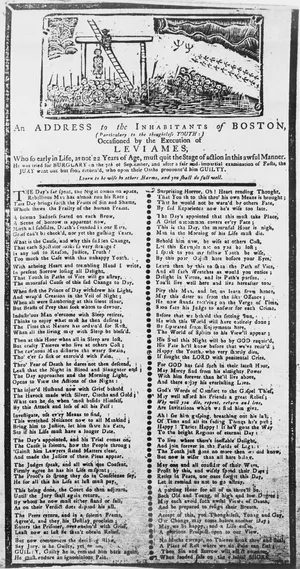
These handbill-sized sheets carried ballad text, often topped with a rough woodcut. No musical notation? No problem. The street seller, the balladmonger, just sang it. You heard it once, twice, maybe three times at the country fair, and suddenly you knew the tune. This wasn’t just literature. It was live performance.
From the 16th through the late 19th century, this was a massive industry. Hack poets wrote on demand. Before newspapers existed, these rhymed accounts were the only source of spectacular news. A murder? A riot? A royal scandal? It got clapped into rhyme and sold on a broadsheet within hours. Most of this topical verse died with the event. But others stuck. “The Children in the Wood” and the stories of Robin Hood and Guy of Warwick became perennial favorites.
The style? It’s not pure folk. It’s closer to minstrelsy, mixed with vulgarized traits from book poetry. And here’s where it gets interesting. We often assume folk ballads were printed on broadsheets. The reverse is often true. Many “folk” songs started as urban, middle-class broadsides that the rural population adapted.
Who wrote the first literary imitations of ballads?
Not the villagers. The literati.
The earliest literary imitations modeled themselves on broadsides, not authentic folk traditions. In the early 18th century, Jonathan Swift wrote political broadsides in earnest, then turned the style toward jocular bagatelles. He wasn’t alone. Matthew Prior and William Cowper followed. By the 19th century, Thomas Hood, W.M. Thackeray, and Lewis Carroll used the jingling meters and forced rhymes for humorous effect.
Then there’s the famous lie. Lady Wardlaw’s “Hardyknute” (1719). It was likely the earliest literary attempt at a folk ballad. It was passed off as a genuine product of tradition. Dishonesty as a marketing tool.
The real shift happened in 1765. Thomas Percy published Reliques of Ancient English Poetry. Suddenly, imitating ballads became a literary vogue. This belongs in the history of poetry, not balladry.
Why do so many ballads feature ghosts, spells, and demons?
Because the finest ballads are saturated in a mystical atmosphere.
It’s not just setting. It’s the engine of the plot. In “The Wife of Usher’s Well,” a mother’s grief is so inconsolable that her children return from the dead as revenants. In “Willie’s Lady,” a wicked mother-in-law’s spells prevent childbirth, broken only by a beneficent household spirit.
“The Great Silkie of Sule Skerry” involves a seal-woman who bears a son to an “earthly” man. He grows up, joins his seal father in the sea, and is shortly killed by his mother’s human husband. “Kemp Owyne” disenchants a bespelled maiden by kissing her, despite her bad breath and savage looks.
Supernatural encounters are everywhere. “Lady Isabel and the Elf-Knight” has a demon meeting a maiden. This story travels. The Dutch-Flemish know it as “Herr Halewijn,” Germans as “Ulinger,” Scandinavians as “Kvindemorderen,” and the French as “Renaud le Tueur de Femme.” In “The House Carpenter,” a former lover (a demon in disguise) persuades a wife to leave her husband and children. A fatal decision.
The trend shifted later. In American and late British tradition, the supernatural gets rationalized. In “Fair Margaret and Sweet William,” Sweet William’s jilted sweetheart doesn’t appear to him as a ghost in bed with his bride. It’s her image in a dream that kindles his fatal remorse. The magic gets packaged as psychology.
Which ballad stories rely on family opposition and tragedy?
Separation. Misunderstanding. Parental veto.
“Barbara Allen” is the archetype. Barbara spurns her lover because of an unintentional slight. He dies of lovesickness. She dies of remorse.
The Freudian paradigm operates rigidly here. Fathers oppose the suitors of their daughters. Mothers oppose the sweethearts of their sons. “The Douglas Tragedy ” (the Danish “Ribold and Guldborg”) happens when an eloping couple is overtaken by the girl’s father and brothers. “Lady Maisry,” pregnant by an English lord, is burned by her fanatically Scottish brother.
Incest? It was frequent in ballads recorded before 1800. “Lizie Wan” and “The Bonny Hind” are examples. Modern tradition shuns it. The genre has cleaned up its edges.
The supernatural fades. The family drama remains. Why? Because jealousy and control are human. Ghosts are easy to rationalize away. A father’s rage is not.
The bittersweet nature of ballad romance
Ballad love stories rarely end happily. Even when the heroine survives, the cost is staggering. Think about “The Maid Freed from the Gallows” or “Fair Annie.” They get their man, sure, but only after enduring trials that seem disproportionate to the reward.
Then there is the classic broadside trick: the “stranger” reveal. The girl meets a man she doesn’t recognize. He tells her her lover is dead or unfaithful. She grieves. He realizes she loves him truly. He reveals his identity. They marry. “The Bailiff’s Daughter of Islington” is the textbook example here.
Sometimes tradition just refuses to let tragedy happen. In the American “Douglas Tragedy,” the lover doesn’t die. He corners the angry father and squeezes a dowry out of him instead.
It is ironic, considering how desperate ballads are to reach marriage, that so many humorous songs focus on bad relationships. “The Wife Wrapped in Wether’s Skin” deals with a shrew. “Our Goodman” mocks the gullible husband.
Murder, jealousy, and fake confessions
Crime is everywhere in the ballad tradition. Sexual jealousy is the usual motive. “Lord Randal” gets poisoned by his sweetheart. In “Little Musgrave,” Lord Barnard kills the man caught in bed with his wife, and the lady gets a similarly grisly ending. “Jim Fisk” and “Frankie and Johnny” follow the same pattern.
A specific genre pretends to be a last goodbye from a condemned man. It is not a real confession; it is a broadside device that folk singers adopted. “Mary Hamilton” uses this form. In America, “Tom Dooley” and “Charles Guiteau,” the song about the assassin of President James A. Garfield, are the most famous versions.
Medieval myths and religious distortions
Only about a dozen ballads come directly from medieval romances. “Hind Horn” and “Thomas Rymer” are examples. They usually pull out just the climax.
These songs did not survive well. The modern folk audience finds the fabulous elements childish and unpalatable. “Sir Lionel” became “Bangum and the Boar” in America, shifting into a humorous piece for kids.
Religious ballads often come from heterodox apocryphal legends rather than scripture. “Judas,” “The Cherry-Tree Carol,” and “The Bitter Withy” fit this category. This distortion is not unique to Britain. Russian ballads reshape Samson and Solomon. Spain has “Pilgrim to Compostela.” French and Catalonian songs radically change the penance of Mary Magdalene.
History with a loose grip on facts
Historical ballads mostly date from 1550 to 1750. “The Battle of Otterburn” is an exception, celebrating an event from 1388. “The Hunting of the Cheviot” covers the same campaign and is better known today as “Chevy Chase.”
The facts are usually wrong. Memory fails. Partisan editing changes the story. But the songs are valuable for showing how the folk felt about the events. “The Death of Queen Jane,” a wife of Henry VIII, gets key details wrong. “The Bonny Earl of Murray” is also factually shaky. Yet both accurately capture popular mourning.
The largest category involves local skirmishes rather than national wars. The English-Scottish border in the 16th and early 17th centuries was a hotbed for displays of loyalty, courage, and cruelty. “Edom o Gordon,” “The Fire of Frendraught,” “Johnny Cock,” “Johnie Armstrong,” and “Hobie Noble” chronicled this violence. Spanish romances, like “The Seven Princes of Lara,” cover similar conflicts between Moors and Christians.
Disasters and the curse of piracy
Shipwrecks, plagues, train wrecks, and mine explosions were regular subjects. Only a few survived in tradition, likely because the language or music had a special charm. The specific shipwreck behind “Sir Patrick Spens” is uncertain, but it remains one of the most poetic ballads.
Other disaster songs are grounded in specific events. “The Titanic,” “Casey Jones,” “The Wreck on the C & O,” and “The Johnstown Flood” are all based on actual catastrophes.
Continental balladries feature epic heroes like the Russian Vladimir, the Spanish Cid Campeador, the Greek Digenis Akritas, and the Danish Tord of Havsgaard. English and Scottish ballads do not have this type. Instead, they have the outlaw hero. The Serbian Marko Kraljević or the Danish Marsk Stig match the English Robin Hood.
Robin Hood is the hero of about 40 ballads, mostly from minstrel or broadside sources. His generosity to the poor inspired later highwaymen in songs about “Dick Turpin,” “Brennan on the Moor,” and “Jesse James.” “Henry Martyn” and “Captain Kidd” were popular pirate songs, but “The Flying Cloud” was the most widely sung. It served as a contrite warning to young men about the curse of piracy.
Most folk heroes are not saints. They are sadistic bullies like “Stagolee,” robbers like “Dupree,” or pathological killers like “Sam Bass” and “Billy the Kid.” This reflects a hostile attitude toward the church, constabulary, banks, and railroads. The kind, law-abiding, devout steel driver “John Henry” is a rarity.
How occupational songs shaped American folk music
Work isn’t just background noise in folk history. It’s the engine. American ballads have long documented the gritty realities of specific jobs. Think seafaring in “The Greenland Whale Fishery” or the danger of the logging camps in “The Jam on Gerry’s Rock.”
Miners had their own warnings, like “The Avondale Mine Disaster.” Cattle herders sang “Little Joe the Wrangler.” Frontier life had “The Arkansaw Traveler.” These aren’t just stories. They are hazard reports set to melody.
But here’s the twist. The songs didn’t stay in their lanes. “The Streets of Laredo” is often labeled a cowboy lament. You’d expect it to live in saloons. It didn’t. It thrived in lumberjack camps and soldier barracks.
Even stranger? The pirate ballad “The Flying Cloud.” You’d think sailors sang it. They didn’t care much. It was far more popular in the shanties of lumbermen than in any forecastle. The genre bleeds across professions.
Why dating a folk ballad is nearly impossible
Trying to pin a specific date to a folk ballad is like trying to weigh a river. You can’t.
Singing stories exists in almost every primitive culture. The habit is ancient. But the ballad as a distinct genre? That’s a different animal. It couldn’t have existed in its current form before roughly 1100.
Francis James Child’s massive collection, The English and Scottish Popular Ballads (1882-98), contains “Judas.” That’s the oldest example he found. It dates from 1300. Before that? Silence.
Why so few records?
A ballad is an oral art. It doesn’t need to be written down to exist.
Many of the people keeping these songs alive couldn’t read. A written notation was useless to them. The few early records we have survived by accident. A monk got curious. A minstrel wrote it down. An antiquary got fascinated by rustic pastimes. Chance, not intention, preserved them.
Where does the “original” version even exist?
Ask for the date of a folk ballad and you’re asking the wrong question. It reveals a fundamental misunderstanding of how balladry works.
The first time you hear a recording? That isn’t the original. It’s a snapshot of a version that has already traveled through time. Tradition shapes the song. A ballad only becomes a ballad after it has run its course in the mouths of people.
What about historical ballads? They look easy to date. The event happened in 1265. The song must be from 1266, right?
Wrong.
The song likely emerged years, maybe decades later. It might be based on chronicles or popular legends. Look at the Russian ballads of the Kievan cycle. Look at the Spanish ballads about the Cid. They weren’t news reports. They were artistic retellings built on existing cultural memory.
Or, the ballad started as something else entirely. An earlier song on a similar theme gets revamped. Names change. Places shift. Local details get swapped out. The core story stays, but the skin changes. That’s how history gets sung. Not documented. Sung.


