A new and controversial trend is emerging in the world of finance and public health: people are betting millions of dollars on the spread of infectious diseases. Since the beginning of this year, nearly $9 million has been wagered on the number of measles cases in the United States via prediction markets such as Kalshi and Polymarket.
While the ethics of profiting from a public health crisis are highly debatable, these markets are proving to be more than just a gambling novelty—they may actually be providing valuable data for scientists.
How Prediction Markets Work
Prediction markets operate on a simple principle: participants buy or sell shares based on the likelihood of a future event occurring.
- The Mechanism: If a market asks whether a certain number of measles cases will occur, the price of a “yes” share reflects the collective belief of all traders. If 86% of traders believe the event will happen, a “yes” share will cost 86 cents.
- The Payout: If the event occurs, successful traders receive $1 per share. If it does not, they lose their entire investment.
- The Logic: The price is essentially a real-time percentage representing the market’s perceived probability of an outcome.
This concept originated in 1988 at the University of Iowa as a way to forecast US elections. By 2003, researchers began applying this model to infectious diseases, viewing these markets as a tool for the “public good” and scientific education.
The “Wisdom of the Crowd” vs. Scientific Modeling
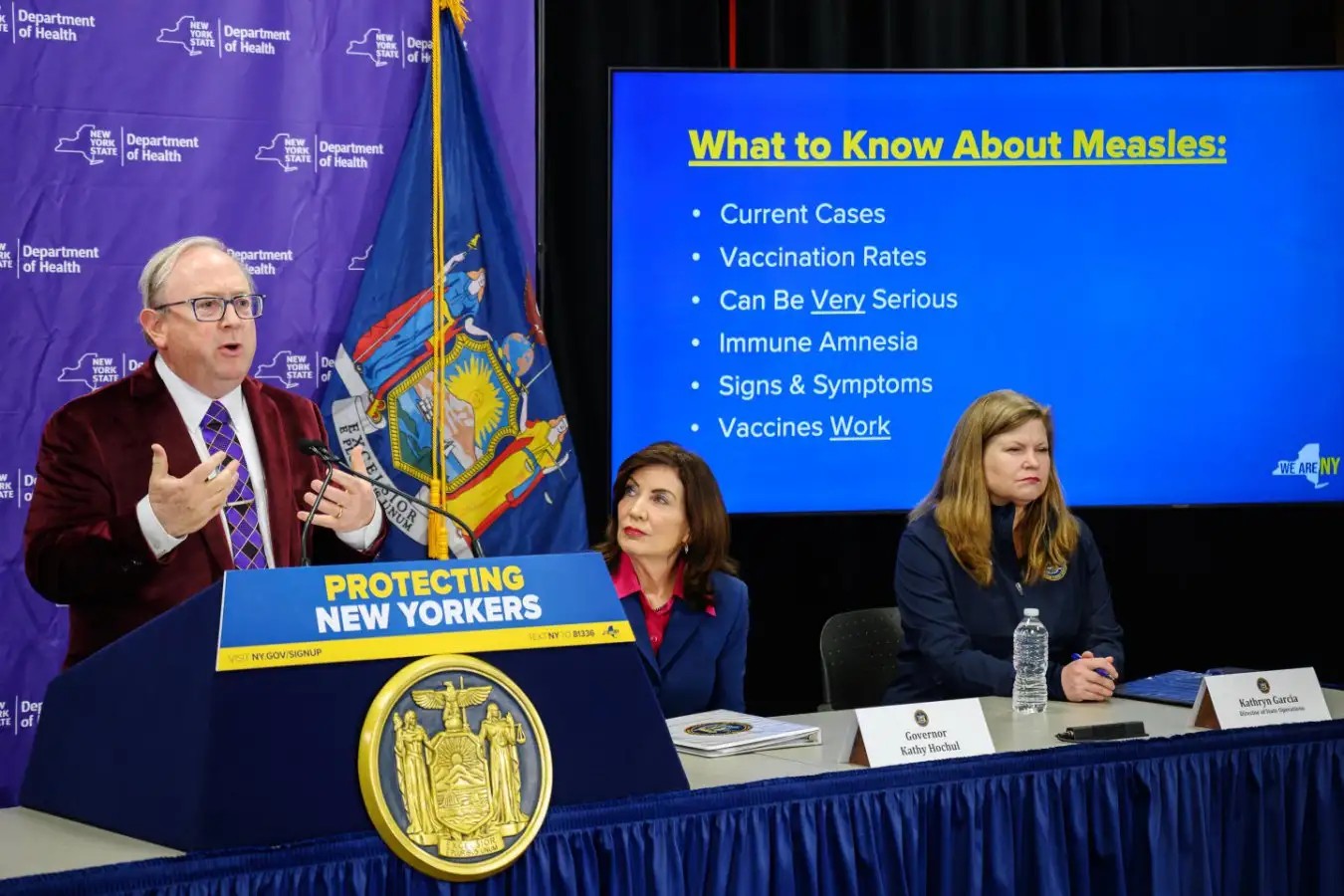
The sudden accuracy of these markets has caught the attention of the scientific community. For example, in June 2025, prediction markets forecasted approximately 2,000 measles cases by year-end; the actual figure was 2,288.
Spencer J. Fox, a researcher at Northern Arizona University, notes that this performance is surprisingly competitive with traditional scientific models. This phenomenon is often attributed to the “wisdom of the crowd.” As Emile Servan-Schreiber, CEO of Hypermind, explains, while individual bettors may lack formal expertise, the collective “cognitive diversity” of thousands of amateurs can often compensate for that lack of specialized training.
However, experts warn that prediction markets are not a replacement for traditional epidemiology. There are significant limitations to relying on gamblers for public health data:
- Lack of Granularity: Scientific models look at thousands of specific variables, whereas prediction markets focus on a few broad outcomes.
- Missing Variables: Epidemiologists use complex data streams—such as vaccination rates, climate patterns, and genomic sequencing—that gamblers do not consider.
- The “Rare Event” Problem: While crowds are good at predicting general trends, they often struggle with rare, high-impact events that require deep, specialized expertise.
Ethical and Regulatory Gray Zones
The rise of these markets has sparked intense debate regarding morality and legality. Platforms like Kalshi and Polymarket are regulated by the Commodity Futures Trading Commission (CFTC) in the US, but they face significant scrutiny.
Critics have raised alarms over markets involving geopolitical conflicts, such as the wars in Ukraine and Iran. There is also the looming question of insider information. For instance, a trader recently made over $550,000 by correctly predicting a major political shift in Iran, leading US lawmakers to question whether traders are profiting from leaked state secrets.
As measles cases continue to rise in the US, the intersection of profit and pathology remains a contentious issue.
“If we don’t invest in the expertise for forecasting infectious diseases now, we’re going to be caught flat-footed for the next COVID-19.” — Spencer J. Fox
Conclusion
While prediction markets offer a unique, high-speed data stream that can complement scientific forecasting, they remain a controversial tool. They highlight a growing tension between the efficiency of decentralized “crowd intelligence” and the necessity of rigorous, expert-led public health modeling.