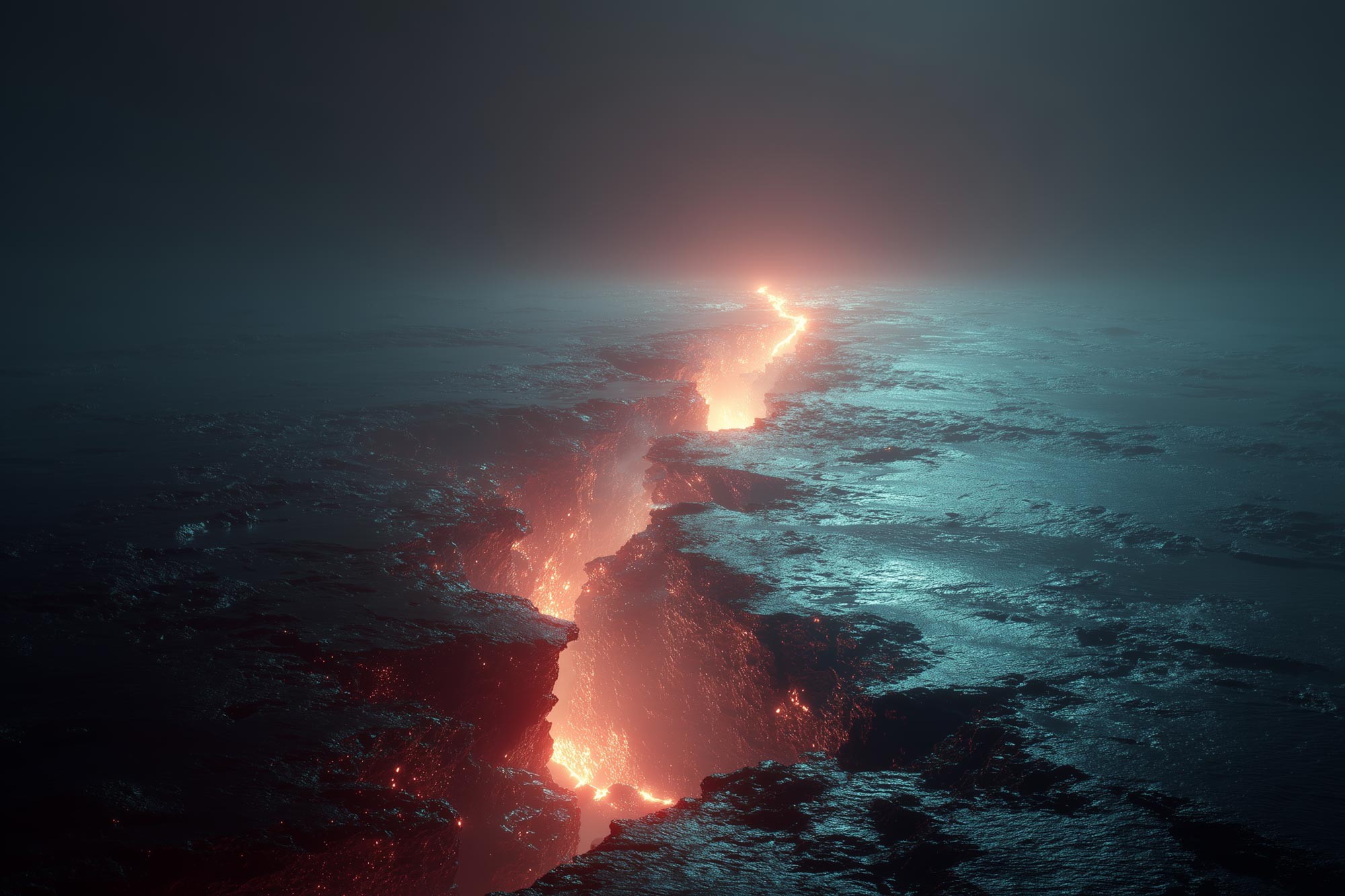
Earthquakes are messy. Chaos incarnate. Or at least they are supposed to be. But out there in the dark depths off the coast of Ecuador, nature is playing a rhythm game. A fault line deep in the eastern Pacific has been popping magnitude 6 quikes like clockwork for over 30 years. Every five to six years. Same place. Same strength. Same thing.
It’s unsettling how predictable it is.
For decades, geologists watched this show from a distance. They saw the pattern but couldn’t explain the mechanics. It’s like watching a car hit a stop sign at the exact same second, every single time, and never knowing what the sign is made of. Until now. A new study in Science finally lifts the hood. Turns out there are hidden “brakes” on the seafloor. Real physical structures that stop these earthquakes from spiraling into something catastrophic.
Jianhua Gong. Assistant Professor at Indiana University Bloomington. He leads the charge. Alongside teams from Woods Hole, Scripps, and several others. They wanted to know why this fault, the Gofar transform, acts like a metronome while others act like a drunkard’s walk.
The Unusual Gofar
Let’s talk location. About 1,000 miles from land. The Gofar fault is where the Pacific Plate slides past the Nazca Plate. They’re rubbing shoulders horizontally. Moving about 140 millimeters a year. Roughly how fast your fingernails grow. Slow. But constant.
Most transform faults are studied. This one is the textbook example. Yet it defies the standard chaos model.
The quakes always start here. End there. And in between? Quiet zones. Barriers. Places that absorb the stress without breaking. Scientists called them barriers for years, but it was just a label. A placeholder. Nobody knew what they actually were.
“We’ve known these barriers existed… but the question has always been… why do they keep stopping earthquakes?” Gong says.
The mystery wasn’t just curiosity. It was a fundamental gap in how we understand fault limits.
Listening to the Floor
So they listened. Literally.
The team dug into data from two massive ocean-floor campaigns. One back in 2008. The other running from 2019 to 2022. They planted seismometers directly on the mud. Hard hats off, instruments down.
The sensors caught tens of thousands of tiny quakes. The foreshocks and aftershocks. The whisper before the shout. And the silence after.
Here is where it gets interesting.
Before the big magnitude 6 bang, the barrier zones lit up with small quakes. Highly active. Frantic. Then—bang. The big quake hits. And the barriers? They went completely silent. Instantly.
This happened in 2008 in one segment. Then it happened again in 2019/2022 in another. Twelve years apart. Same play. Same script. The repetition meant it wasn’t luck. It was physics.
Fluid Lock
Barriers aren’t just smooth, boring rock. No.
The study reveals these zones are structural messes. Complex. The fault doesn’t run in one line; it splits. Multiple strands offset by 100 to 4 meters. Think of it as a zipper stuck with grit in it. These gaps create small openings in the rock.
Seawater gets in. Deep in.
This setup creates a process called “dilatancy strengthening.” Here’s how it works.
The earthquake rupture rolls in. It’s going to keep growing. But when it hits these complex, fluid-filled strands, the movement changes everything. Pressure in the pore water drops sharply. Like popping your ears on a plane. Suddenly, the rock grips tighter. It locks up.
The rupture stalls. The quake stops growing. It hits a ceiling imposed by physics.
“Essentially a natural braking system.” Gong calls it active. Dynamic. Not a passive wall, but an interactive shield that triggers exactly when the pressure gets too high.
Why It Matters
Does this matter if no one lives 1,000 miles out in the Pacific?
Sure it does.
We build cities on coastlines. We fear the big one. Transform faults are everywhere. Underwater. Off the grid. We’ve long noticed they seem to produce smaller quakes than the theory suggests they should. This study explains why. The brakes are likely common. The geometry is common. The seawater infiltration is common.
If these natural brakes are widespread, it changes how we calculate risk. Maybe the monsters aren’t as likely as we thought. Maybe the fault itself knows how to save itself.
It forces us to look at hazard maps differently. The models might need a rewrite. Or at least a patch.
“Understanding how they work changes how we think,” Gong said.
Science usually moves slowly. This? This moves at 140 millimeters a per year.