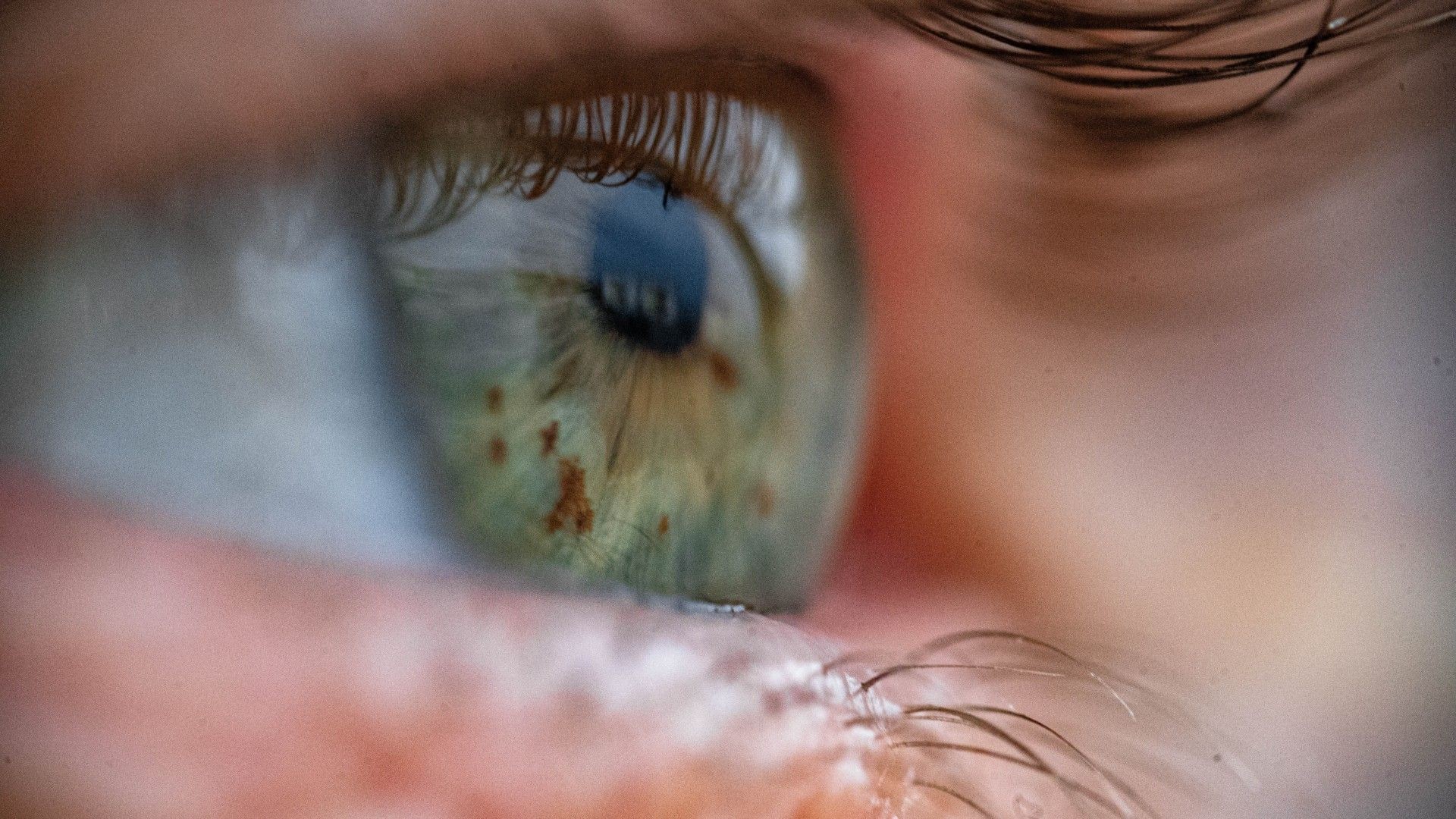
It looks weird. Watching eyeballs to find disease. But that is exactly what a new system attempts to do. Short videos. Just the white part of the eye. No blood drawn. No skin punctured.
A team published their findings on April 8 in npj Digital Medicine. They recorded 224 people. Cancer patients, mostly. Healthy volunteers too. The goal was simple: guess the red blood cell levels.
They guessed right more than 80% of time.
Is this magic? Not really. It is image processing mixed with AI. And it has serious limitations.
The hardware problem
We have noninvasive tools already. Remember Pronto-7? It shines light through your fingernail to measure hemoglobin. Hemoglobin carries the oxygen. Without it you are tired. You might have anemia.
There is a catch though. Skin tone changes how light travels through the nail. For people with dark skin Pronto-7 isn’t accurate enough.
The eye solves that.
The sclera is the white part. It has very little pigment. It looks the same on almost everyone regardless of race. So the new study uses that fact.
How it sees inside out
Researchers used a microscope. Fifty times magnification. They filmed the eyes for ten seconds. Just ten seconds.
Then software named Video-to-Vessels gets to work. It strips out the noise. Blinks get removed. Eye movements corrected. Lighting shifts balanced.
What remains are time-lapse snapshots. The blood vessels pulsing under the surface.
Another program called VesselNet looks at those snapshots. It was trained on lab data. Real blood tests. It learns to predict hemoglobin and red blood count just by watching flow patterns.
“So in theory it could be applied even with a smartphone” Dr. Peter Campbell noted. He likes that aspect. Standard retinal cameras cost thousands of dollars. This might be cheaper. Cheaper means more people can use it. Especially in low-income areas where labs are scarce.
Not ready yet
83% accuracy. That is decent. It is also not good enough to rely on for serious decisions.
Think about it. Would you schedule a transfusion based on this? Probably not. Dr. Theodore Leng agrees. He sees this as a screen. A way to say maybe go to the doctor.
Standard blood draws do so much more. They count white blood cells too. This camera only sees two things right now.
Also practical issues exist. Pink eye? False positive. Dry eyes? Noise. Medicated eye drops? The data gets muddy.
Dr. Christine Kiire pointed this out. You need perfect focus. Patients need to sit very still. Most clinics aren’t built for that precision right now.
Who cares?
People in places without labs do.
Imagine a remote village. No refrigerated storage for blood samples. No pathologists. If you could film an eye on a tablet and get an alert? That is powerful.
Or cancer patients. They need frequent monitoring. Drawing blood every week hurts. A quick video is easier. Less burden on the nurse. Less pain for the patient.
The current study missed iron-deficiency anemia though. Those patients weren’t really in the data. That is a gap. A big one.
The team plans bigger tests. More diverse groups. More reps.
Will this replace the needle? Eventually? Maybe. Right now it’s a interesting proof of concept. Nothing more. But watching a pulse in your own eye never felt like science fiction.
Until now.