It’s called Pando. Say it with a hard “D,” like “pan-doe.”
In Latin, Pando means “I spread.” It doesn’t just spread, though. It sprawls.
Deep inside Utah’s Fishlake National Forest, there is a stand of quaking aspen that defies how we usually think about individual trees. You look out and see thousands of trunks rising from the ground. You might even take a stroll through them, thinking you’re walking through a simple forest.
But you aren’t.
You’re walking on a single, continuous organism.
The Weight of One Being
Here is the kicker: this isn’t just a big tree. It is a clonal colony. Every trunk you see shares the exact same genetic material. They are stems of one massive plant.
And that plant is heavy.
We are talking about 13 million pounds of biomass. Or, if you prefer metric, about 6 million kilograms. This makes Pando the heaviest living organism on the planet.
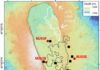
That weight covers 106 acres. That is roughly 43 hectares of ground dedicated entirely to one life form.
Underneath your feet, a single, sprawling root system connects everything. It stretches out like a network of fingers under the soil. When the top dies back, new shoots rise. They are just replacements. The root stays alive.
How Old Can a Single Organism Get?
Age is tricky when you’re cloning yourself.
DNA analysis suggests this root system has been going for tens of thousands of years. We don’t know the exact date. We don’t have a timestamp. But the longevity is undeniable.
Some clonal colonies are old. The Posidonia oceanica seagrass in the Mediterranean is estimated to be 100,000 years old. Pando might be younger than that, but it is certainly older than any single, non-clonal tree we have ever found.
Why does this matter? Because it challenges our definition of “individual.” Is it 40,000 separate trees? Or is it one tree with 40,000 faces?
Biologically, it’s one.
Where to See It
If you want to see the heaviest thing on Earth, you head to Utah. The Fishlake National Forest protects the grove. It is public land