


Europe has been working to reduce vehicle emissions since 1995. The goal is simple on paper. By 2015, cars’ carbon dioxide emissions must be below 130 grams per kilometer. France intervened early and set its own rules. Since 2006, dealers have been required to display CO2 levels on all vehicles and in all advertisements.
The logic is simple. Make the data visible. Let the buyer choose.
How carbon dioxide measurement works
Testing involves more than just looking at the exhaust. This involves a series of measurements. Fuel efficiency is a priority. Next, there are air pollution indicators. The entire process is based on standardized operating cycles. This enables an objective comparison. You can also pit Toyota against Ford and see who wins on paper.
But here’s the problem. The tests seen in Europe are not the tests used elsewhere.
Cycles are different in America and Japan. It’s the same car. The numbers are different. When importing vehicles or comparing specifications across borders, the information does not match. The methodology changed the results.
New European Driving Cycle (NEDC)
In Europe, the standard is NEDC. Driving time is 20 minutes. The car had a distance of about 11 kilometers. It happens on roads and rollers. Simulate special conditions.
The test covers city driving. This means a cold start. The speed limit is 50 km/h. Combination of acceleration and deceleration. It also covers driving outside the city. Here the car reaches constant speeds of 70 km/h and 120 km/h.
Throughout the process, CO2 is measured directly from the exhaust pipe.
Track fuel consumption in three scenarios: urban, extra-urban, and a mixed average. But fuel is not the only metric. Air pollutants were also measured.
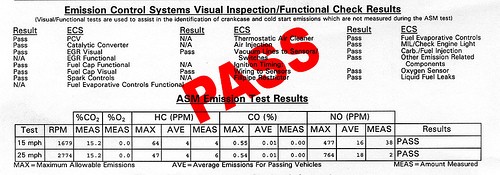
These include oxides of nitrogen (NOx). Carbon monoxide (CO) is also measured. Check for unburnt hydrocarbons. Particles are counted. All these emissions must comply with European standards.
“The test covers city driving, starting in cold weather with a speed limit of 50 km/h and moving to steady speeds of 70 and 120 km/h outside the city.”
Why is this important to you? Because the sticker number comes from a lab coat, not from the street. NEDC is an old framework. Real-world disturbances are not taken into account. Transport. Hills. Air conditioner. It works differently than a robot on wheels.
The gap between the label and the path is a frustration. You buy an “efficient” car. Get on the freeway. The tank is emptying faster than expected. The CO2 label tells one thing. The exhaust pipe said another.
European standards create the basis. NEDC laid the groundwork. But what about the reality? Reality is messy. And it’s not like we’re following a 20-minute script.


