It was hiding in plain sight. Or rather, in plain dust.
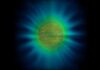
For years, astronomers stared at the Beta Pictoris system and saw only two planets. They were wrong. The James Webb Space Telescope (JWST) has finally dragged Beta Pictoris d out of the shadows. This isn’t your typical discovery. We didn’t spot a bright dot against the blackness of space. We found it by sniffing the air.
The third giant planet in this famous system was concealed by a brilliant debris disk. It was too dim, too cluttered. But Webb’s eyes are different. They don’t just see light; they see chemistry.
How Webb detected Beta Pictoris d without direct imaging
Traditional exoplanet hunting relies on direct imaging. You block out the star, hope for the best, and look for a faint point of light. It’s hard. It’s frustrating. And for Beta Pictoris d, it was impossible.
The planet is buried inside a debris disk so bright it looks like fog to standard cameras.
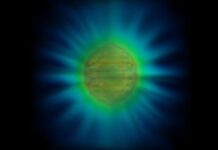
Researchers were originally studying Beta Pictoris b, a known exoplanet in the same system. They used Webb’s NIRSpec instrument. Specifically, the Integral Field Unit. This tool records an image and a spectrum for every single pixel.
Aidan Gibbs, lead author from UC San Diego, wasn’t looking for a new world. He was analyzing the atmosphere of an old one.
Then the data screamed.
Where smooth reflected light from dust should have been, there were jagged peaks. Dips. A barcode of carbon monoxide absorption lines. This pattern is a fingerprint. It belongs to giant planets. It does not belong to dust clouds or background stars.
“We weren’t looking for a new planet. We were trying to understand one we already know existed. Then, this telltale signalappeared in the data where we didn’t expect.”
By measuring radial velocity, they proved the source was moving with the system. It was orbiting the star. The evidence pointed to a planet.
What makes Beta Pictoris d different from its siblings?
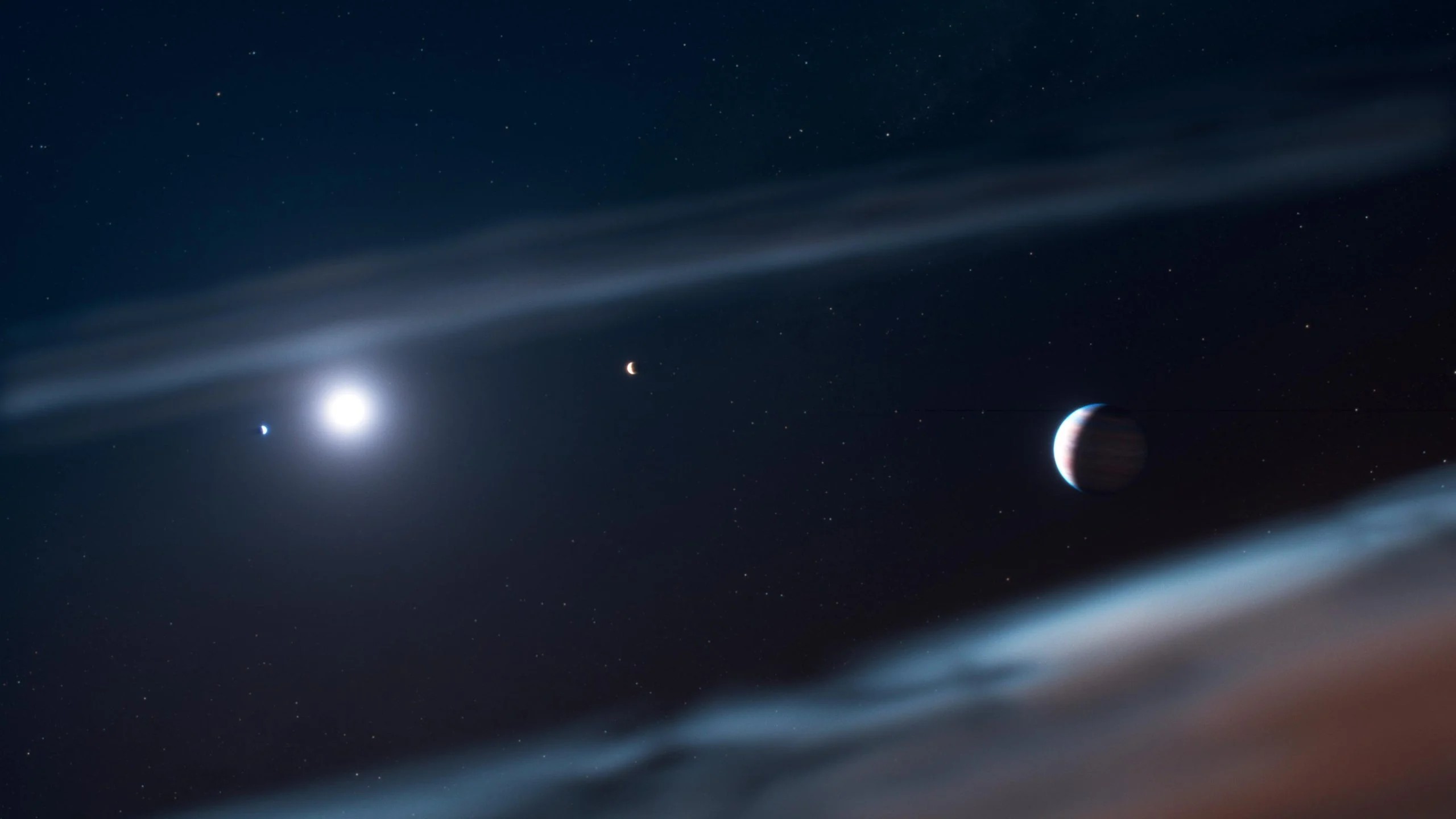
Beta Pictoris is a young system. About 23 million years old. It sits 63 light-years away. It’s close enough to be a laboratory for formation theory.
Before this, it hosted two giants:
– Beta Pictoris b (one of the first directly imaged exoplanets ever)
– Beta Pictoris c
Now we have Beta Pictoris d.
This new world is the lightest of the trio. Estimates put its mass at least twice that of Jupiter. It orbits about 30 astronomical units from its host star. For context, that’s similar to Neptune’s distance from the Sun in our own system.
It sits just inside the inner boundary of the debris disk.
This position matters. Astronomers suspected a planet was shepherding the disk, keeping that inner edge sharp and clean. Now they have the suspect. Beta Pictoris d might be the architect of the system’s structure.
Why spectroscopy changes the search for exoplanets
Here is the thing. You can’t always trust your eyes. Or rather, the eyes of your camera.
Jean-Baptise Ruffio of UC San Diego notes a hard lesson in astronomy: bright blobs are liars.
They can be instrumental artifacts. They can be weird knots in the debris disk. They can be noise. That’s why Webb’s spectroscopic approach is a game changer.
Spectroscopy cuts through the clutter. It isolates specific molecules. Methane. Water vapor. Carbon monoxide. These are detected regardless of how much dust surrounds them.
Follow-up observations with Webb’s MIRI instrument confirmed the presence of methane and water vapor. Independent analysis using the European Southern Observatory’s Very Large telescope and Webb’s NIRCam also supported the findings. The consensus is solid.
This method bypasses the need for coronagraphic clarity. It finds planets in visually complex systems where traditional imaging fails.
Is this a fluke? Probably not.
Beta Pictoris d is the first directly imaged planet identified primarily through moderate-resolution spectroscopy. It proves that atmospheric fingerprints can reveal worlds hidden by glare.
What comes next for the Beta Pictoris system?
The discovery adds another piece to the puzzle. But the puzzle isn’t solved.
Researchers will dig deeper into Webb’s data. They need to refine the orbit. They want exact temperature readings. They are mapping the full atmospheric composition.
Beta Pictoris remains one of the most observed systems in the Milky Way. Now it has three imaged giants. It is the second known system with that distinction.
The fog is clearing. Not because the dust is gone, but because we finally know how to see through it.
There are other systems out there. Bright, messy, confusing ones. They likely have hidden worlds too. We just need to stop looking at the light and start reading the chemistry.