


The old advice is simple: drink water before you eat to fill your stomach. Stretch the stomach, right? Get full. Stop eating.
It’s a staple of diet culture. It makes sense on paper.
It’s also likely wrong.
A new analysis from Cornell University suggests that drinking water during a meal doesn’t suppress hunger. It might actually encourage you to eat more.
The findings are counterintuitive. They challenge the basic mechanics of how we think about satiety. And they come from controlled experiments that watched people eat, drink, and switch back and forth without realizing it was changing their behavior.
Water doesn’t fill you up; it lubricates
The study involved 86 adults in a lab setting. They were served beef chili or chicken tikka masala. They were allowed to eat as much as they pleased. Cameras recorded every bite. Every sip.
The result? No evidence that water created fullness.
Instead, participants consumed roughly 49 extra calories for every 100 grams of water they downed. That’s about 39 additional grams of food per sip.
Why?
Sensory-specific satiety explains the mechanism. As you eat, the appeal of the food declines. You get bored. Your palate tiring.
Sipping water refreshes that sensory contrast. It resets the palate. It allows the food to remain enjoyable for longer. It delays the moment you decide to stop eating.
“Water is emptied quickly from the stomach,” said Paige Cunningham, corresponding author of the study published in Appetite. “Instead, water may increase how much we eat… preventing a dry mouth which can prolong enjoyment.”
Lubrication speeds things up. Dry mouth slows it down. If your mouth stays moist, you can chew faster. Eat more.
One exception complicates the rule: speed.
Participants who drank water quickly ate less. Not more. The researchers don’t have a firm causal explanation yet. Is it about how long the water sits in the mouth? Total meal duration? They’re following up on the data. But the general trend remains clear: alternating between bites and sips is associated with higher intake.
Spice slows you down (and you eat less)
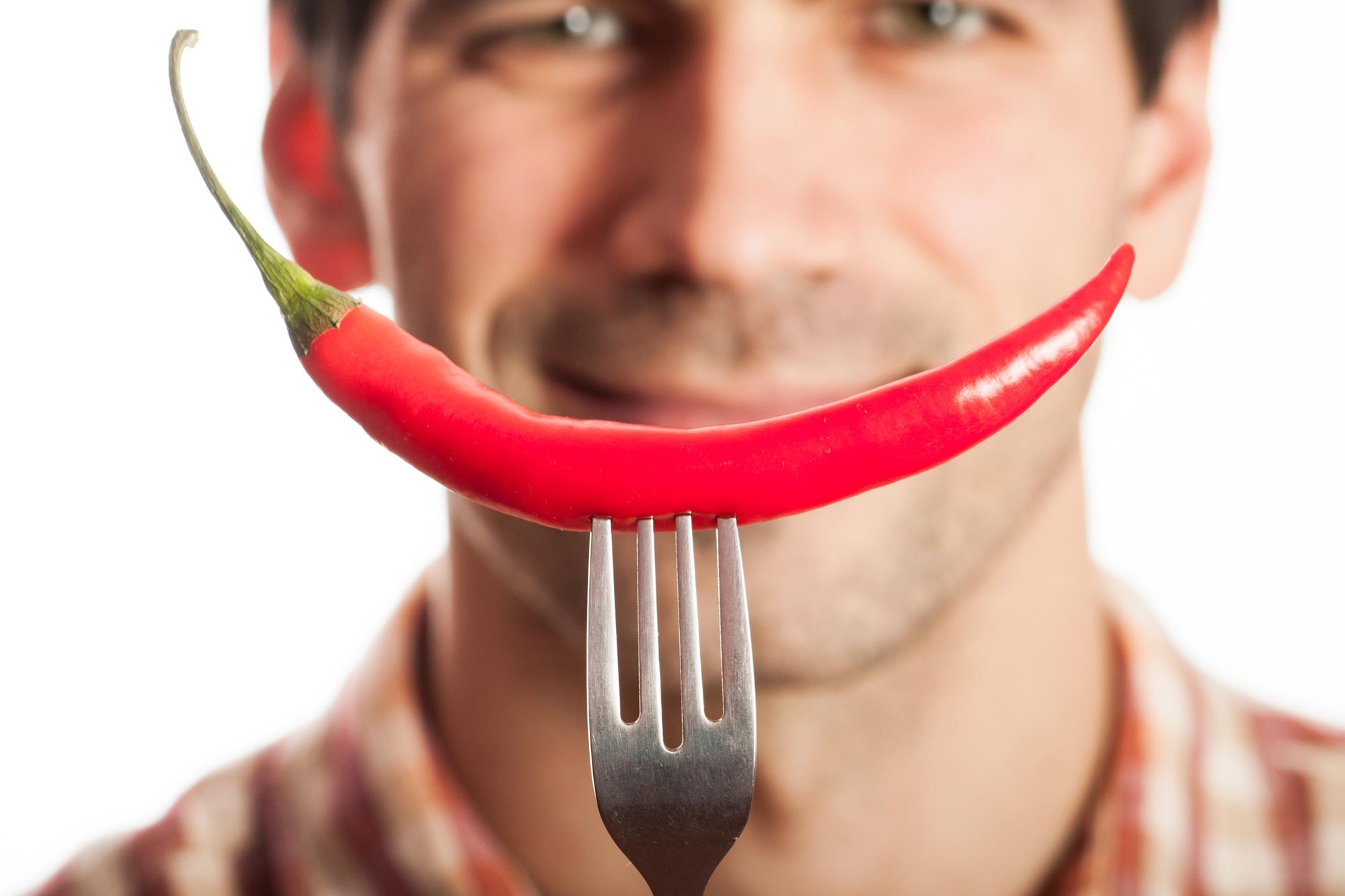
If water is a mistake, maybe spice is the answer.
A separate experiment published in Food Quality and Preference tested this. Forty-nine adults ate tortilla chips with salsa. For two weeks, they did this weekly. Half the time the salsa was mild. Half the time it was spicy. The only variable? Cayenne content.
The results were stark.
Spicier salsa led to a 28% reduction in total snack consumption. This drop included both the salsa itself and the unchanged tortilla chips.
They also ate 30% slower.
Heat slows the pace. It forces you to pause. It reduces intake by breaking the rhythm of automatic eating. Participants drank similar amounts of water in both conditions, so the effect wasn’t driven by liquid consumption.
Adding spice to one part of a snack significantly influences overall energy intake. It works.
Challenging familiar diet advice
We’ve been given two simple tools for weight management.
- Drink water to cut calories.
- Avoid spicy foods or fear they’ll cause overeating.
Both ideas are flipped in these laboratory settings.
Drinking more water correlates with greater consumption. Adding spice correlates with eating less.
“These strategies might help consumers achieve their goals,” Cunningham noted.
But don’t pack your bags for the spice rack yet.
The limitations of lab eating
These studies are tight. Controlled. Isolated.
They only tested two main dishes and one snack. Tortilla chips. Salsa. Chili. Tikka masala.
Every bite was filmed. Every sip counted. This is not real life.
Real eating is messy. Distractions exist. Stress exists. The “everyday eating environment” rarely matches a controlled lab.
Different foods may not produce these results. You might drink water and not gain calories. You might eat spicy food and just suffer.
The researchers caution against generalizing too broadly. They are looking for future experiments to see what other food properties leverage behavior.
What if texture matters? Temperature? Visual cues?
We don’t know yet.
But the assumption that water is a harmless, helpful fill-in-the-stomach tool needs scrutiny. It empties too fast to stretch the stomach long-term. It lubricates the meal, keeping the sensory experience alive just a bit longer.
Spice, conversely, introduces friction. It breaks the flow. It forces a pause.
Is your glass of water helping you lose weight? Or is it just making the meal taste good enough to finish?
Maybe you need less water. And a little more heat.
Or maybe the answer lies somewhere in the middle, waiting for the next study to catch up.


