


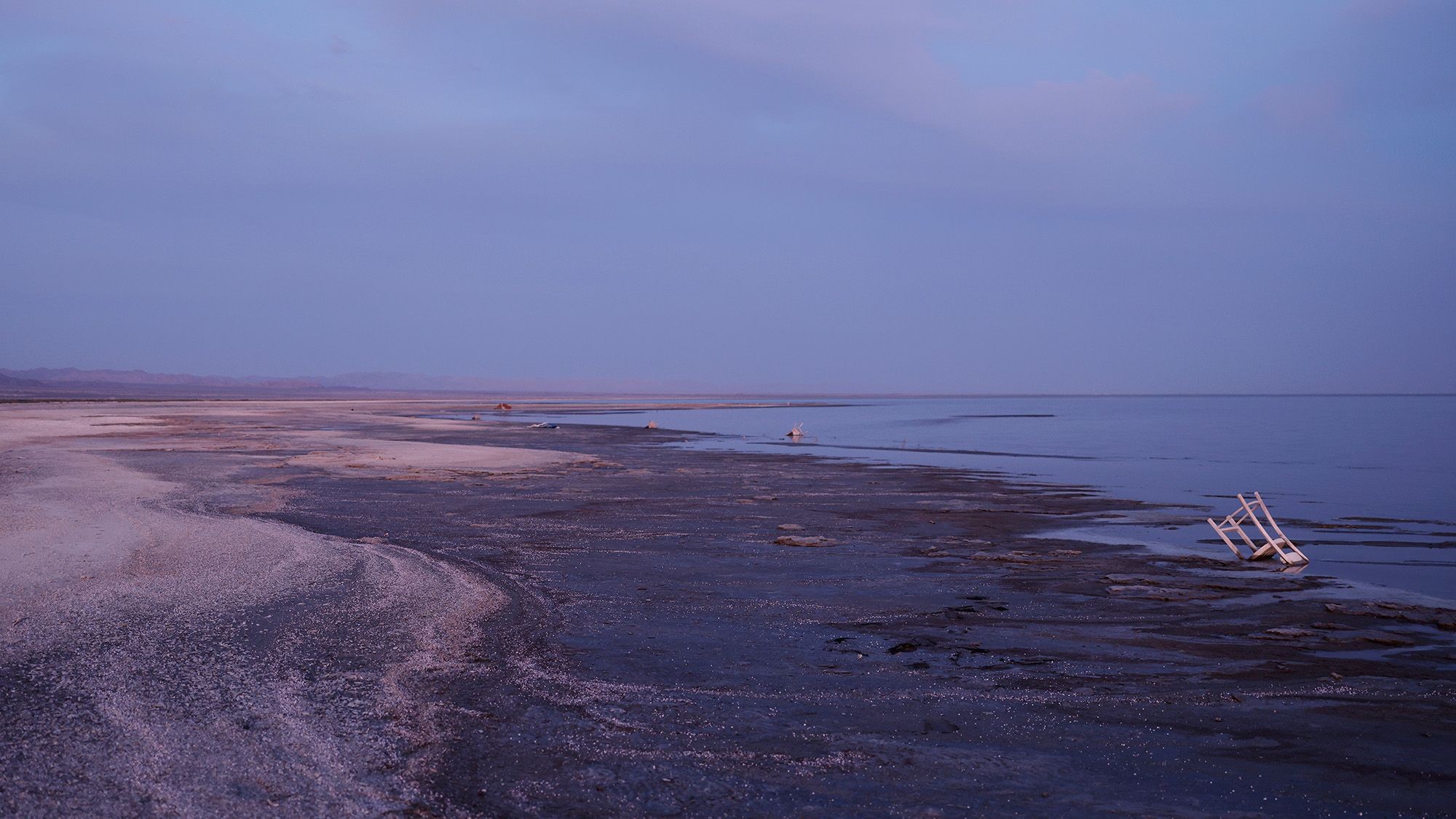
It used to be a playground. Fifty years after the Colorado River accidentally created Southern California’s Salton Sea, it was the “miracle in the desert.” You had yacht clubs. Vacation homes. Nightclubs buzzing with energy. Then the water receded. By the 1970s evaporation outpaced the flow, and the lake began to die.
Now, what remains is a toxic dust bowl. The shrinking shoreline has exposed muddy sediments loaded with pesticides and heavy metals from decades of agricultural runoff. Winds whip this fine particulate matter into the air. People breathe it in. The dust penetrates deep into lungs and enters the bloodstream. It triggers asthma. It damages heart function. It kills, slowly, through poor quality of life.
And who suffers most? Low-income, racial and ethnic minorities who lack the money to move or the power to demand protection.
A study published July 1 in BMC Environmental Science lays bare the reality for Latinx and Indigenous Mexican families in Eastern Coachella Valley. We spoke with Ann Cheney, a professor of social medicine at UC Riverside who oversees a free clinic for these underserved communities. She describes a landscape where daily life is dictated by the wind.
How Salton Sea Pollution Harms Respiratory Health
The water has dropped by 14.6 feet. The surface area shrank by 65 square miles. This isn’t just geography. It’s public health.
Cheney explains that the sea sits on an ancient lakebed. In the early 190th century, an engineering mistake let floodwaters fill part of it, creating the lake. Then came the agribusiness boom of the 1940s. Chemicals seeped into the ground. When Colorado River flows were cut off—2018 was the last drop—fresh water stopped diluting the toxicity.
Today, climate change accelerates evaporation. No fresh water. Just concentrated toxins drying into the playa.
“For me, what is most concerning is that local residents who are affected by poor air quality are Latinx and Indigenous Mexican. Many are undocumented. They have very little political voice.” — Ann Cheney
The air quality issues extend beyond just the lake. Caregivers report that trash burning on nearby tribal lands creates additional smoke hazards. In one documented instance, a tire fire erupted near a family’s apartment complex. It happens often. The dust from the sea is one contributor to the respiratory crisis. Fires are another.
The Daily Grind: A Life Controlled by Dust Storms
Imagine a beautiful day in the desert. Sunny. Clear skies. But later, the wind picks up. Dust rolls in.
Consider a mother working as a farm laborer. Her child has asthma. The child is at school, playing outside. When the dust hits, the school pulls the child inside. If the distress isn’t severe, the kid stays. If it is, the mother gets a call. She has to leave work. She has to pick up the child.
Here’s the trap. Most people in this region are farmworkers. They are not farm owners. They pick crops for minimum wage. Many in the Purépecha community—indigenous migrants from Michoacán, Mexico—are monolingual. They speak only Purépecha. This language barrier confines them to the lowest-ranking jobs. They have zero leverage. If you lose your job because you leave to care for a sick child, you have no income. No safety net.
It’s a cycle of precarious employment and health crises. You work until you break. Or you stay home, but then you starve.
Indoor Air Quality: A Privilege, Not a Right
What does living in this environment do to a family?
Cheney points to a photo taken by one caregiver. Her child is lying on the floor, lethargic. Bored. The kid is stuck inside. Why? Because indoors, the air is cleaner. Outdoors, the air is poison.
But controlling indoor air requires resources. You need air filters. You need sealed windows. You need money. Most families in these mobile home parks—living in dilapidated trailers on dirt lots—don’t have those resources. When dust storms hit, the indoor air quality plummets anyway. The dust finds its way in.
It’s not just physical health. It’s mental health. Caregivers, often mothers, bear the burden of constant vigilance. They watch the horizon. They watch their children. The stress is relentless.
“I anticipated poor quality of life for children. What I understood less was the toll it takes on the families. The mental health of the primary caregiver suffers immensely.”
Broken Promises: Government Inaction and Lithium Dreams
Has anyone tried to fix it?
Assembly Bill 617 was supposed to help. It aimed to involve communities in mitigation efforts. There were meetings. Advisory boards. Years of talk. Yet, Cheney notes, the process is frustrating. Government agencies bring resources and money, but it feels top-down. The community doesn’t see tangible changes. Just talk. Very little action.
Money has been dedicated to restoring the Salton Sea. There’s a ten-year plan in the works. But the focus? Wildlife. Not human health. Only recently have conversations shifted toward the people living on its shores.
For those with a specific asthma diagnosis, there might be retrofitting money through health insurance. You might get cash to remove carpets or fortify doors. But the amount is small. And the most vulnerable residents—the undocumented, the uninsured—can’t access healthcare systems at all. How do you get help if you can’t get in the door?
And then there’s the lithium.
The Salton Sea sits on a lithium hotspot. Companies are testing extraction technologies. The community was angry at the prospect. It feels like exploitation all over again. Professional outsiders come in, take the resources, and make the decisions. The farmworkers don’t get the jobs. Those require degrees. Or specialized training. Plus, lithium mining needs water. In a desert where the sea is drying up, using more water makes the environmental crisis worse.
What Can Be Done?
Cheney installed air-quality monitors in homes. She sees the data. But data doesn’t seal a trailer.
The majority of families live in mobile home parks on bare dirt. There is no landscaping. No barrier. When the wind blows, the dust enters the home. It settles on beds. It settles in lungs.
We need housing that protects people. Not trailers on dirt. Real structures. Sealed homes. Policies that put money into building infrastructure that stands against the elements.
This isn’t unique to California. The Great Salt Lake in Utah is shrinking too. Abby Ellis, a filmmaker from that region, visited Cheney. She saw the Salton Sea as a preview.
“This is essentially where Utah will be in 10 or 15 years.”
But there’s a difference. In Utah, the affected communities are often middle-class. They have political voice. They organize. They say, “No.” In the Salton Sea basin, the victims are poor. They are marginalized. They are ignored.
Will the wind blow the dust away? No. The toxic particles will keep spreading. Unless those in power decide to treat this as a human rights issue and not just an ecological one. Right now, the families near the sea are breathing in a future that America hasn’t figured out how to manage. And they are paying the price with every breath.


