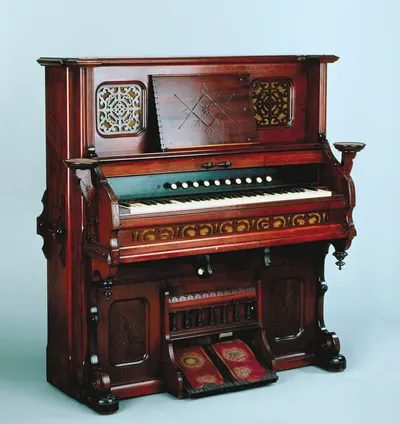
It’s a keyboard. It has pipes (sort of). But it isn’t an organ. At least not in the traditional sense.
If you’ve seen them in Victorian parlors or weird indie folk videos, you’re looking at a reed organ. The term usually points to instruments that rely on free reeds. These are metal strips vibrating through tight slots. Wind pressure makes them sing. No big pipes here. Just air and metal.
This category includes the harmonium and the melodeon. They share the same basic DNA. Free reeds. Bellows. Keys. You press a key. Air rushes over a reed. Vibration happens. Sound follows.
The Confusion with Pipe Organs
People mix this up constantly. Why? Because they look similar. They have keyboards. They make loud noises. But the mechanics are totally different.
A true pipe organ uses air blown through actual pipes. Wind channels. Brass. Wood. It’s massive. It takes a room. A reed organ is smaller. Portable. Less intimidating.
A reed organ sounds like a pipe organ only if you squint. And maybe ignore the wind.
There is one exception. The regal. This is a tiny pipe organ. It uses beating reeds. These vibrate against a frame, not through a slot. It also has pipe resonators. So it’s a hybrid. A weird little cousin of the big boys. But it fits the broad definition.
Why It Matters Now
They aren’t just museum pieces. You still hear them. Indie bands love the warbly, breathy tone. It sounds nostalgic. Even if it’s manufactured in 2024.
The distinction matters for collectors. If you want a harmonium, you’re buying a free-reed instrument. If you want a pipe organ, you’re signing a mortgage and hiring an architect.
Don’t confuse the two. The sound is different. The physics are different. And the price tag? Well. That’s probably the biggest difference of all.