A recent study published in the journal mBio has uncovered a surprising biological mechanism working silently in the atmosphere: bacteria living inside fog droplets are actively growing and consuming toxic pollutants, including formaldehyde. This discovery challenges the long-held assumption that atmospheric microbes are merely passive passengers, drifting through the air in an inactive state.
The Microscopic Ocean in the Sky
For years, scientists knew that the atmosphere contains significant numbers of bacterial cells—ranging from thousands to millions per cubic meter. However, it remained unclear whether these microbes were alive and active or simply dormant particles being transported by the wind.
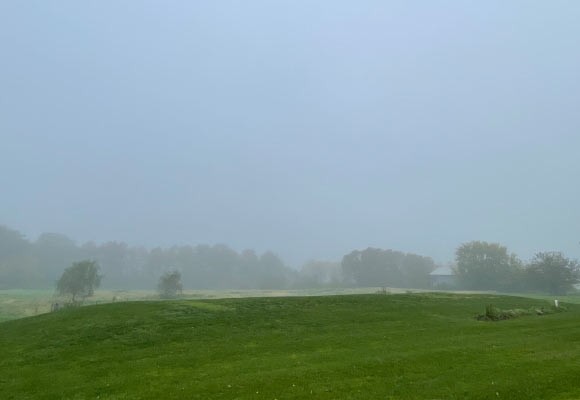
Thi Thuong Thuong Cao, a Ph.D. student at Arizona State University (ASU), and her colleagues sought to answer this question by examining radiation fog events in central Pennsylvania. Over a two-year period, they analyzed 32 distinct fog events, treating the fog as a unique microbial habitat.
The findings revealed a dense, vibrant ecosystem hidden within the mist:
- High Density: While fewer than 1% of individual fog droplets contain bacteria, the aggregate concentration is staggering. Professor Ferran Garcia-Pichel of ASU noted that the bacterial density in fog is comparable to that of the ocean.
- Volume of Life: A single thimble’s worth of fog water contains approximately 10 million bacteria.
Methylobacteria: The Fog’s Janitors
Among the diverse microbial population, one group stood out: methylobacteria. By comparing air samples taken before and after fog events, researchers observed a distinct pattern. Dry air prior to fog formation contained lower levels of these bacteria, while post-fog samples showed a significant increase.
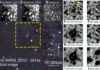
Microscopic analysis confirmed that these bacteria were not just present; they were thriving. The team observed cells increasing in size and dividing, indicating active growth. Crucially, this growth was fueled by formaldehyde, a common and harmful air pollutant.
“We observed them under the microscope to see that, yes, the bacteria are getting bigger and they’re dividing, so there is growth,” Cao said. “We also found that they’re using the formaldehyde as food to support their growth.”
Why This Matters: Cleaning the Air at Night
Formaldehyde is a volatile organic compound that contributes to ground-level ozone smog and poses serious health risks to humans. Typically, atmospheric chemistry that breaks down such pollutants is driven by sunlight. At night, when radiation fog often forms, chemical reactions slow down significantly, allowing pollutants to accumulate.
The discovery of active methylobacteria changes this narrative. These microbes do not rely on sunlight. Instead, they metabolize formaldehyde, breaking it down into carbon dioxide. This process serves two purposes:
- Survival: At high concentrations, formaldehyde is toxic to the bacteria. By breaking it down, they keep the chemical levels at a manageable threshold for their own survival.
- Air Quality: This biological activity effectively removes a harmful pollutant from the air during hours when traditional chemical cleanup processes are inactive.
“It’s relatively new that people are starting to look at biological activities in clouds, so there’s still a lot which we don’t understand,” said ASU Professor Pierre Herckes. “At nighttime… chemistry is largely driven by the Sun and by light. But if the bacteria are still doing their thing even during the nighttime, they can be important.”
A New Frontier in Atmospheric Science
This study, titled “Growth and formaldehyde degradation of photoheterotrophic Methylobacterium within radiation fogs,” highlights a gap in our understanding of atmospheric biology. The researchers emphasize that fog is not just a weather phenomenon but a complex, living environment.
Several critical questions remain for future research:
* Do different types of fog host different bacterial communities?
* What other pollutants might these microbes consume?
* How significantly do these biological processes impact overall regional air quality?
“The sky’s the limit, no pun intended,” Garcia-Pichel remarked, underscoring the vast unknowns in this miniature atmospheric world.
Conclusion
The presence of active, pollutant-consuming bacteria in fog reveals a previously overlooked layer of atmospheric self-regulation. By breaking down toxic chemicals like formaldehyde during the night, these microscopic organisms play a vital, albeit subtle, role in maintaining air quality, suggesting that biology and atmospheric chemistry are more intertwined than previously thought.