The Gemini North telescope pointed upward in Hawaii. What came down the fiber optic cable stopped people short. It is beautiful, certainly. But it is also a funeral.
Ghost Light from NGC 1514
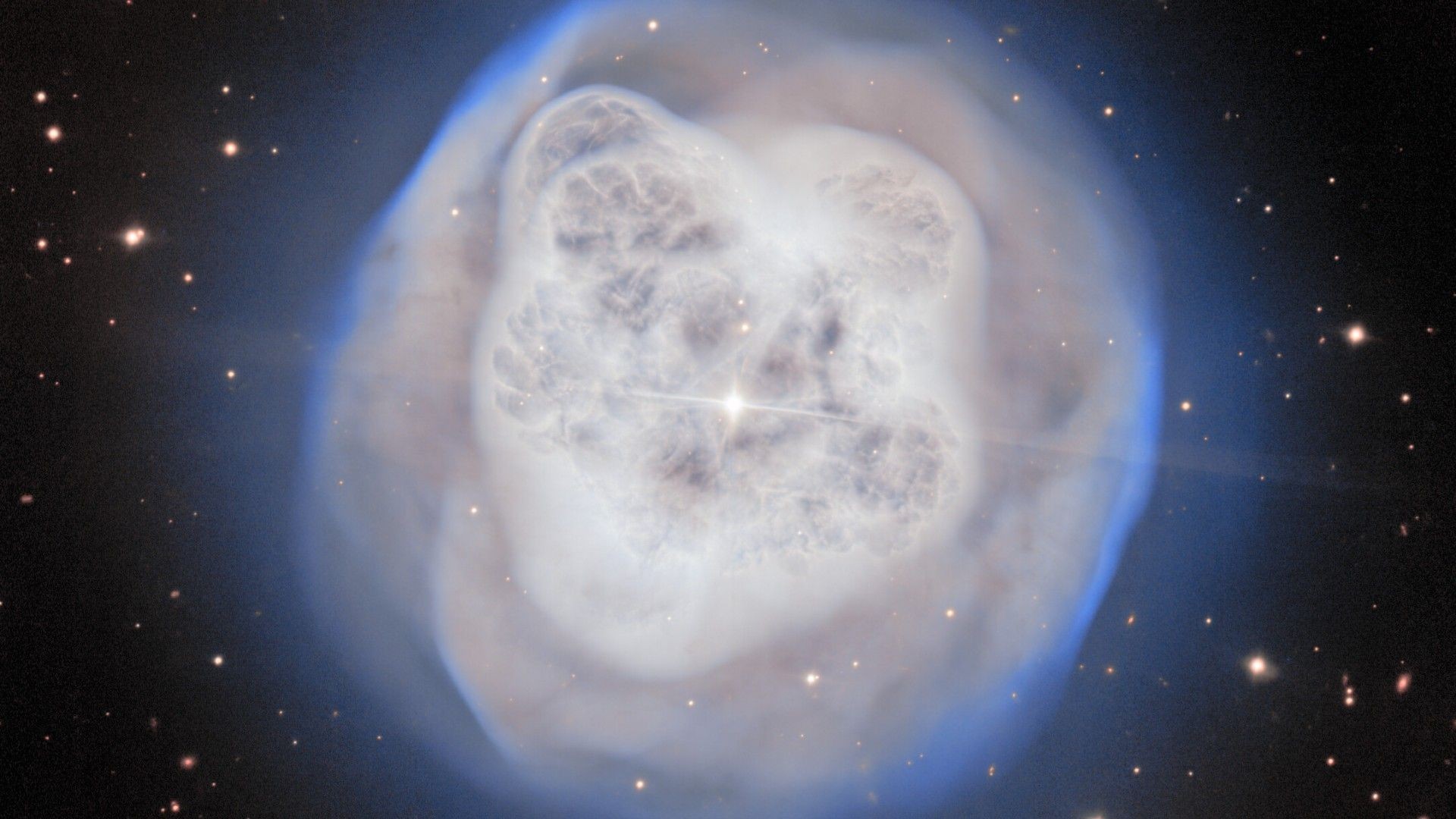
Look up near Taurus, the constellation that maps out a bull’s head if you squint. There, about 1,500 light years out, sits the Crystal Ball Nebula. Or NGC 1514 if you prefer your sky objects with letters and numbers attached. The name feels like magic trickery, crystal balls and all, but the physics here is stark and cold.
Planetary nebulas are misnamed right from the start. They have nothing to do with planets, at least not in the modern exoplanet sense. Early astronomers saw these glowing gas shells through crude lenses. They looked round. They looked like Uranus or Saturn. So they called them planets. Bad naming conventions stick forever, apparently.
The truth is darker. A planetarian nebula is a star’s corpse. Or at least, it is the debris of a star giving up the ghost. As the core collapses, the outer layers are ejected into space. They expand. They glow. They drift away in spherical, messy shells.
Binary Chaos
NGC 1514 adds a twist to this standard script. It isn’t just one dying star screaming into the void. It’s a pair. Two stars, locked in a nine-year dance, orbiting a common center.
Scientists believe that one of these stars… released its outer layers while in the thromes of death.
One star is older. It’s the one dying. The other hangs around, watching its companion unravel. NOIRLab, which runs the telescope, explains that their gravity and winds fight against each other. As the dying star blows its shell into space, the companion pulls on it. Tug-of-war. The result is not a clean sphere. It’s lumpy. Asymmetrical. Distorted by the sheer weight of the neighbor’s influence.
The gas doesn’t flow smoothly. It churns.
The Time Lag
Here is where the romantic part comes in. We call it a crystal ball, sure. People use glass spheres to pretend they know tomorrow. This nebula does the exact opposite.
It shows us the past.
Light takes time to travel. Basic stuff, really. The photons bouncing off that expanding shell left those stars 1,500 Earth-years ago. When we look through Gemini North, we aren’t seeing the present. We are seeing history. Long after those winds first pushed the gas, long after the orbit settled, we catch the light here.
Does that make us fortune tellers? Or just archaeologists of the void?
The image hangs there on your screen. Bright. Lumpy. Old. It reminds us that every beautiful thing in the sky is already dead. We are just late to the party.
Which part of the delay feels heavier? The beauty? Or the silence that follows?