Tonight, the night sky will appear empty of lunar light. As of Friday, April 17, 2026, the Moon has reached its New Moon phase, marking the conclusion of its current lunar cycle.
Why can’t we see the Moon tonight?
According to NASA’s Daily Moon Guide, the Moon is currently at 0% illumination. This occurs because of the Moon’s specific position in its orbit: it is sitting directly between the Earth and the Sun.
Because the sun is shining on the side of the Moon facing away from us, the side facing Earth remains in total shadow. While the Moon is physically present in our sky, it remains invisible to the naked eye.
The Lunar Cycle: How it works
The Moon takes approximately 29.5 days to complete a single orbit around Earth. While we always see the same side of the Moon due to its orbital mechanics, the amount of sunlight reflecting toward us changes constantly. This progression creates the eight distinct phases that define our lunar calendar:
- New Moon: The Moon is between Earth and the Sun; it is invisible from our perspective.
- Waxing Crescent: A small sliver of light begins to appear on the right side (in the Northern Hemisphere).
- First Quarter: Exactly half of the Moon is illuminated on the right side.
- Waxing Gibbous: Most of the Moon is lit, though it is not yet a complete circle.
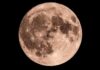
- Full Moon: The entire face of the Moon is illuminated and fully visible.
- Waning Gibbous: The illumination begins to decrease from the right side.
- Third Quarter: Half of the Moon is illuminated, but on the left side.
- Waning Crescent: A final thin sliver of light remains on the left before the cycle resets.
Looking Ahead
If you are waiting for a bright night sky, you will have to wait a little longer. The next Full Moon is projected to occur on May 1, 2026. Notably, May will be a significant month for lunar observers, as it is predicted to host two full moons.
The New Moon phase is not just a period of darkness; it represents the reset point of a predictable celestial rhythm that has guided human calendars for millennia.
Summary: Tonight’s New Moon means the Moon is invisible due to its position between the Earth and the Sun, with the next opportunity for a full view arriving on May 1.