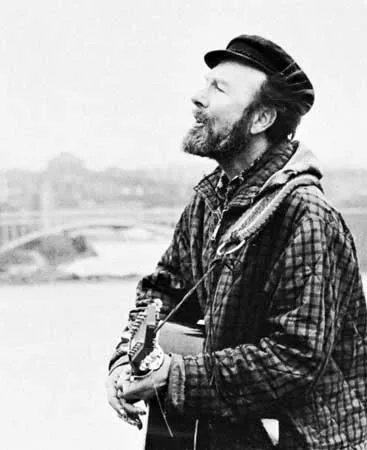
Pete Seeger died on January 27, 2014, in New York City. He was 94. Before the funeral crowds, before the memorials, he was just a guy with a banjo who refused to stop singing.
His story starts with privilege but quickly veers into the grit of the American road. Born in New York in 1919, he was the son of Charles Seeger, a pioneering ethnomusicologist, and the stepson of composer Ruth Crawford Seeger. Music was in his DNA. But he didn’t stay in the ivory tower. He left Harvard after two years. Just walked away in 1938.
He hitchhiked across the country. Rode freight trains. He wasn’t looking for a job. He was listening. He gathered folk songs from the people he met. He developed a virtuosity on the banjo that few could match. It wasn’t about technical perfection. It was about connection.
The Almanac Singers and the Blacklist
In 1940, he found his first real tribe. He organized the Almanac Singers with Woody Guthrie. They played union halls. They sang at farm meetings. The message was simple: workers had power.
Fast forward to 1948. He teamed up with Lee Hays, Ronnie Gilbert, and Fred Hellerman to form the Weavers. They became massive. “Goodnight Irene” was a hit. They were the bridge between folk tradition and mainstream pop.
Then came the blacklist.
It happened shortly after they rose to fame. Seeger’s previous activities in left-wing and labor politics made him a target. The music industry shut him out. It was a cold era for dissent.
“The people have the power. They just need to sing it into existence.”
Building the Hootenanny
He didn’t sulk. He built something new. He fostered the hootenanny.
It was a gathering of performers playing and singing for each other. Audience participation wasn’t just encouraged; it was required. You didn’t watch. You joined in. It democratized music. It turned concerts into community events.
His songwriting reflected this spirit. He wrote folk standards that still echo today. “Where Have All the Flowers Gone” became an antiwar anthem. “If I Had a Hammer” became a civil rights rallying cry. These weren’t just songs. They were tools.
A Life of Protest
Seeger was never just a performer. He was a prominent supporter of antiwar, civil rights, and environmental causes. He fought for peace when peace was unpopular. He sang for the planet before “green” was a marketing buzzword.
He used his voice as a weapon against injustice. He knew that songs could change minds. Not by force. By repetition. By melody.
He died in New York City. But the songs remain. You can still hear them in union halls. In protest marches. In living rooms where people pick up a guitar and try to make sense of the world.
The hootenanny continues.