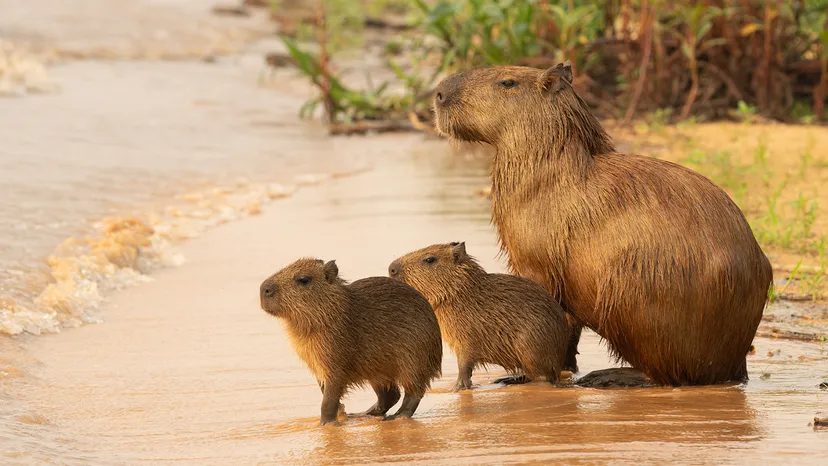
Capybaras dominate the wetlands of South America with an effortless coolness that seems almost human. They are the largest rodents on the planet, cousins of the guinea pig, but have grown to a size that demands respect. One adult can weigh more than 132 pounds. But despite their mass, they are notoriously docile. They rest in water. They share space with caimans and birds without flinching.
But how do you describe them when you spot them in the wild?
The answer depends on the context, just like with lions or elephants. When capybaras come together to socialize, mate, or simply survive the dry season, they form a capybara group. Colloquially, they could perhaps be called a herd. This is the most commonly used collective noun for large grazing mammals. This is appropriate because capybaras are semi-aquatic herbivores that often move in loose formations on land.
However, the size of the group is not fixed. It varies depending on the season and availability of resources. During the rainy season, when food and water are plentiful, you may see small family units. These are tightly knit groups that usually consist of a dominant male, several females and their young. This structure is crucial for raising the next generation. The dominant male protects the territory. The females share the nursing load. It is a cooperative system that keeps the population stable.
In contrast, the dry season changes everything. Waterholes are shrinking. Food is getting low. Capybaras are forced to congregate around the remaining water sources. This way you get the largest configurations. These gatherings can grow up to 100 individuals. Although not all interact closely, they share space by necessity. Predators like jaguars and anacondas are more easily able to target stragglers in large numbers, but sheer numbers also provide a certain safety in numbers.
So when you ask about a group of capybaras, remember that the term describes a fluid social structure. It is not a rigid pack. It is a dynamic gathering for individuals who prioritize safety and social connection. Whether it’s a small family community or a large seasonal gathering, the social nature of the capybara is crucial to their survival. They are not alone. They trust each other. And in nature, this interdependence manifests as a herd that moves, rests, and survives together.
Capybaras are semi-social animals. Their group size adapts to environmental pressures and varies from small family units to large seasonal gatherings.
This flexibility is what makes them so successful. They don’t fight for dominance like some primates. They just exist side by side. A dominant male creates a presence, but he doesn’t push others away. Instead, he makes sure the group has access to the best pastures. This reduces conflicts. It helps the capybara group stay together even when resources are scarce.
For both observers and researchers, understanding these social dynamics is crucial. You cannot study a capybara by looking at one individual. You have to look at the group. Their behavior, communication and coping strategies are
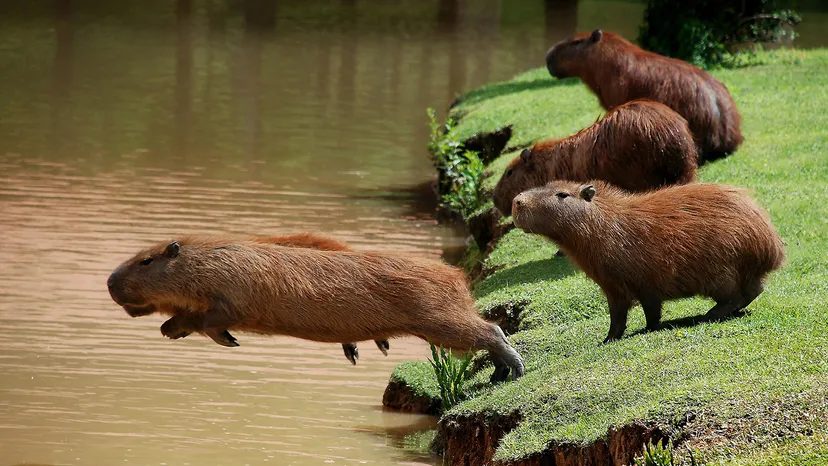
How capybara herds work in the wild
The proper collective noun for capybara is herd. It’s not just a label; it describes their true social structure in nature.
Most groups have 10-20 members. The numbers change according to the seasons. In dry weather, water sources shrink. The capybaras then congregate in much larger herds of 50 or more around the remaining ponds. It’s a survival tactic.
The social hierarchy in the Capybara herd is clear. The nucleus consists of females and their young. A few males join them. The dominant male takes the lead role. He defends the territory. He also mates with females. Subordinate and younger males remain on the sidelines. They form the outermost rows.
Why group life is important
Why do they live like this?
Safety in numbers is the most important factor. A large group makes it difficult for predators to get a single target. It also helps with alertness. More eyes mean earlier warnings.
Access to water also plays a role. In the dry season, gathering near water reduces travel stress. It saves energy.
The role of the dominant male is decisive. He keeps the peace. He drives the competitors away. Without him, the group could fall apart. Subordinate males also benefit from protection. They wait their turn. Or they go off to form their own groups later.
Young capybaras learn from the herd. They observe the interactions of others. They learn social cues. This shapes their behavior as adults.
Is it just about survival? Or something deeper?
Capybara herd bonds seem to be strong. They care about each other. They rest together. This reduces stress. It creates trust.
If it rains again, the groups can break up again. Large clusters collapse. Smaller units are formed. It is a flexible system. It adapts to resources.
This social structure supports their survival. It shapes their daily lives. It defines their relationship.
How are other rodent species different?
Many rodents are solitary creatures. Or live in small family apartments. Capybaras stand out. Their herd behavior is more complex. It better reflects some social mammals.
The dominant male’s presence is not always constant. He can leave when asked. New males can take over. The group adapts. Stability is not rigid. It is dynamic.
Young males often stay longer. They learn the ropes. You gain experience. Then they continue. This dispersal prevents inbreeding. It spreads genes.
What does this mean for us?
Observing herds of capybaras teaches us cooperation. About how animals balance individual needs with group survival. It’s not just instinct. It’s an adaptation.
In zoos, they are kept in small groups. No big herds. Dynamic changes. Without enough space or members, stress can increase. It is important to imitate natural conditions.
Their herd structure is an important part of their ecology. It affects how they eat. How they rest. How they interact. It is woven into their existence.
Will they always stay together?
No. Males may wander. Females with cubs may detach for a short time. A herd is not a static block. It’s a fluid network. Connections change. Members join. Members leave.
This flexibility is its strength. This allows them to thrive in a variety of conditions.
The Social Logic Behind the Chill
Capybaras don’t survive by being tough. They survive by staying together. A herd is a shield. It keeps jaguars, anacondas and people away. In this circle, the roles alternate. One is watching. One eats. One is sleeping. It’s a low-stress system that works because everyone contributes to the safety of the group.
Their diet is simple. Grass. They graze in the morning and evening when it is cooler. Sometimes they feed at night if they have to. Water is their anchor. During the dry season, they cluster near swamps and shallow ponds. When the rains arrive, they spread across the flood plains. It’s not about hiding. It’s about access.
Staying Alive Underwater
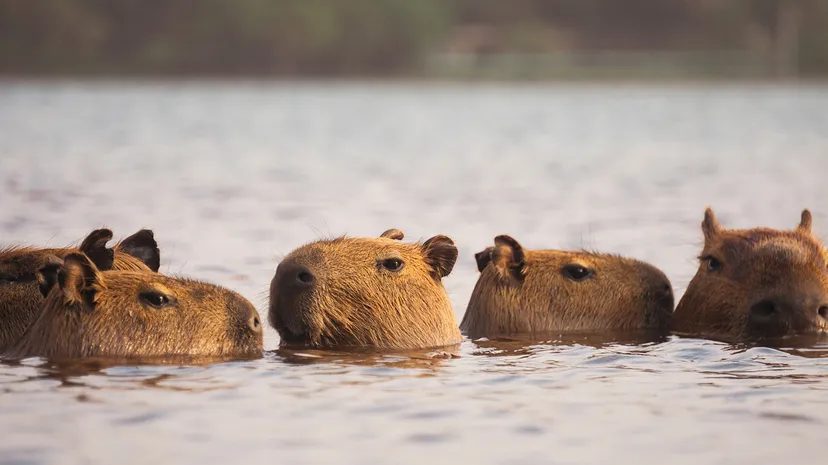
Predators don’t always knock. Sometimes they attack from below. When threatened, capybaras dive. They don’t just splash in. They go under. They can stay underwater for up to five minutes. That’s a long time for a non-aquatic mammal.
How do they do it? Their eyes, ears and nostrils are on top of their heads. It’s like a periscope. They can see and hear while mostly underwater. This is not just a trick. It’s a survival mechanism built into their anatomy.
Beyond the Wild Herd
Capybara behavior is not static. In captivity or in certain wild areas, they adapt. They have been reported to share space with ducks, cats and even cattle. Their calm demeanor makes them popular in zoos. They wallow in mud. They tolerate other species. Why? Maybe because they’re just that chill. Or maybe because cooperation extends beyond their own kind.
They also talk. A lot. Adults and babies use barking, chirping and whistling. These sounds are not random. They maintain group cohesion. They signal danger. They keep the herd together.
Humans and capybaras: a complex relationship
In parts of South America, capybaras are hunted. For meat. For skins. The dry season makes them easier targets. The water shrinks. Herds congregate. Their meat is sometimes compared to pork. Their pelts have been used for leather. It’s a practical relationship. Not always respectful, but real.
Yet, they’re not endangered. Populations remain stable throughout their range. They adapt to human-altered landscapes. You can see them grazing near the farms. Lounging in urban marshes. They thrive where we build, as long as there is water and grass.
So when you see a picture of a capybara cuddling in the mud, remember: It’s not just cute. It’s a family-oriented community. One that relies on cooperation to survive. They have learned the art of doing nothing and staying awake. We could learn a thing or two from that.