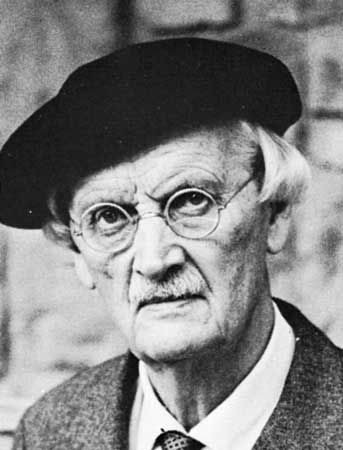
Auguste Piccard doesn’t just explore the extremes of Earth. he went there.
Born in Basel, Switzerland, on January 28, 1884, into an academic family, he had an intellectual curiosity that never yielded to traditional constraints. His father, Jules, was a professor of chemistry at the University of Basel. Auguste attended the Swiss Federal Institute of Technology in Zurich with his twin brother Jean. They split up early. Jean studied chemistry. Auguste chose physics.
Both received their Ph.D. Both planned to teach. But when Jean moved to universities in Munich, Lausanne and finally the United States, August stayed put. He married the daughter of a French historian at the Sorbonne and began his academic life. Or so it seems.
In the late 1920s, the skies called to him.
Most scientists at the time were satisfied with terrestrial observations. Picard wanted to observe cosmic rays from above for atmospheric disturbances. This is a bold move. Balloon technology existed, but it was still in its infancy. Flying at high altitude is very dangerous, but it is not well understood. Picard didn’t expect better equipment. He built it himself.
Reaching the Edge of Space
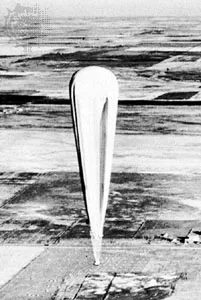
In 1930, he built a balloon specifically to study cosmic rays. It’s not just about collecting data. This tests human endurance at the edge of space.
The following year, in 1932, he improved the cabin design. This is no small adjustment. This is a breakthrough in pressurized habitats at high altitudes. The result? He climbed to a height of 17,008 meters (55,800 feet).
This height corresponds to about 30% of the height of the Karman line, the boundary line generally considered to be the starting point of outer space. he survived. The data he collected changed the way scientists understood high-altitude physics. He showed that with the right ship design, humans can safely explore the upper stratosphere.
Why is this important? Because it opens up new areas. Before Picard, the stratosphere was a speculative no-man’s land. After him, it was a laboratory.
The Descent Begins
But the sky alone is not enough. If he can conquer the skies above, why can’t he conquer the water below?
The depths of the sea are as mysterious and hostile as space. The pressure increases by one atmosphere for every 10 meters. At 1,000 meters, you experience 100 times greater pressure than at sea level. Metal crumples. Glass shatters. Existing submarines have limited depth and maneuverability.
Piccard saw the parallel. Both the stratosphere and the deep sea are voids. Both require stress-resistant habitats. Both asked for isolation.
He applied his engineering principles to the sea. In 1948, he completed the first true bathyscaphe. This is not a submarine in the traditional sense. This is a bathyscaphe designed for one purpose: to sink under tremendous pressure and stay underwater.
He didn’t keep it to himself. He later made several dives with his son Jacques Piccard. The two of them would eventually set records that few can achieve.
From the stratosphere to the abyss
Heaven alone is not enough.
Auguste Piccard had just proven that he could survive in places where the air was so thin it was impossible to breathe and the air pressure was one tenth of sea level. He arrived in Zurich and Brussels with great fanfare. The scientific community celebrated the airtight cabin. They celebrated the pressurized air. They celebrate his survival by stared into the isothermal layer.
But Piccard looked down.
As a child, he was fascinated by sea fish. He wondered why people should fear the depths when they could conquer the heights. The logic is simple, but also scary. If you can build a balloon in the sky, you can probably build a ship in the sea.
He called it a bathyscaphe.
Physics is hard. The cabin must be heavy to withstand the pressures of the deep sea. heavier than water. In the past, researchers hung these heavy pods from cables and lowered them slowly. Suitable for low tests. It failed when the ocean pushed back. Cables snapped. Pressure twisted metal.
Picard didn’t try to fight his weight. He flipped the problem.
Balloons rise because they are lighter than air. A bathyscaphe is heavier than water, so it sinks. To get up, you have to lose weight. Simple. elegant. Revolutionary.
The float (the part that provides buoyancy) needs to be filled with something that won’t collapse under pressure. air? No, air is compressed very easily. It’s useless for maintaining volume at depth. Picard chooses heptane. It is a petroleum derivative. Dense. It is not compressible. It keeps the float rigid, even when the sea tries to crush it.
Diving delays due to the war
Construction stopped. World War II broke out. The Bathyscaphe remained unfinished for many years, representing peaceful exploration interrupted by war.
It appeared in 1948.
October 26 was the first test. Unmanned. shallow water. Eighty feet. It worked.
We’ll go even deeper on November 3rd. Four thousand feet? No, it’s 1400 meters. About 4,600 feet. The cabin held. The pressure didn’t matter.
The heptane float did its job.
But the sea has other plans.
As the ship surfaced, heavy waves crashed into it. The buoy was damaged.
Damaged.
The project ran into difficulties. There were enough problems. The money ran out. Doubt set in.
Family business
Jacques Piccard appears.
August’s son. Assistant at the Department of Economics, University of Geneva. He is not an engineer. He is a negotiator. He spoke to governments. he spoke to the industry.
News has arrived from Trieste, Italy. A local manufacturer proposes to build a new deep-sea submarine. Something better. Jacques jumped on it.
August, now 69, watched. But he didn’t stop. In August 1953, the Mediterranean became a deep battlefield. 2 bathyscaphes. Two countries.
France sent one. Dive to a height of 2100 meters. 6900 feet. deep.
Italy sent Trieste. It went to 3,150 meters. Ten thousand, three hundred feet.
Auguste Picard did it. Dreams are reality. The man who once reached the stratosphere has now fallen into the abyss.
Jacques left economics. He stayed in the family business. They build more. They go deeper.
August retired in 1954 and left Brussels for Switzerland. The teaching ended. The climbing stopped.
However, the bloodline kept moving upward. And down.
In 1999, Auguste’s grandson Bertrand Piccard broke a new record. He didn’t dive. He circled the globe. Nonstop. In a balloon.
The Piccards don’t just border the edge of the world. They orbit it.