


It hits at 5,400 miles per hour. No brakes. No atmosphere to slow it down. Just a massive steel cylinder screaming toward a dust-free surface that hasn’t been touched by a human hand in half a century.
On August 5, at 02:35 EDT, the upper stage of a SpaceX Falcon 9 rocket will collide with the Moon. This isn’t a controlled landing. It’s a crash. A high-velocity, high-mass impact from a piece of space junk that has been drifting for over a year.
How a Reusable Rocket Becomes a Moon Buster
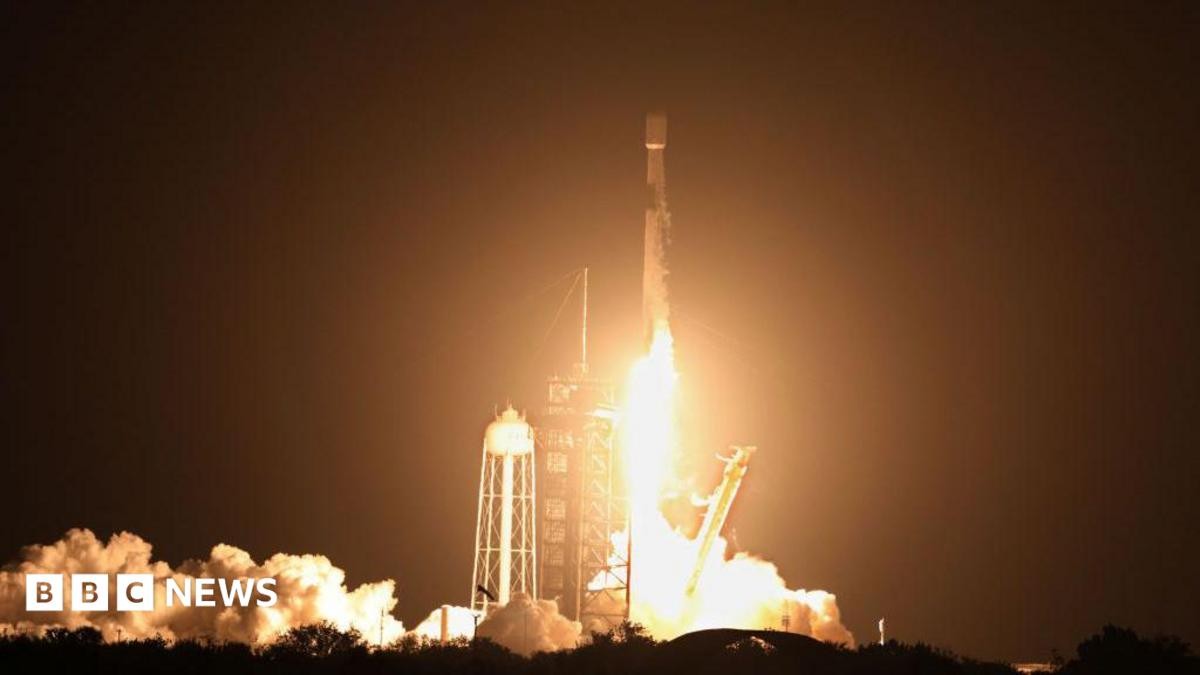
The rocket in question was launched last January during a joint US-Japanese mission. Its job was to deliver lunar landers to the Moon. Standard procedure for SpaceX means the first stage returns to Earth for reuse. But the upper stage—the bulky second half of the booster—doesn’t come home. It stays in space. Stuck.
This specific piece of debris is enormous. We’re talking about the size of a five-story building. On Earth, it weighs at least 4,400 pounds. In the void of space, weight doesn’t matter as much as inertia, but this thing still packs a serious punch. It’s carrying roughly 1 million kilograms of energy when it finally connects with the lunar surface.
Astronomer Bill Gray spotted the trajectory first. Using public data, he noticed this upper stage wasn’t just floating aimlessly. It was on an accidental, direct collision course. NASA’s Centre for Near-Earth Object Studies confirmed it. The target is the Einstein Crater, on the daylight side of the Moon. Visible. Bright. Unavoidable.
Why This Impact Matters (Beyond the Flash)
You can’t see this with the naked eye. Sorry, no fireworks show for the backyard observer. But if you have a serious telescope? You might catch a flash. Or better yet, you’ll watch the dust plume rise.
Dr. Matt Bothwell from the University of Cambridge calls it a “huge smashing into the Moon.” Without an atmosphere to dampen the explosion, the impact will be more violent than anything here on Earth. Debris will rocket upward 50 kilometers or more. It will spread sideways, slowly settling into the grey regolith.
“It’s going to impact and it’s going that send up a huge plume of dust… and that’s going to spread sideways over times.”
But here’s the real reason scientists are excited. It’s not about the noise. It’s about the science.
This is a free experiment. We get to watch exactly what happens when a dense metal object hits the lunar surface at hypersonic speeds. For the first time, we’ll see fresh subsurface material exposed. We can measure how much debris goes up. How high. How it falls back. It sharpens our models. It teaches us what’s buried just beneath the Moon’s crust.
Telescopes across the Americas will track it. NASA’s Lunar Reconnaissance Orbiter. South Korea’s Danuri probe. Citizen scientists with their own gear. Everyone is watching.
The Dark Side of Space Exploration
There’s a cautionary tale in this crash. It highlights the growing problem of space clutter. We keep sending stuff up there. Rockets. Satellites. Debris. Sometimes they just collide and shatter into more pieces. A runaway cascade isn’t just a risk; it’s becoming a reality.
The European Space Agency estimates 54,000 floating objects larger than 10 cm are already drifting up there. Since 1957, humanity has launched about 17,00 tonnes into the void. That’s a lot of heavy metal.
This wasn’t the first rocket to hit the Moon. China’s Long March 3C upper stage did in 2022. It hit the far side, invisible to Earth. Back in the Apollo era, NASA deliberately crashed probes to study seismic activity. But that was intentional. This? This was an accident. A side effect of our reliance on reusable rockets and orbital mechanics.
The impact will leave a crater. Bill Gray predicts one more than 17 meters wide. It’s permanent. A scar on a world that’s seen billions of years of hits, yet never one quite like this.
So, we watch. We learn. And we wonder how much longer we can keep throwing stuff up there without consequences.


