


Life on Earth runs on a schedule. It is not random. Organisms follow periodic fluctuations that mirror the environment. These cycles are tied to the movement of celestial bodies. The relative position of Earth to the Sun changes. It creates day and night. The Moon pulls on the oceans. It creates high tides and low tides.
Animals respond to these shifts. But the response does not come from nowhere. There is an internal mechanism. Scientists call it a biological clock. This clock maintains rhythmic phenomena. It keeps time even when the external stimulus disappears.
Think about what happens when you break that routine. Take an animal used to a specific cycle. Move it quickly to a new geographic point. The environmental cycle there is no longer synchronous with the animal’s internal cycle. The clock continues. It keeps ticking to the old time. For a short while, the organism is out of sync.
Humans do this all the time. We fly across time zones. We ignore the local sun. Our bodies react. We feel fatigue. Our efficiency drops. This is not a metaphor. It is a physiological reality.
Jet lag is the human experience of a biological clock out of sync with its environment.
This phenomenon has a name. It is called jet lag or jet syndrome. The term describes the specific disconnect between the internal biological rhythm and the external world.
The core concept here is the biological clock. It is a self-sustaining system. It does not need constant external cues to function. However, it does need those cues to stay aligned. Without alignment, the mismatch causes problems.
Consider the circadian rhythm. This is the most common type of biological rhythm. It operates on a roughly 24-hour cycle. Light is the primary cue. Darkness is the signal to rest. Disrupt this light cycle and you disrupt the clock.
Where does this clock reside? In the brain. Specifically, the suprachiasmatic nucleus. It receives signals from the eyes. It adjusts the body’s functions. Heart rate. Hormone release. Body temperature. All of it follows the schedule.
Why does this matter? Because the clock governs health. Disruption leads to errors. The body expects food at a certain time. It expects sleep at another. When the schedule breaks, so does the system.
Jet lag is just the most visible symptom. The underlying issue is the persistence of the biological clock. It continues its original function. It does not instantly adapt. This lag is the cost of speed. We moved faster than our biology.
The biological rhythm is not just a passive reaction. It is an active state. It is maintained by the clock. And when the clock runs on old time, the organism suffers.
This sets the stage for understanding how we adapt. Or fail to. The clock is stubborn. It resists change. Learning to manage it is a skill. Ignoring it is a mistake.
The relationship between the sun, the moon, and our bodies is not abstract. It is daily and physical. We are tied to the planet’s rotation. When we cut that tie, we pay a price. The price is measured in tiredness. In confusion. In lost efficiency.
The biological clock keeps time. But it only makes sense if we

Biological clocks tick in more ways than one. We usually think of sleep and wakefulness as the primary cycle. But nature keeps time on several different scales.
A rhythm that repeats roughly every 24 hours has many names. Scientists call it circadian. The term comes from Latin words meaning “about a day.” You might also hear it described as a solar day, diel, daily, diurnal, or nychthemeral rhythm. These terms all point to the same fundamental pulse. It is the beat of life on a spinning planet.
But the day isn’t the only clock.
The Pull of the Moon
Look at the ocean. It breathes. This movement is a lunar tidal rhythm. The moon’s gravity pulls on large bodies of water, causing ebb and flow. This cycle takes about 24.8 hours. That extra eight minutes matters. It means the moon isn’t directly overhead at the same time twice a day.
Coastal ecosystems live by this schedule. Plants and animals on the shore adapt to the changing waterline. Many species of shorebirds have locked into this pattern. They don’t hunt randomly. They wait for the tide to go out. Only when the beach is exposed do they seek food. Miss the window and you starve. The rhythm dictates survival.
Monthly and Annual Cycles
The clock speeds up or slows down depending on where you look.
Monthly rhythms last about 29.5 days on average. This matches the lunar cycle. Marine plants often follow this timeline. So do the reproductive cycles of many sea creatures. Spawning events sync with the moon phases. It isn’t random chance. It is a deeply ingrained biological imperative.
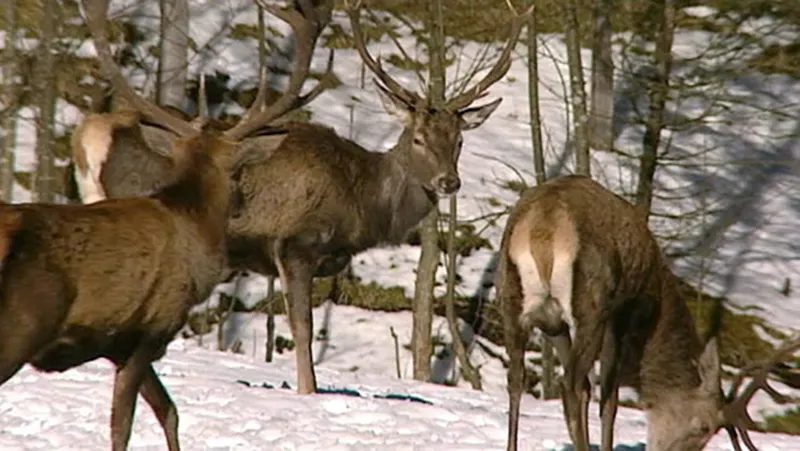
Then there is the annual rhythm. This one governs the temperate zones. Here, reproduction and growth follow the seasons. Plants bloom. Animals migrate or hibernate. The cycle is driven by Earth’s orbit around the sun. It is a slow, steady drumbeat that structures entire ecosystems.
Why This Matters
These aren’t just academic labels. They are functional realities.
An organism that ignores its internal clock gets left behind. A bird that feeds at high tide misses its meal. A coral that spawns on the wrong night sees its eggs drift away unused. The timing is everything.
Understanding these rhythms helps us predict behavior. It helps farmers know when to plant. It helps conservationists protect breeding grounds. It reminds us that life is not chaotic. It is structured by the cosmos.
We live in a world of overlapping cycles. 24 hours. 29.5 days. 365 days. They stack on top of each other. Creating a complex, rhythmic existence. One we are only beginning to fully appreciate.


