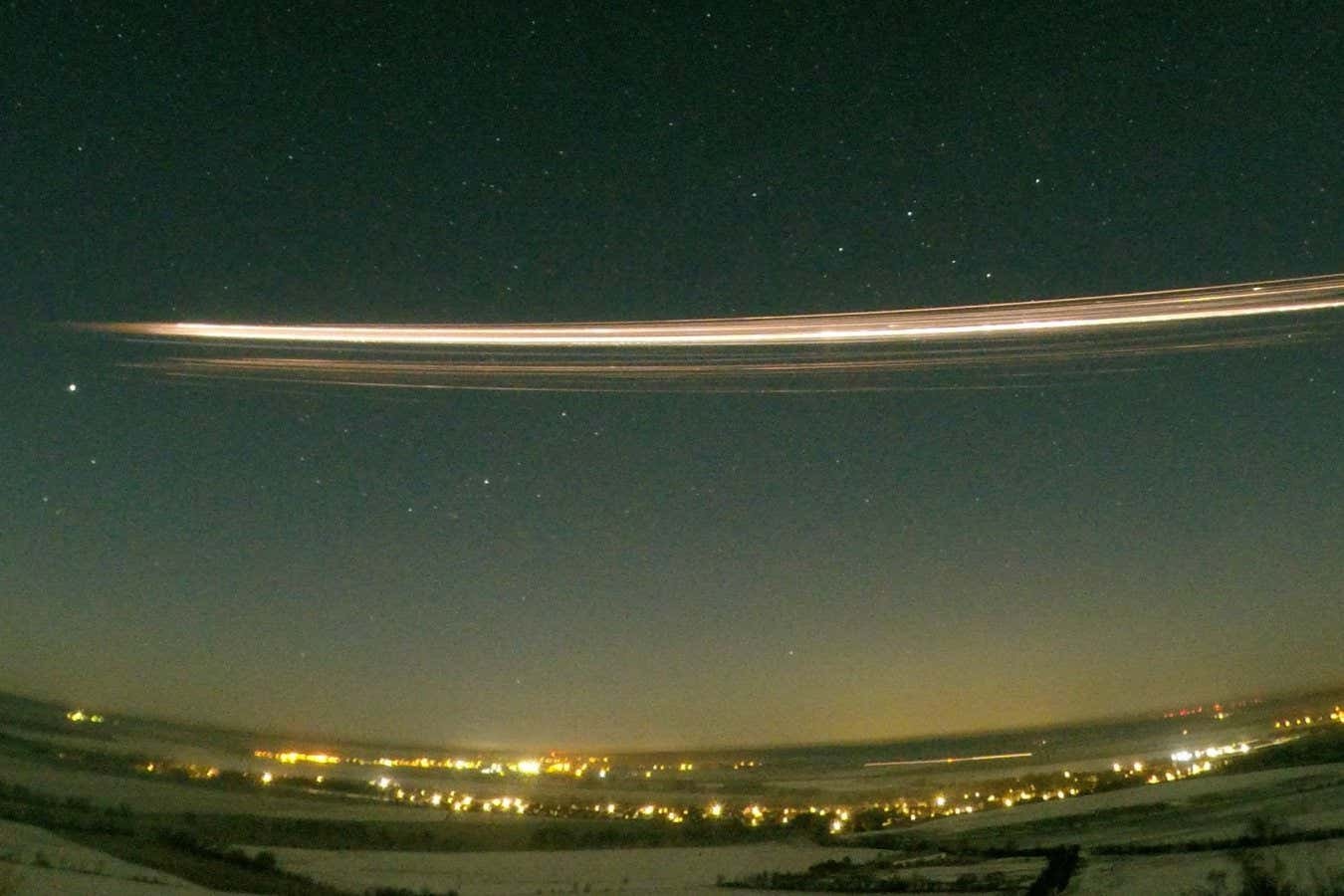
The increasing number of spacecraft and satellites in orbit is creating a new form of atmospheric pollution, as vaporized metals from burning-up rockets and debris accumulate in the upper atmosphere. Recent studies have confirmed that this isn’t just theoretical: a SpaceX Falcon 9 rocket re-entry in early 2025 released a detectable plume of lithium and other metals over Europe, demonstrating the direct impact of space activities on atmospheric chemistry.
The Problem with Re-Entry
As space launches become more frequent—driven by companies like SpaceX and Amazon expanding satellite mega-constellations—more materials are burning up during re-entry. The current practice of allowing satellites to fall and burn at the end of their lives, while intended to avoid collisions, is now recognized as a significant source of pollution. Experts predict that space debris could increase by 50 times in the next decade, rivaling natural meteoroid influx in mass.
The misconception that this debris simply “disappears” upon burning is incorrect. Vaporized metals, particularly aluminum, react with the atmosphere to create particles that catalyze ozone destruction, form high-altitude clouds, and alter sunlight penetration. The Falcon 9 plume alone contained an estimated 30 kilograms of lithium, but far more aluminum, releasing approximately 1000 tonnes of aluminum oxide into the atmosphere annually.
Ozone Depletion and Climate Impact
The consequences of this pollution are potentially severe. Aluminum oxide particles accelerate ozone breakdown in the stratosphere, threatening to expand the southern hemisphere’s ozone hole—a reversal of recent progress made through phasing out ozone-depleting chemicals. Increased UV radiation reaching the surface poses higher risks of skin cancer.
Moreover, metal oxide particles can act as condensation nuclei, promoting cirrus cloud formation in the upper troposphere. These clouds trap heat, contributing to global warming, though the impact is currently smaller than that of greenhouse gases like carbon dioxide.
The Need for Sustainable Space Practices
Scientists are urging for a more thorough assessment of these effects. The rapid expansion of satellite constellations, with SpaceX seeking approval for 1 million more, demands caution. Proposed solutions include using alternative satellite materials (though even wood combustion releases pollutants) or sending retired satellites to high-altitude “graveyard orbits.”
“We need to take a little bit of time and think about what we’re doing before we do it,” says atmospheric physicist Robin Wing. “This explosion of satellites… it’s very fast, and we don’t know the consequences.”
The unchecked growth of space activities risks undoing decades of environmental progress. A shift towards sustainable space practices is critical to protect Earth’s atmosphere from this emerging pollution source.