The UK government has definitively stated that no further adjustments will be made to the recently revised farm inheritance tax proposals. This decision follows months of protests from farming organizations who argue the tax remains detrimental to the rural economy, despite a significant increase in the tax-free threshold.
Protest and Compromise
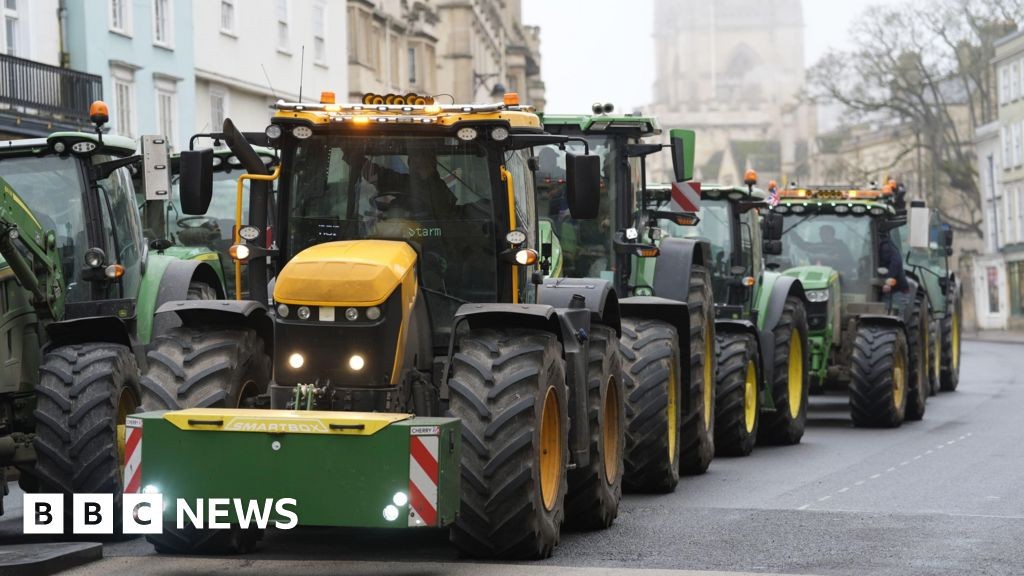
Farmers demonstrated their opposition at the Oxford Farming Conference earlier this week, using tractor horns to disrupt a speech by Environment Secretary Emma Reynolds. The government initially proposed a 20% tax on inherited agricultural assets exceeding £1 million. Following pressure, that threshold was raised to £2.5 million, a move described as a “partial climbdown” by the Country Land and Business Association (CLA). Reynolds made clear that further changes are off the table, stating that constructive dialogue — rather than disruptive protests — influenced the current policy.
The Revised Policy and Its Limits
The updated policy allows couples to transfer up to £5 million in qualifying agricultural assets tax-free, leveraging a spousal exemption. This represents a substantial increase from the original proposal, which was projected to generate £520 million annually by 2029. The government justified the initial tax as a means of preventing wealthy investors from exploiting farmland as a tax loophole while protecting smaller farms.
Despite the raised threshold, farming unions remain critical. The National Farmers’ Union (NFU) continues to advocate for a complete reversal of the policy, deeming it fundamentally flawed. Though acknowledging the relief felt by many farmers following the December revision, NFU President Tom Bradshaw emphasized that ongoing political pressure will be necessary to achieve further change.
Payment Scheme Reforms
Reynolds also addressed concerns over the Sustainable Farming Incentive (SFI), a post-Brexit environmental land management scheme. The SFI faced criticism earlier this year when funding was abruptly cut, leaving farmers in uncertainty. The government now pledges to avoid similar sudden closures, announcing plans for a simpler, fairer, and more stable SFI application process.
The new scheme will open in phases, starting with smaller farms under 50 hectares in June, followed by a wider application window in September. The government is also considering streamlining the number of funded initiatives and potentially capping individual farm payments. Reynolds emphasized that environmental protection is not separate from profitability but essential to long-term sustainability.
Ongoing Concerns and Future Outlook
Despite the government’s assurances, agricultural groups remain skeptical. The Wildlife Trusts argue that the current budget for environmental schemes must be significantly increased to effectively address climate change and wildlife decline. A recent profitability review commissioned by the government revealed that the farming sector feels “bewildered and frightened” by ongoing policy changes.
The government’s refusal to reconsider the inheritance tax further solidifies a policy that many in the agricultural sector view as damaging. While some relief has been provided, the underlying opposition from key industry groups suggests that this issue will remain a point of contention in future political negotiations.