July 2024. The sky over New York tore open.
A fireball. A sonic boom that shook windows. Chaos.
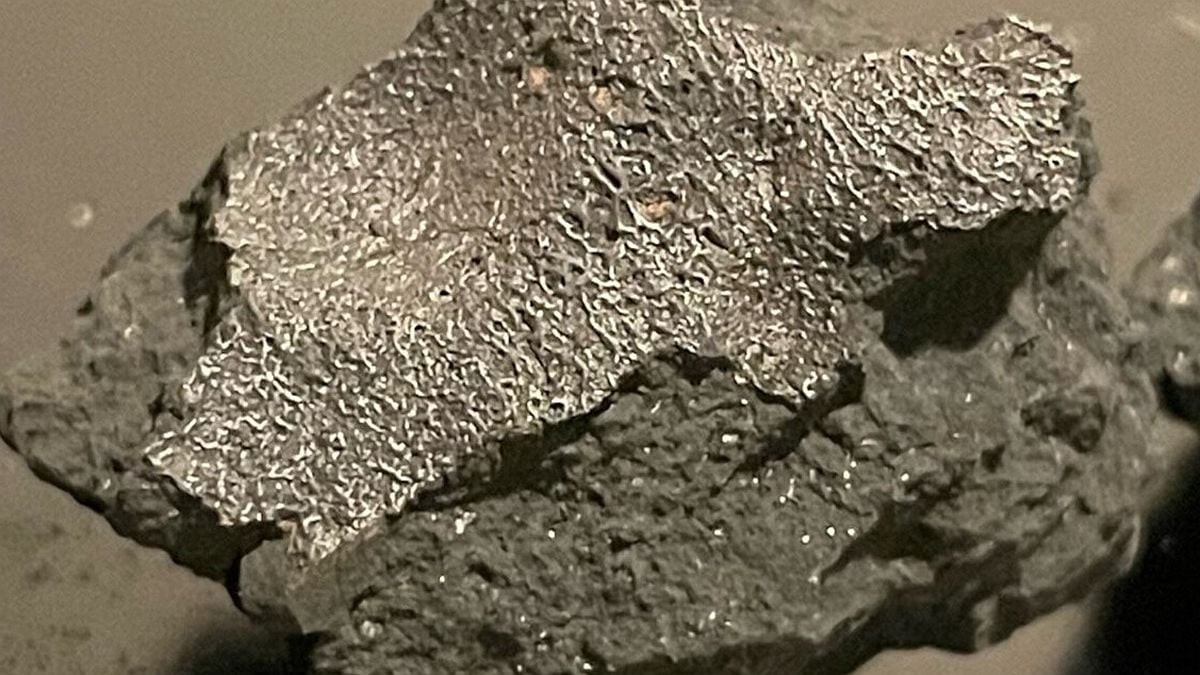
In New Jersey, one homeowner didn’t just see it. She got hit by it. A shard of rock punched through her ceiling, exploded on impact, and landed right there in her bedroom.
Bad luck for her roof.
Amazing for science.
They named it the Hillsborough meteorite. It landed in a house. That means it didn’t sit in dirt. It didn’t soak in rain. It stayed clean. Earth contamination? Minimal. The chemistry inside remained as fresh as the day it formed.
“A forensic study… revealed that they contained preserved bits… where it experienced concentrated salty fluids”
— Peter Jenniskens, SETI Institute
Science loves a clean sample. Most meteorites? They lie around in deserts or Antarctic ice for years before anyone finds them. Time degrades them. Rain changes them. Soil eats into them.
Hillsborough fell in daylight. Millions of eyes. Cameras. Doorbell feeds. The whole internet watched it shatter.
Meteors break apart. Physics does this. Air rushes into cracks. Pressure spikes. Kablooey.
Most of the debris scattered across Staten Island. Nobody found that stuff. Just the one piece inside the house.
The owner acted fast. Gloves. Aluminum foil. Glass jars.
That quick reflex saved everything. These are now the most pristine CM1/2 meteorite pieces we have. Ever.
Brines and Amino Acids
Calculations placed the home of this rock in the asteroid belt. Between Mars and Jupiter. It belongs to the CM class, named after the Mighei meteorite from Ukraine. These guys are carbon-rich. Ancient. They hold keys to the Solar System’s infancy.
Here is the surprise.
Inside Hillsborough, researchers found salt-rich inclusions. Near-surface material from its parent body. And minerals that show signs of aqueous alteration.
Liquid water changed them. Long ago.
But not just water. Brines. Water saltier than any ocean on Earth today.
Why does this matter?
Salty brines drove complex chemistry. They left behind unusual minerals. They created organic compounds. Specifically, amino acids. The building blocks of life.
We knew asteroids had amino acids. We didn’t know exactly where inside them these formed.
Hillsborough gives us the blueprint.
Pockets of salty water inside primitive asteroids were far more chemically active than we realized.
Maybe these rocks brought life to baby Earth. That is the theory. It fits the data.
But wait.
Could these chemicals just be leftovers from older collisions? Debris recycled into something new?
Hard to say. Without going to the asteroid belt ourselves, we can’t check. We rely on the mess left behind in suburban bedrooms.
What it does tell us is that the early Solar System was not a cold, dead vacuum. It was wet. It was salty. It was dynamic. Water mixed with rock and organics inside tiny, drifting worlds long before Earth got its first breath.
Complex chemistry was happening everywhere.
We just have to wait for the next rock to fall to know where else.