Researchers have developed a novel superconductor based on germanium, a material already ubiquitous in the computing industry, potentially unlocking significant advancements in quantum computer technology. The breakthrough addresses a crucial hurdle in quantum computing: the need for materials that both exhibit superconductivity and can be seamlessly integrated into existing chip fabrication processes.
What is Superconductivity and Why Does It Matter?
Superconductors are materials capable of conducting electricity with zero resistance. This property is exceptionally valuable in any electrical device, as it eliminates energy loss due to heat. Crucially for quantum computing, superconductors also maintain quantum coherence – a phenomenon essential for the manipulation and storage of quantum information.
The Challenge of Integrating Superconductors into Computing
Previous superconductors, while effective, were often made from unusual and difficult-to-work-with materials. This posed a significant barrier to incorporating them into practical computing devices, particularly quantum computers which require complex circuitry.
A Novel Approach: Gallium-Doped Germanium
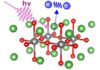
Peter Jacobson at the University of Queensland, Australia, and his team have created a germanium-based superconductor by introducing gallium into the material through a process called doping. Unlike previous attempts at similar combinations, which proved unstable, Jacobson’s team employed X-ray irradiation to force a more uniform distribution of gallium within the germanium film. This resulted in stable, patterned structures.
Super-Cooling Requirements & Quantum Computing’s Landscape
It’s important to note that this new superconductor, like existing ones, doesn’t operate at room temperature. It requires extremely low temperatures – specifically, 3.5 kelvin (-270°C/-453°F) – to function. While this eliminates its use in typical consumer devices, David Cardwell at the University of Cambridge suggests it’s a perfect fit for quantum computing, which already necessitates super-cooling.
“It could be transformational for quantum,” says Cardwell. “This gives a whole new level of functionality, because you’ve got a very cold environment anyway. That would be, I think, the obvious starting point.”
Overcoming the Crystal Structure Defect Issue
Previous attempts to combine superconductors with semiconductors (key components of computing devices) resulted in defects in the crystal structure – a major obstacle for practical applications. These defects lead to signal absorption and interfere with the precise quantum operations.
“Disorder is really a parasitic effect in quantum technology,” explains Jacobson. “It causes absorption of your signals.”
A Uniform Crystal Structure for Enhanced Functionality
The newly developed gallium-doped germanium superconductor overcomes this problem by enabling layers of the material and layers of silicon (another common semiconductor) to sit directly on top of each other without disrupting the crystal structure. This paves the way for manufacturing integrated chips that leverage the unique advantages of both semiconductors and superconductors. These combined chips have the potential to drastically improve the efficiency and reliability of quantum computers.
In conclusion, the creation of a stable, easily manufactured germanium superconductor represents a significant step forward for quantum computing. By addressing issues related to material integration and crystal structure defects, this innovation unlocks possibilities for more powerful and reliable quantum technologies