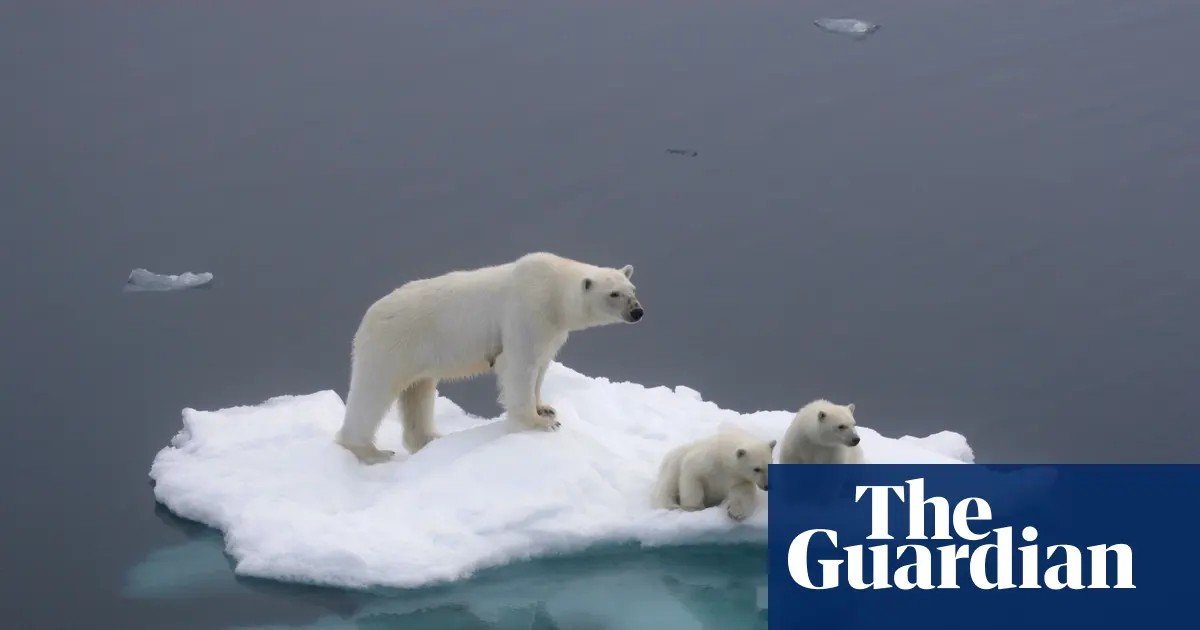
The Arctic is changing faster than many species can adapt, and new research shows polar bears are already altering their DNA in response to a warming climate. While this adaptation might seem like good news at first glance, it underscores the severity of human-caused environmental stress forcing animals to evolve at an unprecedented rate. The study marks the first statistically significant link between rising temperatures and genetic changes in a wild mammal population, a development that should not be celebrated but rather viewed as a stark warning.
The Arctic as a Canary in the Coal Mine
For decades, polar bears have served as a visceral symbol of climate change, with images of stranded bears on shrinking ice caps becoming synonymous with environmental destruction. The Arctic region is warming at a rate far exceeding the global average, making it uniquely susceptible to visible and dramatic habitat loss. This rapid warming is now triggering genetic shifts in polar bears, but this adaptation is not a solution; it’s a symptom of a deeper crisis.
Adaptation vs. Survival: A Critical Distinction
While animals adapting is a natural process, the speed at which this is happening due to human activity is alarming. The study demonstrates that DNA changes are occurring in response to extreme environmental pressure, not as a gradual evolutionary process. This rapid genetic shift raises questions about whether other species can keep pace with the accelerating rate of change, and what the long-term consequences might be for biodiversity.
Beyond Polar Bears: A Global Trend
The genetic adaptation observed in polar bears is not an isolated incident. Animals worldwide are already showing signs of behavioral and physical changes in response to climate change. Octopuses are moving into British waters, tiger moths are thriving in Jersey, birds are developing larger beaks in Australia, and bats are growing bigger ears to regulate heat. These shifts highlight a global pattern of forced adaptation driven by human activity.
The Human Role in Ecological Disruption
Habitat destruction exacerbates these changes, forcing animals into closer contact with humans and increasing conflict. The plight of the Tapanuli orangutans in Indonesia, whose habitat is threatened by gold mining, exemplifies this issue. The expansion of mining operations, worsened by climate-related flooding, has led to a dramatic decline in their population.
The Future of Climate Reporting
Scientists emphasize that adaptation is not a substitute for mitigation. The polar bear study reinforces the urgent need to reduce fossil fuel emissions and protect ecosystems. The real question remains whether animals can adapt fast enough to outpace the rate of human-induced environmental change, a scenario that currently appears unlikely.
Conclusion
The genetic changes observed in polar bears serve as a chilling reminder of the scale of the climate crisis. While adaptation is occurring, it is a response to a crisis that should not exist in the first place. The fate of species now hinges on whether humanity will act decisively to reverse the damage already done.