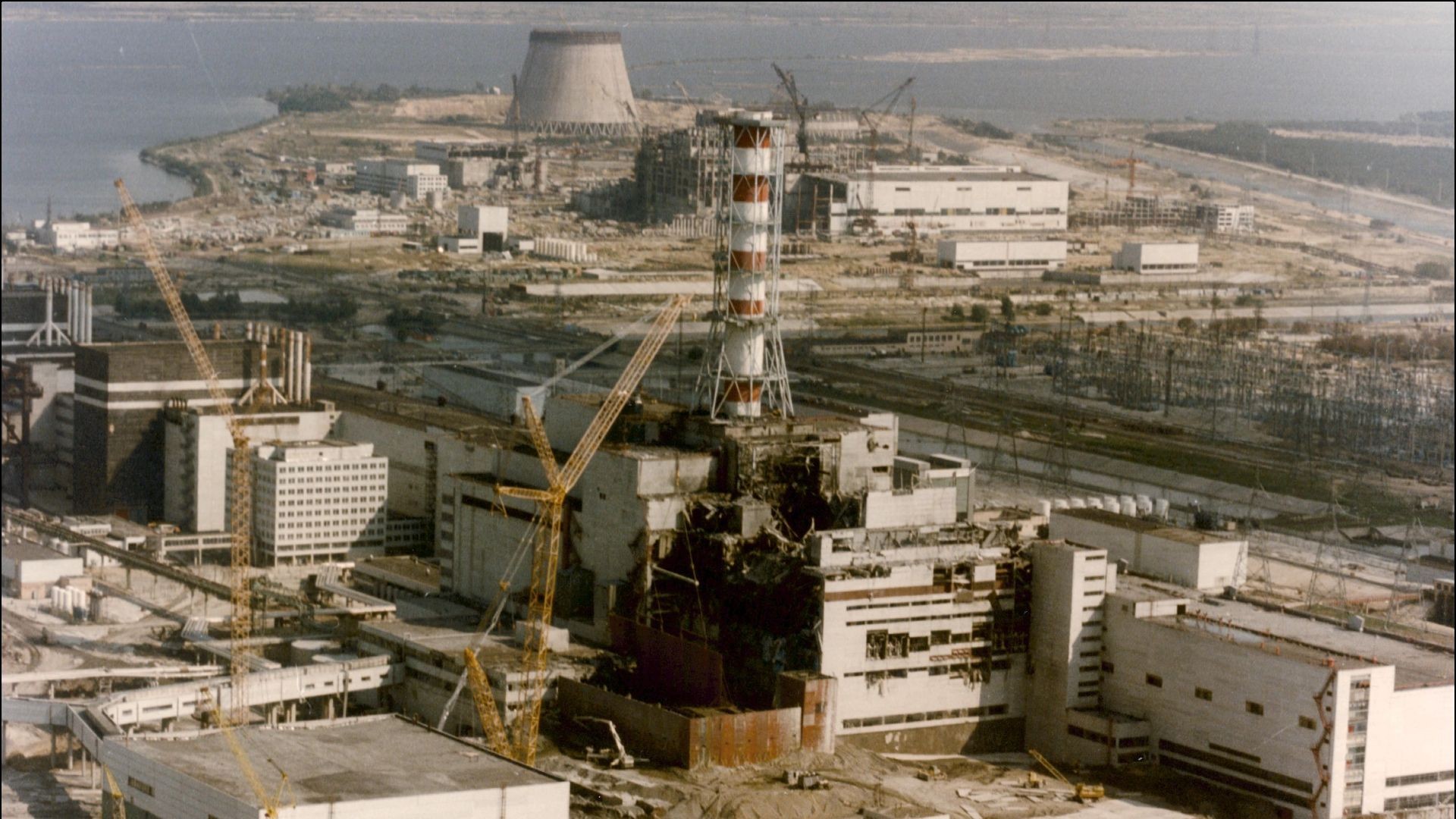
On the early morning of April 26, 1986, a routine safety test at the Chernobyl Nuclear Power Plant escalated into the most significant nuclear accident in human history. What began as an attempt to improve plant safety resulted in a catastrophic meltdown that released massive amounts of radioactive material into the atmosphere, changing the course of nuclear energy and global safety protocols forever.
The Failed Safety Test
The disaster occurred during a test designed to determine if the plant’s turbines could provide enough electricity to keep cooling pumps running during a power outage, acting as a bridge until emergency diesel generators could take over.
However, a series of operational failures and decisions compromised the stability of Reactor 4 :
- Grid Demands vs. Safety Protocols: To meet electricity demands from the Kyiv grid, operators were prevented from a full shutdown. Instead, the reactor was kept at half-power for several hours, causing a buildup of xenon —a byproduct that makes nuclear reactions harder to control.
- Inexperienced Personnel: The test was handed over to a night shift with less experience. Instead of stabilizing the reactor at a higher power level, the operators inadvertently allowed the power to drop too low.
- Desperate Measures: In an attempt to regain control and raise the power, operators withdrew almost all the control rods —the very tools designed to slow down the fission process.
The Moment of Explosion
At approximately 1:23 a.m., the reactor reached a critical state. A massive power surge, 100 times greater than normal, occurred. When operators attempted to insert the 211 control rods back into the core to stop the reaction, the rods jammed.
The resulting steam explosions blew the roof off the reactor building and ignited a massive fire. This released a plume of radioactive isotopes—including iodine, strontium, and cesium —high into the atmosphere, spreading across borders and into the wider European continent.
The Fatal Design Flaw: A “Positive Feedback Loop”
While human error played a decisive role, the catastrophe was fundamentally rooted in a critical design flaw of the Soviet RBMK reactor.
To understand why Chernobyl was so volatile, one must look at how it managed the nuclear reaction compared to Western reactors:
- Standard Reactors (Negative Feedback): Most Western “light water” reactors use water as both a coolant and a moderator (the material that sustains the reaction). If the reactor gets too hot and the water turns to steam, the reaction slows down because there is less liquid water to moderate the neutrons. This is a built-in safety mechanism.
- The RBMK Reactor (Positive Feedback): Chernobyl used graphite as a moderator. In this design, as water turns to steam, it creates “voids” that actually accelerate the reaction rather than slowing it. This is known as a high positive void coefficient.
- The Graphite Tip Error: Even more dangerously, the control rods were tipped with graphite. This meant that when operators tried to shut down the reactor by inserting the rods, the graphite tips actually caused a momentary increase in reactivity before the rods could begin to slow the process.
Despite warnings from British officials nearly a decade earlier regarding these defects, the flaws in the RBMK design remained uncorrected.
Human and Environmental Impact
The immediate aftermath was devastating. Two workers died in the initial blast, followed by many more among the “liquidators”—the firefighters and workers tasked with containing the radiation.
The long-term consequences remain a subject of intense study:
– Health Effects: While a 2000 UN report found no significant increase in overall cancer mortality across the general population, there were documented spikes in thyroid cancer among children in the region due to radioactive iodine exposure.
– The Exclusion Zone: A 1,000-square-mile area remains uninhabitable for humans. Ironically, this “Exclusion Zone” has become a unique nature preserve, serving as a living laboratory for scientists to study how wildlife and plants adapt to chronic radiation exposure.
Conclusion
The Chernobyl disaster was the result of a “perfect storm”: a combination of flawed reactor physics, ignored technical warnings, and critical human errors during a high-stakes test. It stands as a permanent reminder of the necessity for rigorous safety protocols and transparent engineering in nuclear energy.