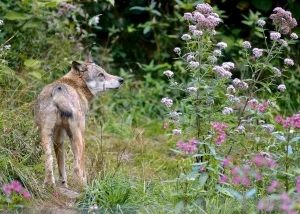
Fear is still the first reaction many people have when they hear the word “wolf.” But more and more people are trading their fear for excitement. They spend their weekends tracking paws in the mud and listening to eerie wolf choruses in the twilight. It’s not just about adrenaline. It’s about the ecosystem coming back to life.
Germans love to travel in their home country. For 15 years, this love extended to the forest. The gray wolf returned to the republic and proved that drawing a line on the map does not change nature.
Evidence of their existence is everywhere. Wolf tracks can be found in Southern Bavaria. You see tracks in the black forest. Some wandered as far north as Denmark. This is not a local anomaly. This is a continental trend.
The biggest question remains. Where should I go if I want to see these animals in the wild?
The best place for outdoor observation
The good news is that there are plenty of options. You don’t need a PhD in animal behavior to find the best places to observe. Several destinations across Europe are viewing centers for the “big three”: bears, lynx and wolves.
The best viewpoints are often closer than you think. A walk along wolf migration routes can lead to a designated viewing area. The distance between human habitation and wild habitats is shrinking, but so is the gap between our understanding of these animals.
Why is this important now?
This is more than just a travelogue. This is a change in the way we live side by side. These predators have been driven to the brink for decades. Their return means changes in land use and conservation practices. But it’s also a sign of tension.
Some locals are scared. Others are delighted. Reality is messy. You can’t create a balanced story by ignoring fear. But the tracker’s joy at finally seeing the lynx’s eyes catch in the moonlight can’t be ignored either.
It’s not just a matter of whether you see it or not. It’s “How do you deal with them if you meet them?”
Track the wolf
Wolves are elusive. They avoid direct confrontation. But they signs. Tracks. Scats. Howls that echo through the valley.
Guided tours are emerging to areas where wolf populations are stable. These are not visits to the zoo. They are immersive experiences. You learn to read the forest. You know wolves aren’t monsters. They are top predators with complex social structures.
If you’re planning a trip, look for areas with active conservation programs. These areas often provide the best infrastructure for observing animals safely without disturbing them.
The bear and the lynx: The Shyer Cousins
Bears and lynx are even harder to spot. They are more mysterious. But they too are making a comeback. Bear sightings are increasing in parts of Eastern Europe and the Alps. Lynx populations are recovering in the Carpathians and the Balkans.
The same principles apply. Respect their space. Use binoculars. Go with a guide who knows the terrain.
Human factors
Why do we care so much? Maybe it’s nostalgia. Maybe it’s a desire for the wild in an increasingly sanitized world. Maybe it’s just curiosity.
Whatever the reason
Where are the wolves of Europe: Germany vs Spain
If you want to track wolves in Germany, the Lausitz region is the place to go. Wolves first settled this area on the Polish border in 2000. It is now known as the “Wolf Experience Area”. The local liaison office organizes more than 200 lectures every year. These activities often include hiking. About 5,000 people visit it every year.
Private tour companies such as Wolflandtours also offer walking tours. You can follow the animal’s footprints while learning about wolf ecology. For those who want to explore on their own, the Wolf Cycle Trail connects Nochten to Rothenburg/Steinbach. Follow the green wolf paw signs. There are signboards along the route. Stop at the Erlichthof village museum. There is a solid wolf exhibit.
Can you see a wolf from your bike? Probably not. Direct sightings are still rare, even on a sturdy mountain bike. Germany is not an easy place to enjoy the scenery. Still, the trip is worth it. Learn how wolves survive in cultural landscapes. They are more than just beasts of the deep forest.
Spain: the best destination for watching wolves
If you want guarantees, go to Spain. In any case, it is a popular destination among German tourists. View of the Culebra Mountains. The area borders Portugal in the north. Probably the most popular destination for wolf watchers in the Iberian Peninsula.
The landscape consists of rolling hills. Part of the area is covered by forest. The rest are fields. A dirt road provides access. This area is a hunting area. The operators use lure sites called muladares. They place livestock carcasses there to attract predators.
Companies such as the “European Big 5” organize tours. Customers wait on the viewing platform. They go both in the morning and in the evening. Most of the sightings are from far away. The wolves were safe. Tour operators promise up to 90% detection probability. They say this is the best chance for wolves in Western Europe.
Which country has better wolf viewing services?
Germany offers education and history. It will probably be seen in Spain. The choice depends on what you want. Want to learn orbits or look at surfaces? Lausitz teaches to respect coexistence. Spain has the thrill of the hunt. Both have their place.
Where to see brown bears in Somiedo, Spain
The most common places to see brown bears in Spain are not on remote mountaintops far from infrastructure. Somiedo Nature Park is located in the northwestern part of the Cantabrian Mountains. Here, visitors don’t have to walk for miles through dense, impenetrable bush. You can observe these giant creatures from designated viewing spots on the treeless hillsides. Timing is more important than equipment. The best season is mid-September. Around that time, the bears emerge from the edge of the forest and concentrate on picking wild berries and hazelnuts. The tree line becomes a feeding place, not a hiding place.
Why Iberian lynx is harder to beat than you think
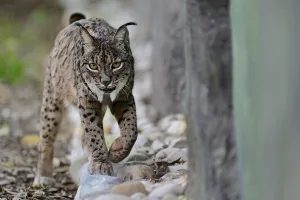
Things have changed in the south. The Andujar Mountains in southern Spain hold the title of Europe’s best lynx viewing spot. But this is not the Eurasian lynx or the elusive Canada lynx. You are looking for Iberian lynx. This subspecies has different survival strategies. Specialized in rabbit hunting. This dietary focus makes it a daily meal. Unlike their nocturnal cousins, they hunt during the day. This behavioral habit makes it easy for observers to spot.
The Iberian Lynx or Pardell lynx is one of the rarest cats on the planet. The dangerous situation increases global tourism.
It is on the verge of extinction. People struggle with habitat loss and lack of prey. But this vulnerability has attracted observers around the world. They came to a rocky bushland to see one of the world’s most endangered big cats.
Bear population in Abruzzo, Italy
Italy is the second most popular holiday destination for German tourists. But for wildlife lovers, the attraction is something special. Brown bear of Abruzzo is the main attraction. These Marsican brown bears take the area well above the “ankle” in the form of an Italian boot. This area was located between Rome and the Adriatic Sea. There are about 50 individuals left in the wild.
The International Union for Conservation of Nature lists this subspecies as endangered. The numbers are low. The gene pool is tight. Despite the sad statistics, the observation possibilities are surprisingly strong here. Bears are concentrated in protected areas and can be observed on guided tours. This is in stark contrast to the loneliness and shyness of bears. For geographical reasons, proximity is required here.
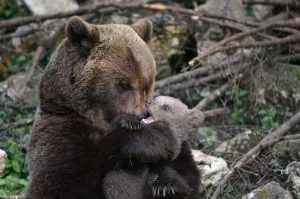
Most trips to the center of the Abruzzo National Park start from Pescasseroli. This is a natural hub. But if you want to see wildlife, you have to respect their schedule. The bears and wolves here are creatures of the twilight hours. The best window opens is early in the morning or at dusk. Timing is more important than luck. May is generally considered to be the prime month for these encounters.
The strategy is simple. Before breakfast, Hit the national park roads of the national park. Be sure to stop when you find a vantage point that overlooks the terrain. The landscapes change with the seasons, and so do the animals. In spring, bears stay in the lower valleys. They eat grass just like cows. It is a slow, peaceful scene. Summer brings a different dynamic. When the alpine buckthorn berries ripens high up, the bears move up. That’s when guided hikes becomes essential. You need someone who knows the terrain and the animals. Ecotur’s Paolo Iannicca is a good choice. He speaks very good English and knows where to look.
Beyond Scandinavian Myths
When we think of wolves, we often think of the North. The image of a howling figure in the Swedish boreal forest is deeply rooted in our cultural memory. It feels good. It feels very real. However, wolves are not limited to the cold north. They also thrive in the south.
But there is a reason why people flock to northern Sweden. It’s the atmosphere. The combination of dark forests, peat bogs and primal sound is unparalleled. Wild Sweden is a reliable operator for those looking for a special experience. They travel in minibuses to the active wolf territories. Then the real work begins. You get out and walk.
Focus on the ground. Every detail tells a story. A paw print. A scat. Each trace offers data. Do the pups go out with the adults? Is there remains of prey nearby? These details are what separate the casual observer from the true wildlife enthusiast. It’s not just about seeing a wolf. It is about understanding their behavior, diet and family structure through the evidence they leave behind.
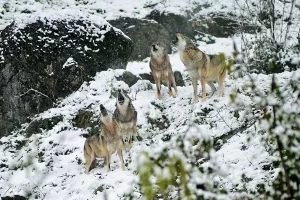
According to Ahlqvist, this is more than just a nature guide. He is one of Scandinavia’s most respected wildlife biologists, and when Wild Sweden needs someone to interpret the forest for our guests, we call him. His story is compelling. Let’s take wolves as an example. In the 1970s, only five wolves managed to trek from Russia to Sweden, reaching a country that had been wolf-free for decades. These five wolves are the ancestors of all wolves living in Sweden today. They make up the entire gene pool.
After the lecture, the group headed to the place. You bundle up tight and take your position on the mossy slope. Ahlqvist starts the hunt with a howl. It cuts through the twilight. It sounds so authentic that your hair stands up on its own.
But here is the thing about wildlife watching. It almost never goes according to script.
The old saying “as you call, so it echoes back” is not always true. You can howl in the dark and not hear anything. It may take several attempts to get Isegrim to respond. Remember that you aren’t even necessary. Wolves communicate vocally even when humans are not around. Waiting is part of the experience. The longer you wait, the bigger the reward.
Where and when to see bears
If the wolf is the ghost of the north, then the bear is a completely different beast. If you want to meet bears, look no further than Finland. The window is tight. The best time to see them is from mid-April to early June.
So why? In April, bears wake up from hibernation. They are starving. They head to the feeding station near the observation hut. After this binge phase, the mating season begins. Then, from July to mid-August, they return to the feeding grounds with renewed interest.
Timing is a logistical game. Most visitors in April check into their cabins around 4:30 p.m. and leave the next morning at 8:00 AM. Hardcore watchers can stay up to three or four days in a row. You don’t even blink.
Food in the huts is provided, either in the hut or in the next room. However, bring your own sugar. Candy can keep you awake during long sleepless nights. There is a catch, though. The smell of snacks attracts mice. They chew through your gear and steal your sleep. Think of it as the price of admission. The noise increases your alertness so you won’t miss a giant bear lumbering by.
Outside the North: rest of Europe
This covers the north-south overview of bears, wolves, and lynxes, but that’s just the tip of the iceberg. The “Big Three” roam much further south.
Estonia is a surprisingly good destination for all three species. For something a little more rugged, check out remote east of Poland. The mountains of the mountain regions of Slovakia and Bulgaria. The virgin forests of Romania are still the stronghold for these predators.
For those looking to combine travel and economic aid, Greece offers a niche option. You can see wolves and bears at the foot of Mount Olympus. Seeing wildlife in one of Europe’s most historic landscapes It helps the local tourism sector.
The forest doesn’t care about your itinerary. It only responds to patience.