分子是纯物质的最小单位,其行为仍与该物质相同。 进一步分解它,你就得到了原子。 成分发生变化。 化学反应消失了。
但是,将两个或多个原子以特定的排列组合在一起,就形成了一个分子。 这是您日常互动的大多数事物的基础。 水。 氧。 脱氧核糖核酸。 它们都是分子。
是什么让分子成为分子
这个定义听起来很简单,但含义却很广泛。 分子保留其来源物质的化学特性。 如果将水分子分裂成氢气和氧气,它就不再是水了。 它不能解渴。 它不会扑灭火灾。 如果你点燃它,它就会爆炸。
这种稳定性就是分子如此重要的原因。 它们是将原子结合在一起的化学键的有形结果。 这些键可以是强键或弱键、共价键或离子键。 结构决定一切。 物质如何反应。 闻起来如何。 无论是室温下的固体、液体还是气体。
考虑食盐。 氯化钠通常被描述为分子,尽管从技术上讲它形成晶格。 即便如此,这个原则仍然成立。 钠和氯的结合产生的东西与任何一种元素单独产生的东西完全不同。 钠是一种活性金属。 氯是一种有毒气体。 它们一起食用是安全的。 这种转变发生在分子水平上。
为什么结构决定功能
It’s not just about “which” atoms are present. It’s all about “how” they line up. Isomers are a good example. The molecular formula is the same, but the structure is different. One of them may become a useful medicine. Others may be inert or even harmful. The tragic case of thalidomide taught pharmacologists a painful lesson.
The shape of a molecule determines how it binds to biological receptors. 锁和钥匙。 If the key doesn’t match, the door stays closed. This specificity is why enzymes work. Why do drugs target certain cells? Why do some scents evoke memories and others cause nausea?
The material’s unique properties are directly reflected in how its atoms are bound and organized in space.
This is not an abstract theory. This is why life exists. Proteins fold into complex shapes. DNA is twisted into a double helix. These structures perform functions that individual atoms cannot. They store information. They catalyze reactions. They build cells.
Without molecules, there is no complexity. Only a soup of elemental particles. 这种组织性创造了我们看到的这个世界。
When molecules break up
You can always slice the substance further and further. The substance remains unchanged. Its composition holds. Its chemical personality remains unchanged. This continues until you hit one molecule. This is the final point of no return.
Keep breaking it and everything will change.
The pieces that emerge from this final split are not just smaller versions of the original. They are different. Usually their composition changes. Their chemical properties are always completely different. Why? Because you are no longer dealing with the entire unit. You are breaking the glue that holds the atoms together.
Chemical bonds are broken.
The structure that defined the substance collapses. What remains are atoms or smaller groups of atoms that do not behave like the original material. This is the boundary between physical division and chemical decomposition.
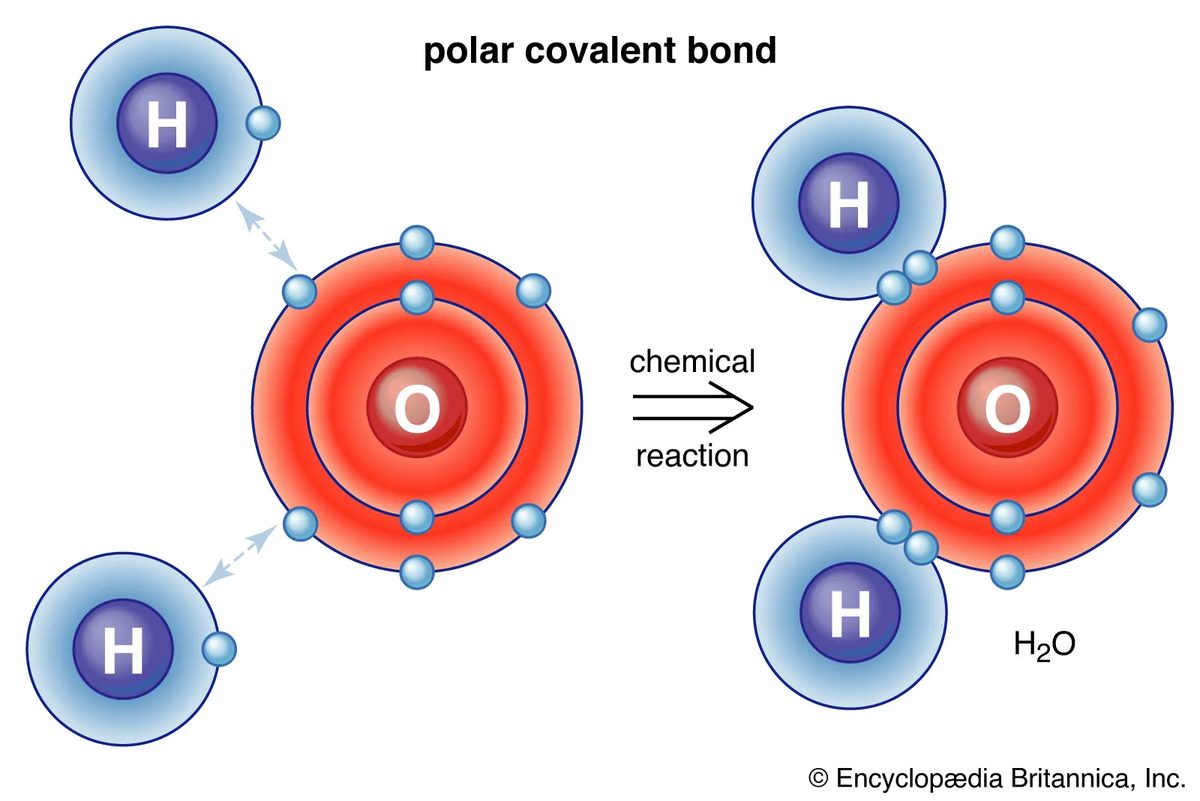
分子不只是出现。 它们的形成是因为原子想要降低其能量状态。 想象一个带正电的原子核位于中间。 在它周围,一团带负电的电子在旋转。 当两个原子靠近时,这些电子云会相互碰撞。 它们也与原子核相互作用。 如果系统的总能量由于相互作用而下降,原子就会粘在一起。 它们形成化学键。 那是一个分子。 从结构的角度来看,它是由价力保持的原子的聚集体。
这种简单的能量下降就是物质保持其形状的原因。 这不是魔法。 这是物理学。
双原子与多原子形式
最简单的键仅涉及两个原子。 这些是双原子分子。 如果两个原子相同,则该分子是同核的。 以氧气为例。 即O2。 两个氧原子,化学键合。 如果原子不同,则它是异核的。 一氧化碳(CO)就符合这个要求。 一碳。 一个氧原子。 不同的元素。 相同的键。
多原子分子的情况变得更加复杂。 它们含有两个以上的原子。 二氧化碳 (CO2) 是一个标准示例。 水(H2O)是另一种。 原子以特定的几何形状排列,以最大限度地提高稳定性。 但有些结构是巨大的。 聚合物分子可以将数千个组成原子结合在一起。 规模不同,但原理是一样的。 原子结合以达到较低的能量状态。
Fixed ratio and isomer problems
Mixtures work according to different rules than mechanical mixing. In the mixture, hydrogen and oxygen can be mixed in any ratio. A little gas here, a lot there. 它们就那样待着. 但一旦点燃,它们就会反应. They can form 水 only in certain proportions. 水. Two hydrogens. One oxygen. This fixed ratio defines the compound. This is not advice. This is the law.
However, the ratio of atoms is not always constant. The same elements can be combined in different ways. Hydrogen and oxygen can form 水 (H2O). It can also produce hydrogen peroxide (H2O2). There are two hydrogens and two oxygens. The ingredients are similar. The results were completely different. One is the liquid we drink. Another is bleach, which can burn the skin.
Even stranger, atoms can combine in equal proportions to form different molecules. These are isomers. They have the same molecular formula but differ in their internal atomic arrangement. Ethanol (CH3CH2OH) and methyl ether (CH3OCH3) have the same number of atoms: 1 oxygen, 2 carbons, and 6 hydrogens. However, connections make all the difference. 前者让人醉酒. The other is refrigerant or aerosol propellant. 原子是相同的. Structure determines identity.
If “molecule” is not available
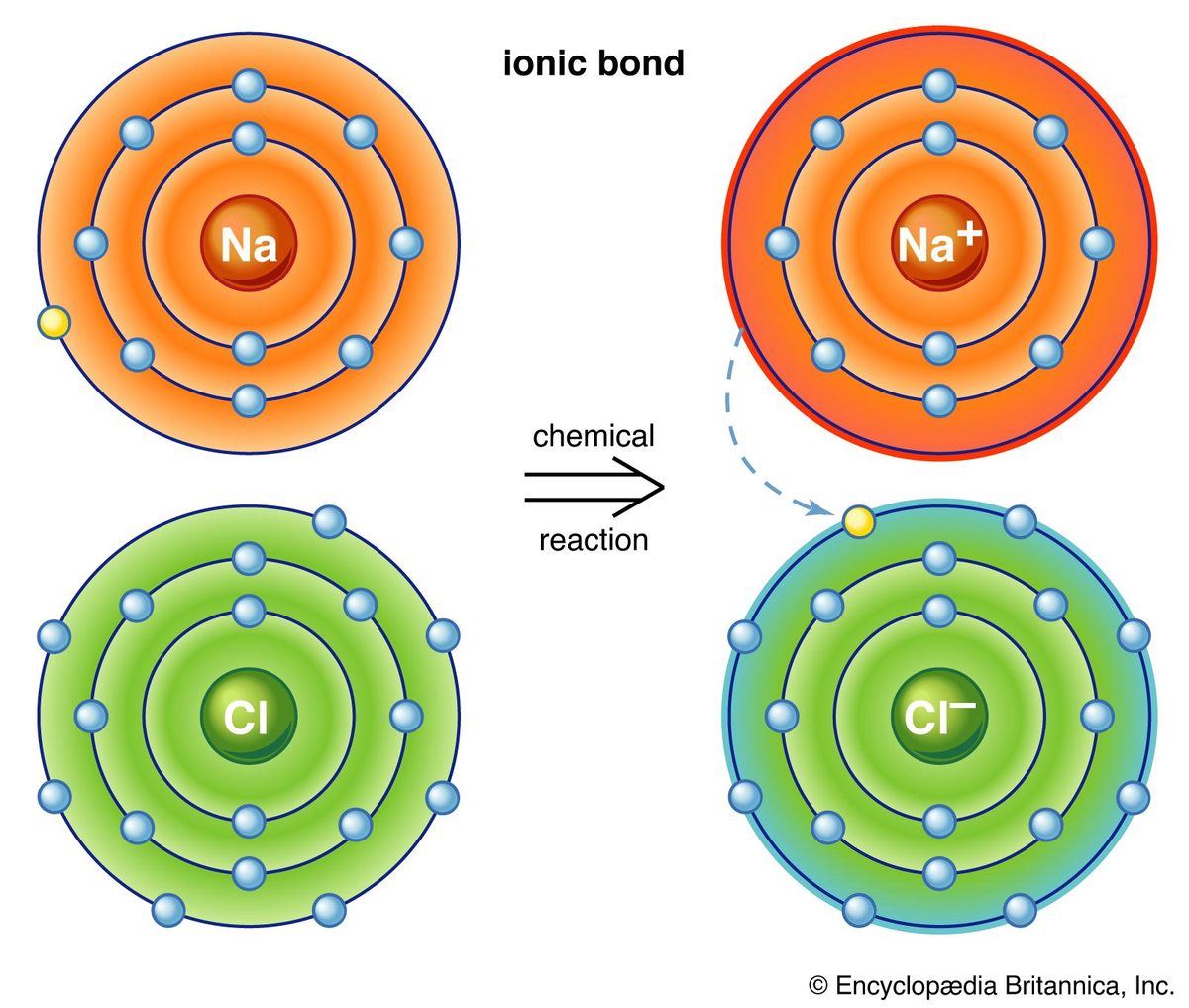
Not all substances can be broken down into individual molecular units. Sodium chloride breaks this pattern. 食盐. 它不以单个NaCl分子的形式存在. 而是形成晶体晶格.
In this structure, sodium and chloride ions alternate in a rigid lattice. Each sodium ion is surrounded by six equidistant chloride ions. Each chloride ion is surrounded by six equidistant sodium ions. The force is the same in all directions. There are no clear aggregates that can be called “食盐 molecules”. The concept of chemical molecules loses its meaning here.
那么该如何表示它? Use the simplest atomic ratios. This is called a formula unit. For sodium chloride, it is NaCl. This is not the number of particles. 这是一个比例. 反映了晶格结构. This applies to all solids of similar ionic type. Molecules do not exist as separate entities like 水 or oxygen.
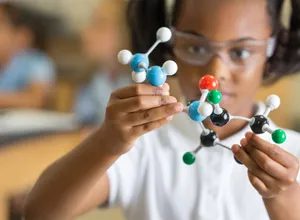
Although covalent bonds are essentially shared pairs of electrons, they are more than just a static glue. They are directional. To maximize the strength of these bonds, the atoms are attached in a special spatial arrangement, creating a rigid, well-defined structure in each molecule. This is the essence of structural chemistry. It’s about understanding how valency determines the proportion of bonding atoms, the length of bonds, and the direction of bonds.
The physical properties of a substance often result directly from its shape. Take water. It’s not straight, it’s curved. This angle creates a dipole moment and makes the molecule polar. In contrast, carbon dioxide is linear. The symmetry cancels the dipoles, making it nonpolar. Geometry changes everything about how these molecules interact with the world.
However, not every structure is locked in stone. Ethane (H3CCH3) shows that flexibility exists. The carbon-carbon single bond enables almost free rotation. Atoms can rotate around each other without breaking chemical bonds, bringing a dynamic layer of complexity to a static diagram.
Exploring the Invisible Architecture
How can we know all this? We can’t just look at atoms. Determining molecular structure is based on techniques that detect the arrangement of electrons and nuclei.
X-ray crystallography is still the gold standard for solids. When X-rays hit the crystal, they are refracted by the atomic lattice in a unique way. By analyzing these diffraction patterns, researchers can reconstruct the 3D coordinates of each atom in the unit cell. It’s precise. It’s powerful. This is how we understand the structure of everything from simple salts to complex proteins.
For gases and smaller molecules, spectroscopy plays a leading role. Infrared spectroscopy measures how molecules absorb light at specific frequencies that correspond to the vibration of their bonds. When the bond stretches or bends, energy is absorbed. The patterns reveal which bonds are present and their strength. Nuclear magnetic resonance (NMR) provides another window, especially for organic molecules. By placing the sample in a strong magnetic field, researchers can observe the environment of hydrogen or carbon nuclei. It’s like getting a detailed map of atom’s neighborhood in a larger structure.
These methods not only confirm what we think; they challenge it. The predicted geometry may be wrong. In some cases, molecules can twist in ways that simple models cannot predict. This information allows us to better understand how electrons bind objects together.
Why structure matters for reactions
The real stakes come into play during chemical reactions. 反应本质上是原子的重组。 The way atoms are organized in the starting materials determines how they can connect to form new products. Stereochemistry—the specific 3D arrangement—can be the difference between a life-saving drug and a toxic byproduct.
Consider a reaction where two molecules collide. They need to approach each other in a specific orientation for the bonds to break and reform. If the structure is too rigid or too bulky, the reaction might not happen at all. Or it might happen at a snail’s pace. Understanding the spatial constraints helps chemists predict reaction outcomes and design new pathways.
The non-rigid nature of some molecules adds another layer. The ability of parts of a molecule to rotate or flex can influence how it fits into an enzyme’s active site or how it interacts with another reactant.
Reading the Invisible Architecture
How do we know what a molecule looks like? We don’t just guess. We measure.
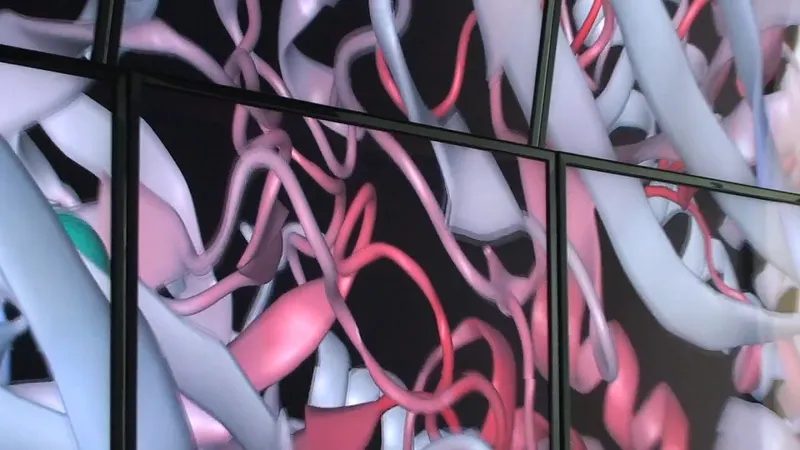
The positions of the heavy atomic nuclei are pinned down using two main tools: microwave vibration-rotation spectra and neutron diffraction. But nuclei are just the skeleton. To see the electron cloud—the messy, fuzzy stuff that actually makes chemistry happen—we turn to X-ray diffraction. If you need more granularity, electron spin resonance or nuclear magnetic resonance (NMR) techniques fill in the gaps. Recently, electron microscopy has advanced so much that we can now produce visual images of individual atoms and molecules. It’s no longer just data points; it’s a picture.
Theoretically, all of this comes from solving the Schrödinger equation. This quantum mechanical formula describes how electrons move within the electric field of the nuclei. In simple terms, a molecule settles into a shape where its energy is at the absolute minimum. Bond lengths and angles aren’t arbitrary; they are the result of nature’s most efficient balance. Solving these equations used to be impossible. Now, with supercomputers, it’s a highly developed routine. We run the numbers, and the computer spits out the structure.
The Dipole Decision
Not all molecules are created equal. Some are symmetrical. Some are not.
If a molecule has no net electrical charge, the positives equal the negatives. But where those charges sit matters. If the distribution is spherically symmetric—like a perfect sphere—the molecule is nonpolar. No net direction. No bias.
If the positive charge hogs one end and the negative charge clusters at the other, you get a dipole moment. The molecule becomes polar. It has a north and a south in the electrical sense. When these polar molecules float freely, they twist and turn to align with electric or magnetic fields. They seek attraction.
This distinction isn’t just academic. It dictates how biology works.
Nonpolar molecules are lipophilic. They love fat. Polar molecules are hydrophilic. They love water.
Cell membranes are essentially lipid bilayers—hydrophobic, nonpolar barriers. Small, nonpolar molecules slip right through. They dissolve into the lipid portion like oil into oil. Water, being polar, can pass through, but it struggles with larger, charged, or highly polar molecules. These charged ions get stuck. They need help. They require specific transport systems to cross the membrane. Without these portals, life as we know it couldn’t maintain the ionic gradients necessary for nerve impulses or muscle contractions. The polarity of a single atom can determine whether it enters a cell or stays out.
Counting the Uncountable
So, how heavy is a thing?
The molecular weight is simply the sum of the atomic weights of every atom in the molecule. But weight is a relative scale. To make it useful, chemists use the mole.
If a substance has a molecular weight of M, then M grams of that substance is exactly one mole. It’s a bridge between the microscopic and the macroscopic. One mole contains Avogadro’s number of molecules: approximately 6.022 × 10^23. That number is constant for all substances. It’s the universal counting unit for the atomic world.
How do we know these weights? Mass spectrometry is the go-to. It measures the mass-to-charge ratio of ions. Thermodynamic techniques and kinetic transport phenomena provide alternative routes, confirming the data through different physical lenses. We don’t just assume the weight. We measure it, cross-check it, and build our understanding on solid, quantifiable ground.