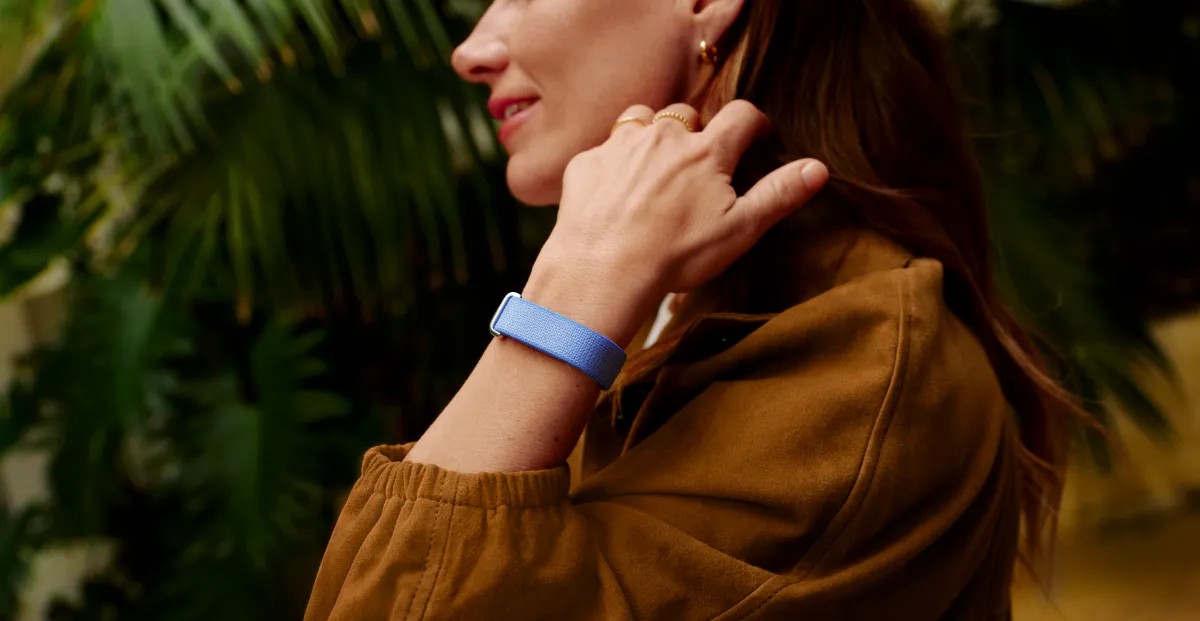
Google is launching a major initiative to simplify digital health, anchored by the new Fitbit Air, a streamlined tracker designed for ease of use. This hardware launch coincides with a significant software shift: the retirement of the standalone Fitbit app and its merger into the new Google Health platform.
This move signals that Google is no longer treating Fitbit as a separate entity. Instead, it is integrating Fitbit’s user base into a broader, AI-driven health ecosystem that aims to consolidate fragmented health data from various sources. While the hardware harkens back to Fitbit’s simple origins, the strategy points toward a future where health insights are platform-agnostic and powered by artificial intelligence.
The Fitbit Air: Simplicity Over Screens
The Fitbit Air is priced at $99 and deliberately eschews a screen. At first glance, its metallic fabric clasp and screenless design resemble competitors like Whoop. However, Google positions the Air as a return to Fitbit’s roots—specifically, the modular, clip-on trackers of 2012—rather than a copy of current trends.
Key specifications and features include:
* Compact Design: The device is 25% smaller than the Fitbit Luxe and 50% smaller than the Inspire, weighing just 12g with the band.
* Modularity: The sensor module can be swapped between three different band styles, allowing for versatility in how it is worn.
* Essential Sensors: It includes optical heart rate, blood oxygen, skin temperature, and motion sensors (gyroscope and accelerometer).
* Battery Life: It offers seven days of battery life on a full charge, with the ability to gain one day of use from just five minutes of charging.
* Compatibility: The Air can be used concurrently with a Pixel Watch, allowing users to switch between devices for different activities like workouts or sleep.
Rishi Chandra, Google’s vice president of health and home, explains that the Air addresses a gap in the market for wearables that are “too complicated, too bulky, or too expensive.” The goal is to create a device that requires no learning curve, suitable for both children and older adults.
The Rise of Google Health
The launch of the Fitbit Air is part of a larger restructuring. Starting May 19, the Fitbit app and Android’s Health Connect app will be consolidated into a single Google Health app. Additionally, Fitbit Premium will be rebranded as Google Health Premium, though pricing remains unchanged.
This transition reflects Google’s strategy since acquiring Fitbit for $2.1 billion in 2021. The company has been steadily integrating Fitbit into its broader ecosystem, a process that has faced criticism from long-time users due to service outages, deprecated features, and leadership changes.
“The health app is not going to be specific to Fitbit hardware… We want to be a health coach to an Apple Watch user, too. That’s why we had to make the brand change.”
— Rishi Chandra, Google VP of Health and Home
Solving Data Fragmentation
A primary driver behind the Google Health app is the fragmentation of health data. Currently, users often have their fitness data scattered across multiple apps (Strava, Garmin, Peloton), while medical records sit in separate systems. Operating system silos further complicate this landscape.
Google Health aims to unify this information. Initially limited to Pixel and Fitbit devices, the app is designed to be iOS compatible and will eventually support third-party wearables like Garmin, Whoop, and Oura. This platform-agnostic approach allows Google to position itself as a central hub for all health data, rather than just a hardware manufacturer.
AI Coaching and Privacy Concerns
The new Google Health app features an AI-powered Health Coach that has exited beta and is now available to the public. This tool allows users to:
* Chat with an AI about their medical records.
* Use their phone camera to log meals.
* Receive adaptive fitness plans.
* Ask how various health metrics relate to one another.
However, the effectiveness of AI in health coaching remains a challenge. Many existing AI health tools have been criticized for providing inaccurate or unhelpful advice. Google acknowledges this difficulty, noting that the public preview involved nearly 500,000 users and over a million pieces of feedback. The final version includes improvements such as more accurate sleep algorithms, cycle tracking, and a less verbose AI interface.
Privacy remains a critical concern. Google states that Fitbit data will remain siloed from its ad business. Training for AI models is opt-in and turned off by default, addressing fears regarding the use of sensitive health information for commercial purposes.
Conclusion
Google’s strategy with the Fitbit Air and the Google Health app represents a shift from selling hardware to providing a comprehensive, AI-driven health service. By consolidating apps and opening its platform to third-party devices, Google aims to become the central organizer of personal health data. While the execution of AI health coaching is still evolving, this move definitively marks the end of Fitbit as an independent brand, integrating it fully into Google’s broader vision for digital health.