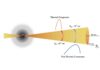
Mitochondria are famously known as the power plants of the cell, generating the energy required for survival. However, their role extends far beyond energy production; they also harbor their own distinct genetic blueprint, known as mitochondrial DNA (mtDNA). For this genetic material to function correctly, it must be evenly distributed within the cell. A new study reveals that cells achieve this balance not through complex chemical tethering, but through a simple, rhythmic physical transformation called “mitochondrial pearling.”
The Puzzle of Mitochondrial Spacing
Inside every cell, hundreds to thousands of copies of mtDNA are organized into compact clusters called nucleoids. Researchers have long noted that these nucleoids are spaced at remarkably regular intervals within mitochondria. This precise arrangement is critical: it ensures that when a cell divides, each new daughter cell receives a fair share of mitochondrial genes.
When this spacing fails, the consequences can be severe. Disruptions in mtDNA distribution are linked to a range of serious conditions, including:
* Metabolic disorders such as liver failure.
* Neurological diseases like encephalopathy, Alzheimer’s, and Parkinson’s.
* Age-related decline, where cellular energy efficiency drops.
Despite the importance of this organization, scientists could not explain how cells maintained such consistent spacing. Previous theories suggested that mitochondrial fusion (merging) or fission (splitting) might be responsible. However, as Suliana Manley, a professor at EPFL’s Laboratory of Experimental Biophysics, noted, nucleoid spacing remains stable even when these processes are disrupted. The mechanism remained a mystery until now.
Enter “Mitochondrial Pearling”
The breakthrough came from the work of Manley and postdoctoral fellow Juan Landoni, who identified a dynamic process previously dismissed as a cellular anomaly. They call it mitochondrial pearling.
During this process, mitochondria temporarily transform from their usual tubular shape into a structure resembling beads on a string. This shape-shifting is not a sign of distress, as once believed, but an active, energy-efficient strategy to distribute genetic material.
“Since Margaret Reed Lewis first sketched mitochondrial pearling in 1915, it has largely been dismissed as an anomaly linked to cellular stress,” says Landoni. “Over a century later, it is emerging as an elegantly conserved mechanism at the heart of mitochondrial biology.”
How the Mechanism Works
Using advanced super-resolution imaging and live-cell microscopy, the research team observed this process in real time. Their findings reveal a highly coordinated sequence of events:
- Rhythmic Constriction: Mitochondria undergo rapid, temporary constrictions several times per minute, forming evenly spaced “pearls.”
- Spacing Alignment: The distance between these bead-like sections closely matches the natural spacing required between nucleoids.
- Cluster Splitting: Larger clusters of mtDNA are physically pulled apart as they settle into individual pearls. Most pearls contain a single nucleoid near their center.
- Stabilization: When the mitochondrion returns to its normal tube shape, the nucleoids remain separated, preserving the uniform distribution.
This biophysical process acts as a self-correcting system. If nucleoids clump together, the pearling motion helps break them apart. If they are too sparse, the process ensures they are evenly spread along the mitochondrial network.
The Triggers: Calcium and Membrane Structure
The researchers also identified the controls that regulate this delicate dance. Through genetic and pharmacological experiments, they found two key drivers:
* Calcium Influx: The entry of calcium ions into the mitochondria can trigger the pearling event.
* Internal Membrane Structures: Specific internal features of the mitochondrion help maintain the separation of nucleoids during the shape shift.
When either of these elements is disrupted, the “beads” fail to form correctly, and nucleoids tend to clump together, leading to uneven genetic distribution.
Why This Matters for Medicine
This discovery shifts the understanding of mitochondrial biology from a purely molecular perspective to a biophysical one. It highlights that cells rely on physical shape changes—just as much as chemical signals—to maintain order.
For medicine, this insight is significant. Many diseases linked to mitochondrial dysfunction may stem from a breakdown in this pearling mechanism. By understanding how calcium and membrane structures drive this process, researchers may develop new therapeutic strategies to:
* Restore proper mtDNA distribution in aging cells.
* Target specific pathways in neurodegenerative diseases.
* Improve treatments for metabolic disorders caused by mitochondrial failure.
Conclusion
The rediscovery of mitochondrial pearling demonstrates that nature often solves complex problems with elegant, physical simplicity. By rhythmically changing shape, cells ensure their genetic heritage is preserved and evenly shared. This finding not only solves a century-old mystery but also opens new avenues for treating diseases rooted in cellular energy and genetic imbalance.