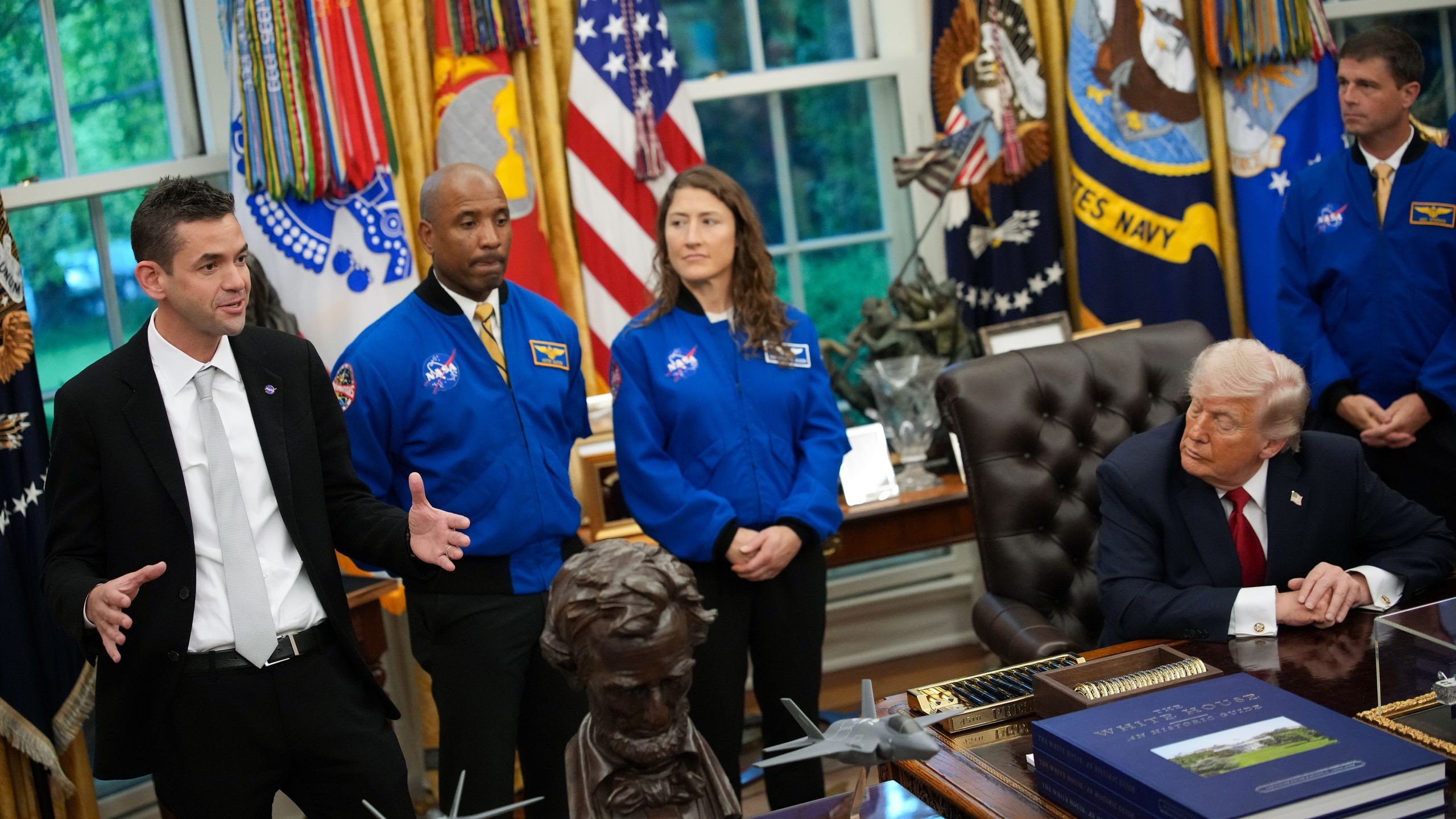
The Artemis program has entered a critical phase of execution. Following the successful April 2024 circumlunar flight of Artemis 2, NASA Administrator Jared Isaacman has announced a strategic restructuring of the mission schedule. The immediate goal is to accelerate the pace of lunar exploration, aiming to reduce the gap between major missions from several years to approximately 10 months. However, this ambitious cadence hinges on the readiness of private-sector lunar landers, raising significant questions about whether NASA can realistically land astronauts on the Moon by 2028.
A Shift in Strategy: From Landing to Rendezvous
Originally, Artemis 3 was slated to be the first crewed lunar landing since the Apollo era. Under the new strategy, Artemis 3 has been redesigned as an Earth-orbit rendezvous and docking demonstration. The mission will test the interoperability between NASA’s Orion capsule and the commercially developed Human Landing Systems (HLS).
This pivot allows NASA to validate critical technologies—such as docking in deep space and crew transfer—without the immediate pressure of a lunar touchdown. The actual return of astronauts to the lunar surface is now targeted for Artemis 4 and Artemis 5, with launch windows projected for 2028.
“We have an achievable plan now, back to the moon, and we’re back in the business of launching moon rockets with frequency,” Isaacman stated during a press conference with President Donald Trump.
The Vendor Challenge: SpaceX and Blue Origin
NASA relies on two primary partners for the lunar landers: SpaceX (Starship) and Blue Origin (Blue Moon). Both companies face steep technical hurdles to meet the late-2027 testing deadline for Artemis 3 and the 2028 crewed flight requirement.
SpaceX Starship
SpaceX’s Starship is designed for full reusability and serves as the cornerstone of Elon Musk’s broader vision for Mars colonization. Currently, the vehicle is approaching its Version 3 (V3) prototype launch, which will feature the new Raptor 3 engines.
* Progress: Starship has undergone numerous test flights, with mixed results. The V3 iteration aims to improve reliability and performance.
* Challenges: The vehicle requires multiple refueling launches in Earth orbit to reach the Moon. Cryogenic fuel transfer in space remains an untested capability. Additionally, the current Starship builds are cargo variants; adapting the interior for life support and astronaut safety is a separate engineering task.
Blue Origin Blue Moon
Blue Origin is taking a more cautious, iterative approach with its Blue Moon Mark-1 (Mk1).
* Progress: The Mk1 has completed vacuum chamber testing at NASA’s Johnson Space Center and is undergoing final preparations at Cape Canaveral.
* Challenges: The lander’s debut depends on the New Glenn rocket, which recently experienced an anomaly during its first launch. Until New Glenn is cleared for flight, Blue Moon’s timeline remains uncertain. Like Starship, the current Mk1 is a cargo variant and lacks the life support systems necessary for crewed missions.
Technical Hurdles: Fuel, Life Support, and Certification
Beyond launch readiness, both landers must overcome fundamental engineering challenges before NASA will certify them for human flight:
- Cryogenic Propellant Management: Both Starship and Blue Moon use cryogenically cooled fuels that boil off over time. For Artemis missions, which will last significantly longer than Apollo-era stays, managing fuel stability and performing in-orbit refueling is critical.
- Life Support Integration: Neither company’s current lander design includes systems to sustain human life. Developing and integrating these habitats adds complexity and time to the development cycle.
- Uncrewed Demonstrations: NASA requires both landers to successfully demonstrate uncrewed landings on the Moon and liftoffs back to lunar orbit before entrusting astronauts to them. These tests are still in early-to-mid stages.
Political and Programmatic Implications
The timeline carries significant political weight. President Trump expressed confidence that a crewed landing could occur within his term, which ends in January 2029. During the Oval Office press conference, he noted, “We have a shot at it… I think we could say we’re ahead of schedule.”
However, the technical reality is more nuanced. A late-2027 rendezvous test for Artemis 3 leaves a very narrow window for integrating life support, conducting safety reviews, and launching crewed missions in 2028. Any delay in Starship’s V3 testing or New Glenn’s clearance could push the lunar landing beyond 2028, potentially affecting the program’s political and public momentum.
Conclusion
NASA’s restructuring of the Artemis program reflects a pragmatic attempt to balance ambition with technical reality. By shifting Artemis 3 to a rendezvous test, the agency aims to de-risk the complex logistics of lunar landings. Yet, the 2028 target for crewed surface missions remains highly aggressive, dependent on the rapid maturation of SpaceX’s Starship and Blue Origin’s Blue Moon. While the framework for a return to the Moon is in place, the success of the 2028 landing hinges on overcoming untested spaceflight capabilities and strict vendor timelines.