Twenty five years since the credits rolled. A lot of things have changed. Our phones listen to us. Algorithms pick our news. A.I. Artificial Intelligence looks less like a wild sci-fi guess now. It looks like a documentary.
The irony is sharp. Spielberg released Disclosure Day recently. It felt slow. Late to the UFO party. Decades too late. But look at 2001. The film anticipated the current obsession. It guessed the future of the code running your life.
The journey to the screen was messy. A strange odyssey. Two titans of cinema collided. Brian Aldiss wrote a short story in 1969 about global warming and synthetic children. Stanley Kubrick wanted it for decades. He tried again and again. Writers came. Writers left. Scripts burned or were rewritten. The project stalled. And then there were conspiracy theories. Loud ones. About a sudden death that cleared the board.
“The fusion of Kubrick’s bleak view of humanity and Spielberg’s warmth makes for a unique cocktail.”
Spielberg picked up the pieces in 1995. He worked with Kubrick on it for years. It was a slow burn. Kubrick died in March 1999. Four days after Eyes Wide Shut dropped. Some whispered foul play. That the director hid secrets about the industry. The death left the script unfinished. Spielberg felt the weight. He took over. He finished what his friend started. He turned grief into a film.
The budget was high. $75 million for a fairy tale. The look was distinct. Dreamy. Desaturated. A haze that pulls you down into the mud of the story. It’s not bright Disney magic. It’s darker. Heavier. One of Spielberg’s most serious efforts.
It opened on June 29, 2001. Warner Brothers took the risk. The audience stayed. People loved it. Or hated it. The climate is changing. The oceans rise. New York floods. This was before it became daily headlines. Back then it was just setting. A backdrop for robots. Mecha s. Synthetic humans.
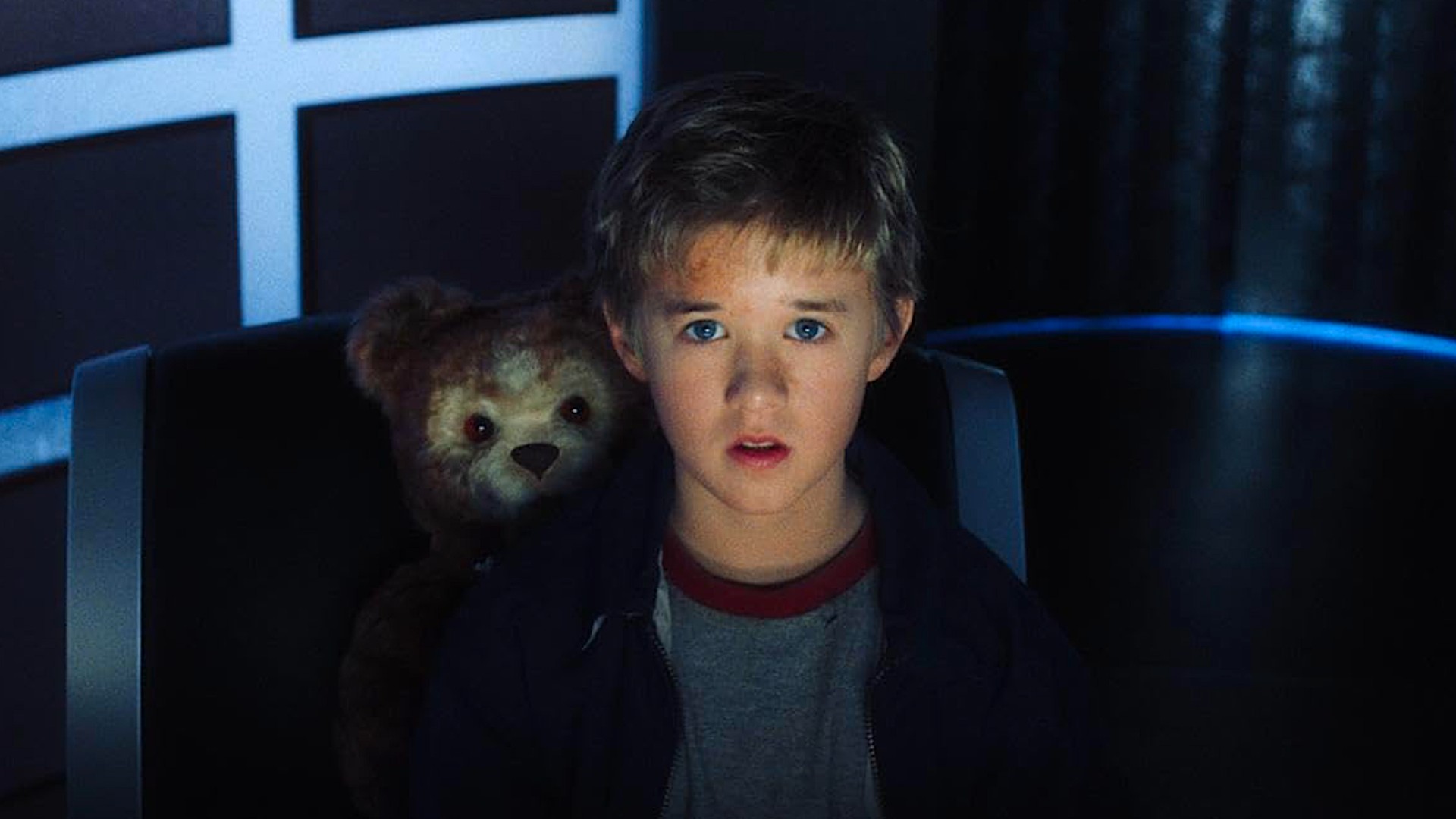
David is the center. Haley Joel Osment plays him. Fresh off The Sixth Sense. The “I see dead people” kid. Here he sees no one who cares. David is a Model 10 MK-II android. Programmed to love. Bought by a couple because their real son has a genetic disease. A tragedy strikes the home. The natural child gets better. The android remains. A liability.
Conflict rises. It turns violent. Monica, the mother, can’t handle the reality of what David is. Not his malfunction. His nature. She abandons him. Takes him to the woods. Leaves him tied to a tree. David begs her. Please don’t go. He does not blink. Osment holds the stare. No blinks. Just pure programming and pain.
This scene haunts. It shows the raw nerve of the Spielberg brand. Broken families. Divorced parents. The Fabelmans laid this bare later. But it’s in all of them. E.T. War of the Worlds. Here the break is fatal for a robot’s hope. David wanders away. Alone. He finds the Blue Fairy in his memories. A cartoon guide from the Pinocchio book. She promised real boys get what they wish for.
So David goes to Manhattan. Flooded Manhattan. A strange road trip with Teddy, the hyperactive teddy bear with an A.I. brain. They meet Jude Law. Who plays Gigolo Joe. A pleasure model. A sex robot trying to become something else. Law has fun. Lots of ribald charm. Joe saves David. They travel toward their maker. Like a twisted Wizard of Oz. Only the Wizard is an algorithm. Or a corpse.
They encounter other outcasts. A band of stray mechas in a monastery of sorts. The Flesh Fair is brutal. Robots fight for food. Gladiatorial bloodsport for post-human crowds. The visual effects hold up. Digital innovation in 2000 was just starting. The Phantom Menace lit the fuse. This movie rode the wave. Janusz Kaminski lit the scenes. Michael Kahn cut the tension. John Williams scored the sorrow. The sound is familiar but strained. Sad.
The film cost serious money but made $235 million. Not a flop. But not Titanic. It’s PG-13. Grown-up sci-fi. Robin Williams plays Dr. Know. The search engine. He looks like Einstein. He answers questions with infinite confidence. But he is hollow. No soul. Just data.
Was it Kubrick’s film or Spielberg’s? It is both. It is cobbled together. Kubrick feared technology couldn’t make a realistic robot face. Stan Winston used prosthetics. CGI filled the rest. They fused a cold, unflinching look at human nature with a sentimental quest for love. A Pinocchio remix for the machine age.
The ending breaks many viewers. Giant robots emerge from the floodwaters. They act like the Blue Fairy. They grant David his wish. A simulated day with his dead mother. She is an A.I. reconstruction. A fake. A lie. David knows this.
So why does he want it?
He knows it is false. But he needs it. To become a “real” boy requires acceptance. He has to choose the illusion of love over the reality of solitude. He closes the door. Lets her leave. He walks into the rain alone. He finally gets a toy to play with. But he does not play. He holds the box. He accepts the loneliness.
It is bitter. Sweet in the wrong places. People debate it still. Does he pass the test of humanity by feeling the pain? Or does the film cheat? The debate continues. On its 25th birthday, the film feels urgent. The robots are no longer on screen. They are in your pocket. They answer you. They predict you. Do you love them back? Or do you just use them?
The movie doesn’t give a clear answer. It just shows a boy waiting for the water to rise.