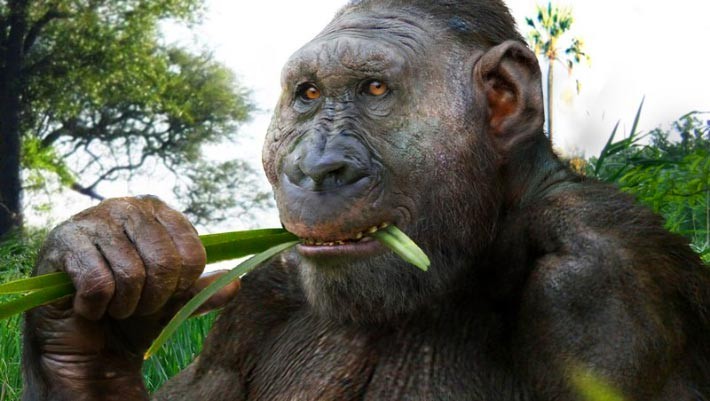
A newly discovered 2.6-million-year-old fossil jaw from Ethiopia dramatically expands the known range of Paranthropus, an extinct branch of early hominins. The find, unearthed in the Afar region, represents the first evidence of this robust hominin genus in that area and pushes its geographic boundaries over 1,000 kilometers north of previous discoveries. This suggests Paranthropus was more adaptable and widespread than scientists previously believed.
The Significance of the Find
For decades, Paranthropus fossils had only been found in regions spanning southern Ethiopia to South Africa. The absence in the Afar region, despite its exceptionally rich fossil record including Australopithecus and early Homo, was a longstanding puzzle for paleoanthropologists. Some theorized dietary specialization limited Paranthropus to specific environments, while others suggested they couldn’t compete with the more versatile Homo.
This new discovery proves neither theory correct. The fossil, designated MLP-3000, confirms that Paranthropus occupied a broader range than previously recognized. The Afar region’s geological context places the fossil between 2.9 and 2.5 million years ago, a period of significant environmental shifts in eastern Africa.
A Mosaic of Primitive and Robust Traits
The fossil itself presents a unique mix of characteristics. It exhibits the hallmark robust features of Paranthropus, like a thick jaw and large teeth, combined with more primitive traits seen in earlier hominins. Researchers conservatively classify it as Paranthropus sp., acknowledging that further analysis may refine its exact species assignment.
The context of the find is as crucial as the fossil itself. The Mille-Logya area preserves sediments from a poorly sampled period between 3.0 and 2.4 million years ago, a time of increasing grasslands. Associated animal fossils indicate a shifting environment, suggesting Paranthropus thrived in various habitats, not just a narrow niche.
Coexistence and Competition
The discovery also underscores that multiple hominin lineages coexisted in the Afar region during the Late Pliocene. Fossils of early Homo and Australopithecus from nearby sites confirm this unexpected diversity. This raises fundamental questions about how these hominins interacted, competed for resources, and ultimately shaped the evolution of our own genus.
“This discovery is so much more than a simple snapshot of Paranthropus’ occurrence: it sheds fresh light on the driving forces behind the evolution of the genus.” – Professor Zeresenay Alemseged
Ultimately, this fossil challenges long-held assumptions about the ecology and dispersal of Paranthropus. It reinforces the idea that early hominin evolution was more complex and geographically diverse than previously imagined. The find not only expands our understanding of Paranthropus but also prompts a reevaluation of the competitive dynamics between early human ancestors.