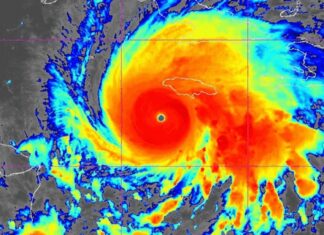
The planet is warming at an accelerating rate, with 2024 marking the first full year exceeding 1.5°C above pre-industrial averages. Despite ongoing efforts to reduce emissions and scale carbon removal technologies, these may prove insufficient to avert catastrophic climate change. This reality compels a serious examination of all potential interventions, including the controversial but potentially vital field of solar radiation management (SRM).
The Logic of Reflection
Earth naturally reflects about 30% of incoming sunlight. Increasing this reflection by even a small margin – to 31%, for instance – could act as a temporary planetary heat shield, buying time while deeper decarbonization efforts take hold. The idea is not new; in 1965, U.S. science advisors under Lyndon B. Johnson proposed it as a last-ditch solution. The 1991 eruption of Mount Pinatubo demonstrated this principle, cooling the planet by roughly 0.5°C through the injection of sulfur dioxide into the stratosphere.
Stratospheric Aerosol Injection (SAI): A Scientific Exploration
Models suggest that injecting approximately 12 million tonnes of sulfur dioxide (SO₂) annually into the stratosphere could offset 1°C of warming – a fraction of current industrial emissions but with a significant cooling effect. This is not a substitute for emissions cuts. Halting SAI mid-deployment would result in rapid rebound warming, and poorly coordinated interventions could disrupt precipitation patterns. However, these risks underscore the need for rigorous research, not a dismissal of the concept.
Why Research is Essential
Some argue that the potential for misuse renders SRM research unacceptable. This is counterproductive. Open, carefully controlled investigation can clarify whether SRM could be deployed safely and effectively, particularly for vulnerable populations. It also allows early identification of risks and failure modes, reducing the likelihood of reckless implementation.
Phased Testing: A Responsible Approach
The scientific community has well-established protocols for assessing risky interventions. Just as medicine employs phased clinical trials, SRM research should follow a structured, stage-gated program. This begins with “phase zero” – lab work and computer models – which have accurately predicted the consequences of rising emissions but require real-world validation.
Proposed Testing Phases:
- Phase One: Release 10 tonnes of SO₂ at altitude, a negligible amount compared to industrial emissions, to study aerosol formation and behavior. This would test model accuracy without climate impact.
- Phase Two: Increase the release to 100–1,000 tonnes, still far smaller than a volcanic eruption, to examine aerosol mixing and dispersion. This would assess how particles spread and interact with stratospheric circulation.
- Phase Three: Initiate small-scale, reversible cooling (e.g., 0.1°C over five years) under strict oversight, allowing for continuous monitoring and evaluation.
Governance and Transparency
Any deployment of SRM must be governed by a robust framework, ensuring transparency, accountability, and the involvement of diverse stakeholders. The UK’s Advanced Research and Invention Agency (Aria) has taken a first step in this direction, funding projects to determine the minimum scale for meaningful experiments.
Conclusion
The world may never need to reflect sunlight. However, ignoring the potential of SRM research is not a viable strategy. If conditions worsen, we must be prepared to make informed decisions based on evidence, not fear. Investing in transparent, controlled experimentation now is the only way to ensure that any future choice – whether to proceed, reject, or refine SRM – is grounded in reality. Waiting too long to learn the answers could prove catastrophic.